The Story Behind ‘Mi Soc’: A Cambodian Woman in a 19th-Century Colonial Photograph
 The Story Behind ‘Mi Soc’: A Cambodian Woman in a 19th-Century Colonial Photograph
PARIS, Oct. 1, 2026 — A 19th-century photograph of a Cambodian woman, long identified in some collections as a “Siamese woman” or simply an anonymous Cambodian figure, has been given a more personal identity through historical research and family oral history.
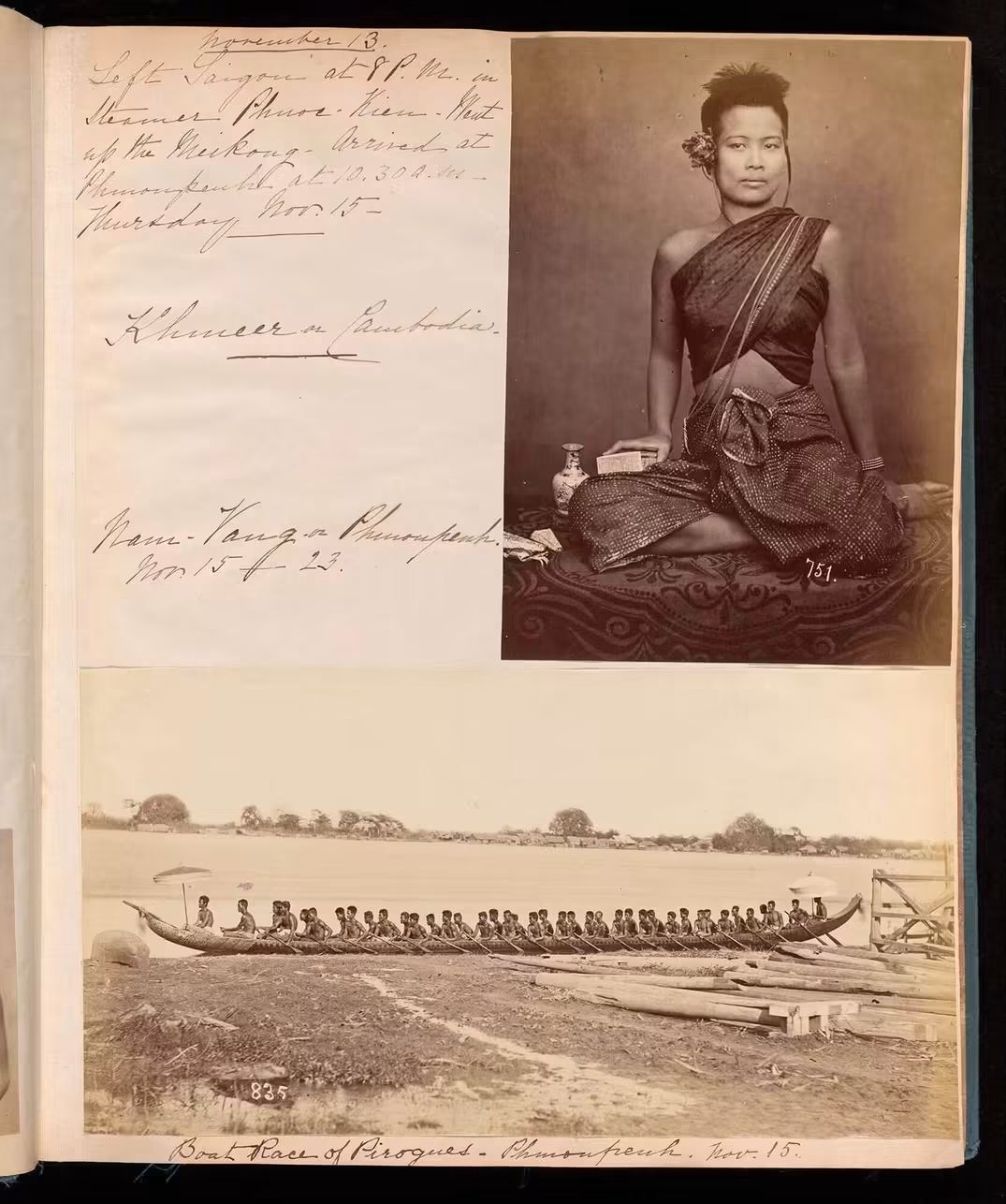
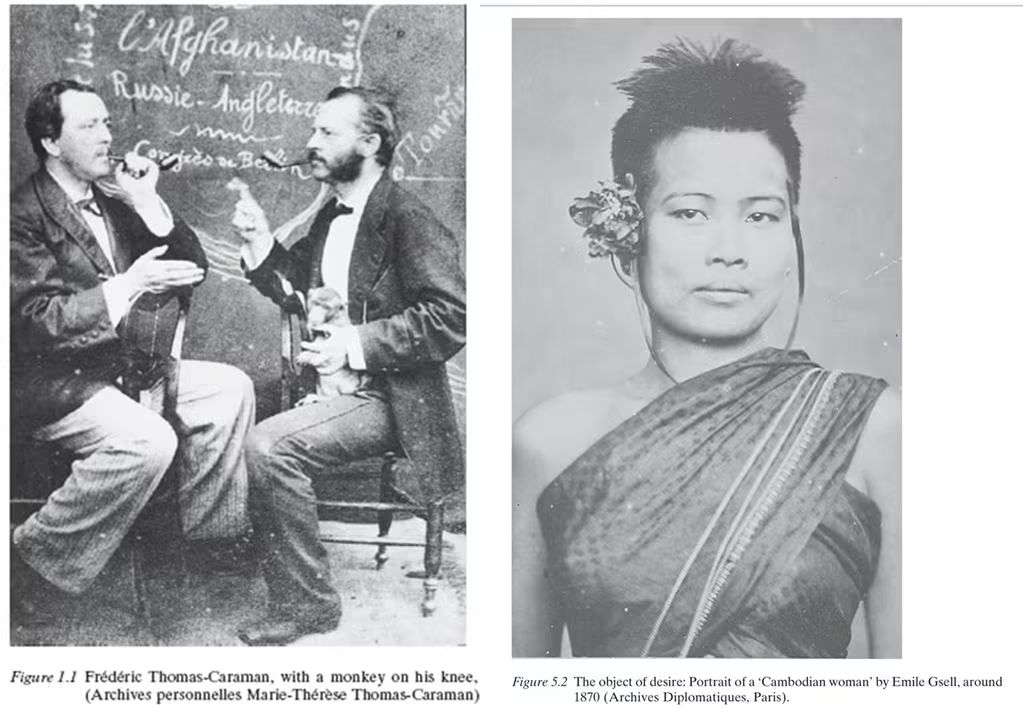
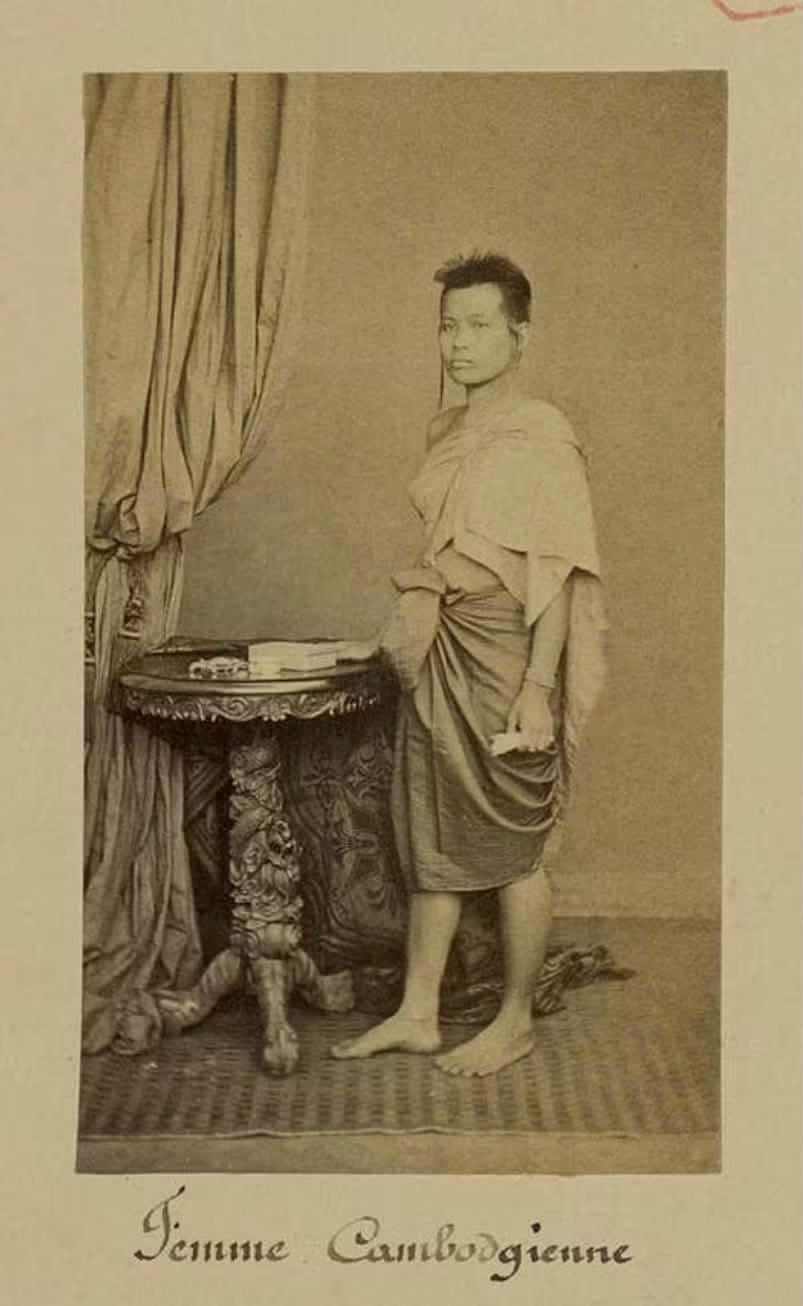
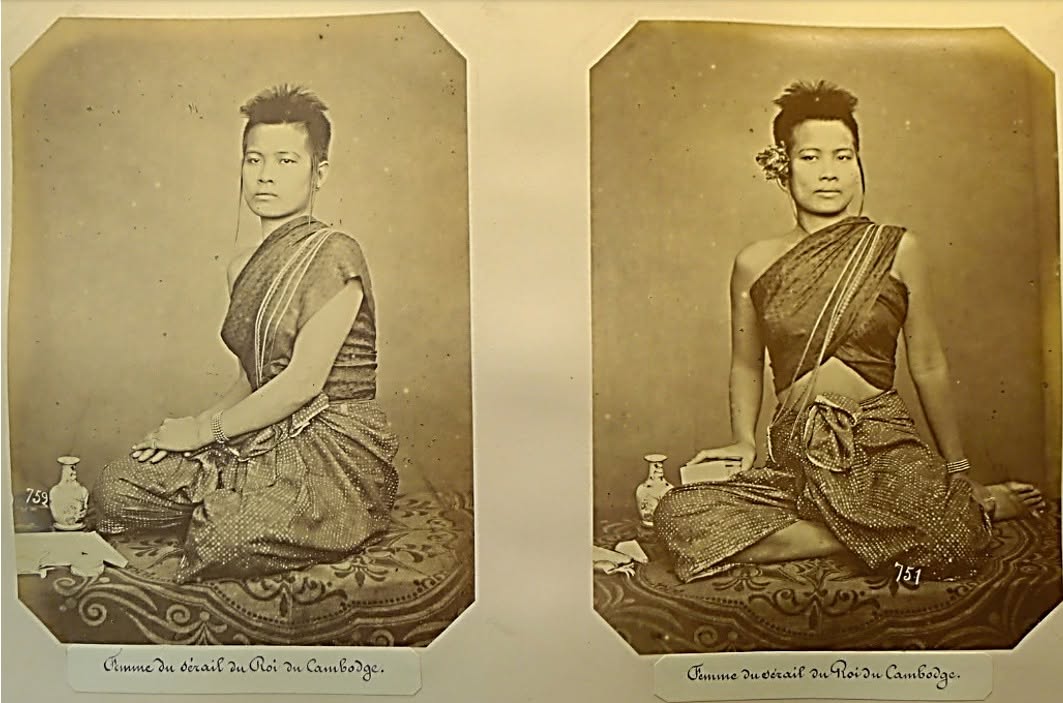
In his Lettre sur le Cambodge, published in Paris in 1872, French writer Paul Le Faucheur presented an album containing four photographs, including portraits of King Norodom and a Cambodian woman identified in the accompanying caption as “mi Soc.” The photograph was taken by photographer Gsell before 1872.
According to historian Marie Aberdam, the woman was Cambodian, and her name was Soc. The term “mi” was not her personal name but a social designation historically associated with female dependents and servants, including women who had occupied various forms of dependent or enslaved status in Cambodian society.
A Royal Dancer and Concubine
Family oral history passed down through Soc’s descendants identifies her as a dancer and concubine of King Norodom. This connection helps explain why she was photographed at a time when photography was still uncommon in Cambodia and why many surviving photographs from the period focused on members of the royal family, officials and other prominent figures.
A second photograph of Soc, also taken by Gsell, presents a markedly different image. In it, she faces the photographer directly and wears the same clothes as in the earlier portrait. A flower has been placed behind her ear, while her chest scarf has been lifted to expose part of her shoulder and abdomen.
Aberdam argues that these changes transformed the representation of Soc. Rather than portraying her primarily as a royal dancer, the second image presented her through a colonial gaze as a sexualized Asian woman, detached from her name and personal history.
From the Royal Court to a French Household
According to her descendants, King Norodom later gave Soc in marriage to Paul Le Faucheur, a French merchant who had a close relationship with the Cambodian king.
Le Faucheur had been entrusted by Norodom with responsibility for constructing the king’s new palace in 1865, when Norodom moved from Oudong and established Phnom Penh as the modern capital. The project introduced Western architectural materials and approaches into the royal court’s building traditions.
The family account says that Norodom rewarded Le Faucheur by giving him one of his servants, a dancer, as a wife. The story is presented as echoing a Cambodian foundation narrative in which a foreign prince marries a royal daughter of the land.
Soc and Le Faucheur subsequently had a daughter, Malis. According to the account, Norodom also granted the couple a plot of land opposite the northeastern corner of the royal palace, where Le Faucheur built their home.
A Family’s Rise
Le Faucheur died in 1874, leaving Soc and their daughter in difficult economic circumstances. Although Soc had been associated with the royal court, her dependent status meant that her family did not have substantial wealth to support her.
Her marriage to a Frenchman also created social and legal difficulties. According to Aberdam, Le Faucheur had not registered his marriage or his daughter’s birth with French authorities, leaving Malis unable to claim French citizenship.
Despite these difficulties, Soc managed to retain the house that had been granted by King Norodom.
Malis later married Thiounn, a young interpreter and secretary in the French colonial administration. He subsequently rose through the colonial administration and royal government, becoming Minister of the Royal Palace in 1902 and Prime Minister of Cambodia in 1929.
From “Mi Soc” to “Lok Yeay Soc”
Soc’s social identity also changed over time.
Within her family, she eventually ceased to be called “mi Soc,” because the term acquired increasingly negative social and moral connotations. Instead, she became known as “neak” or “lok yeay Soc,” terms conveying greater respect.
According to the family history, Soc went on to establish a large and prominent family, while her descendants preserved the story behind the woman whose photograph had survived in colonial archives.
More than a century later, her story offers a different way of viewing colonial photography: not simply as images of anonymous Cambodian people, but as fragments of individual lives, social relationships and family histories that can sometimes be recovered through archival research and oral traditions.