‘Scarlet Heart Thailand’ Faces Cultural Appropriation Backlash Over Alleged Myanmar Heritage in Costumes
 ‘Scarlet Heart Thailand’ Faces Cultural Appropriation Backlash Over Alleged Myanmar Heritage in Costumes
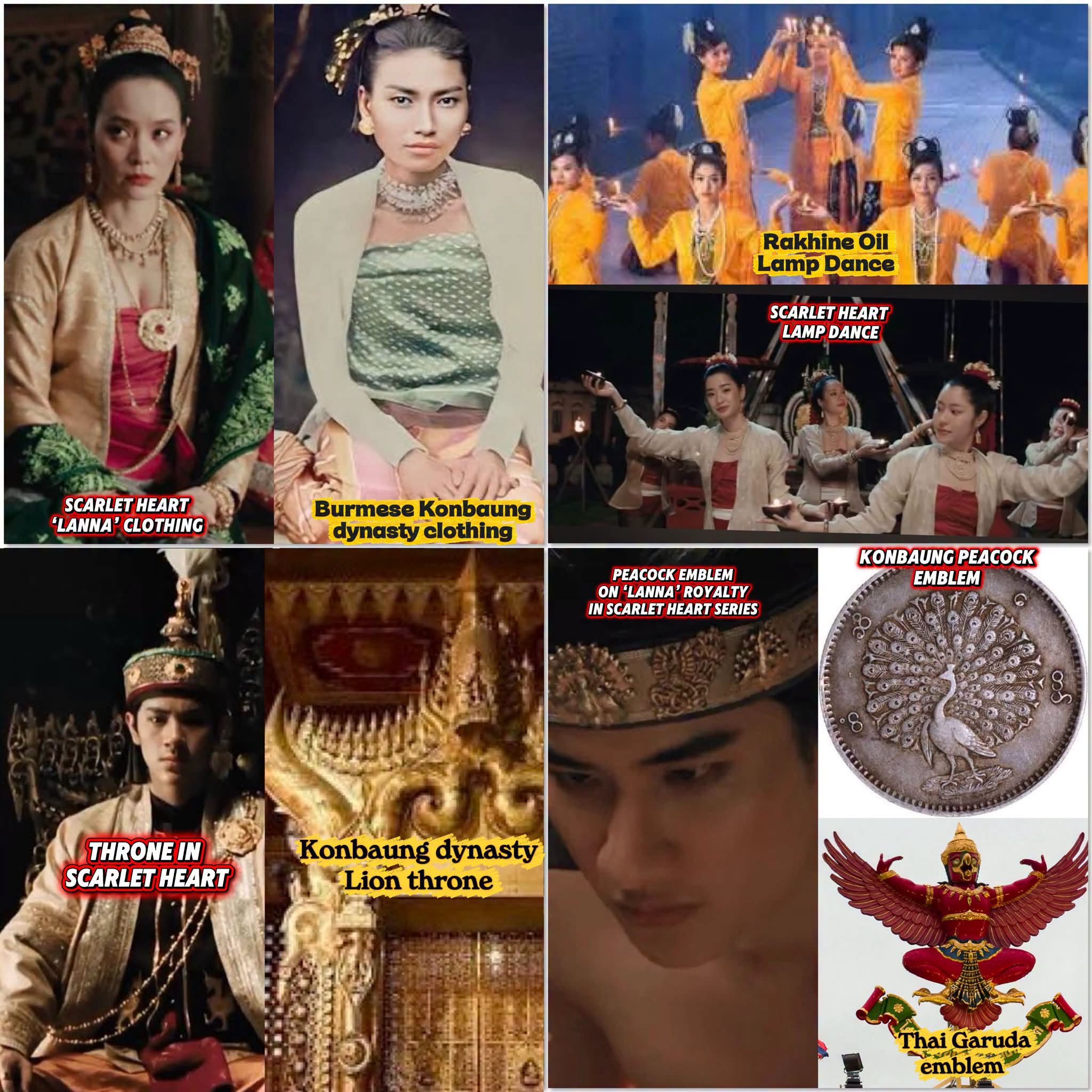
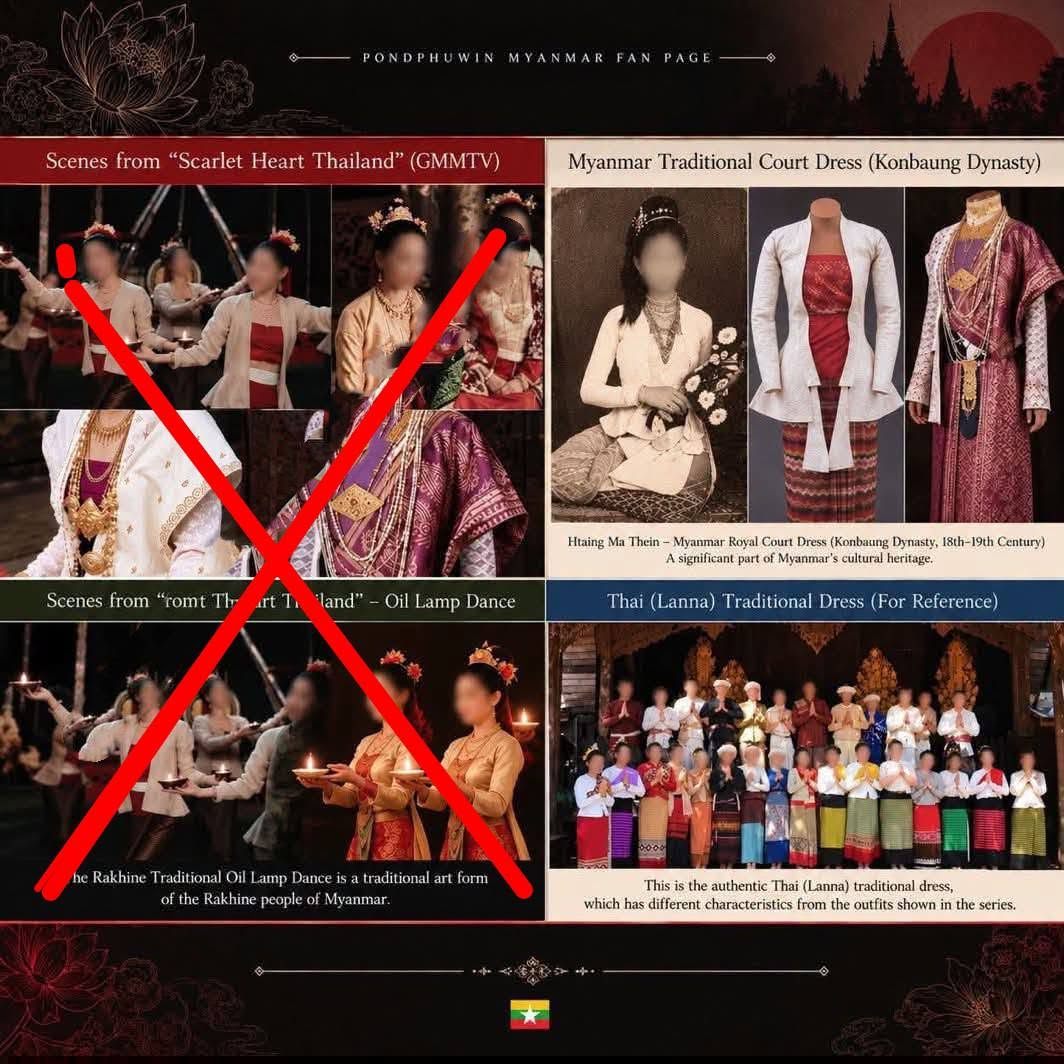
BANGKOK, October 22, 2026 — The upcoming Thai historical romance series Scarlet Heart Thailand has sparked online controversy after its official trailer prompted viewers to question whether its costumes, ceremonial dances and royal symbols draw heavily from Myanmar’s historical heritage, particularly the Konbaung dynasty, rather than accurately representing the Lanna culture of northern Thailand.
The debate has prompted calls for GMMTV, the series’ production company, to clarify the cultural influences behind its artistic design and acknowledge Myanmar’s heritage if it has been used as a source of inspiration.
A Myanmar BL artist publicly criticised the production, saying they would not remain silent over what they viewed as the misrepresentation of Myanmar’s cultural heritage. The artist argued that the costumes featured in the trailer were associated with Myanmar traditions rather than Thai traditional clothing and called on GMMTV to give proper credit.
“GMMTV RESPECT OUR CULTURE,” the artist declared in a public appeal.
Debate Over Lanna and Konbaung Cultural Influences
The controversy centres on the distinction between Lanna culture, associated with the historic kingdom of northern Thailand, and the cultural traditions of Myanmar, including those associated with the Konbaung dynasty.
Critics argue that several visual elements in the trailer resemble historical Burmese royal attire and ceremonial traditions. They say that if these elements were deliberately incorporated into the series, the production team should acknowledge their origins rather than presenting the overall aesthetic as exclusively Thai.
However, the historical relationship between the cultures is complex. Lanna experienced periods of Burmese rule, and cultural influences across the region developed through centuries of political contact, migration and exchange. Some online commentators have therefore argued that Burmese influences can also form part of the broader historical heritage of northern Thailand.
This has added nuance to the debate, with the central question extending beyond the visual similarities themselves to whether the production adequately explains its historical references and gives appropriate recognition to the cultures that inspired its designs.
Calls for Accountability Focus on Production Team
Commentators have urged audiences to distinguish criticism of a television production from hostility towards Thailand or Thai people more broadly.
One commentary on the controversy argued that responsibility should rest with the series’ production team, which has the opportunity to explain its creative decisions and address concerns over cultural representation.
Critics are calling for greater transparency about the research behind the costumes, dances and royal symbols, as well as appropriate acknowledgement if Myanmar’s historical traditions were used as references.
The debate also highlights broader questions about cultural representation in historical entertainment, particularly when productions draw on the shared and intertwined histories of neighbouring Southeast Asian societies.
Series Set to Premiere in November
Scarlet Heart Thailand is a Thai adaptation of the Chinese novel Bu Bu Jing Xin, which has previously inspired television adaptations in China and South Korea. The Thai version features Tontawan Tantivejakul and Metawin Opas-iamkajorn, alongside an ensemble cast, and follows a modern-day woman transported into a fictional historical setting involving royal succession struggles and palace intrigue.
According to the series’ official promotional information, the drama is scheduled to premiere on November 4, 2026, on Thailand’s One 31 television channel, with episodes also available through the oneD streaming platform.
As the premiere approaches, the controversy presents an opportunity for the production team to clarify its artistic inspirations and address viewers’ concerns about cultural recognition.
The discussion is ultimately about more than costumes: it raises questions about how historical cultures are represented, whose heritage is acknowledged and how creative productions can respect the intertwined histories of Southeast Asia.