The ICJ Rohingya case reshapes human rights litigation
 The ICJ Rohingya case reshapes human rights litigation
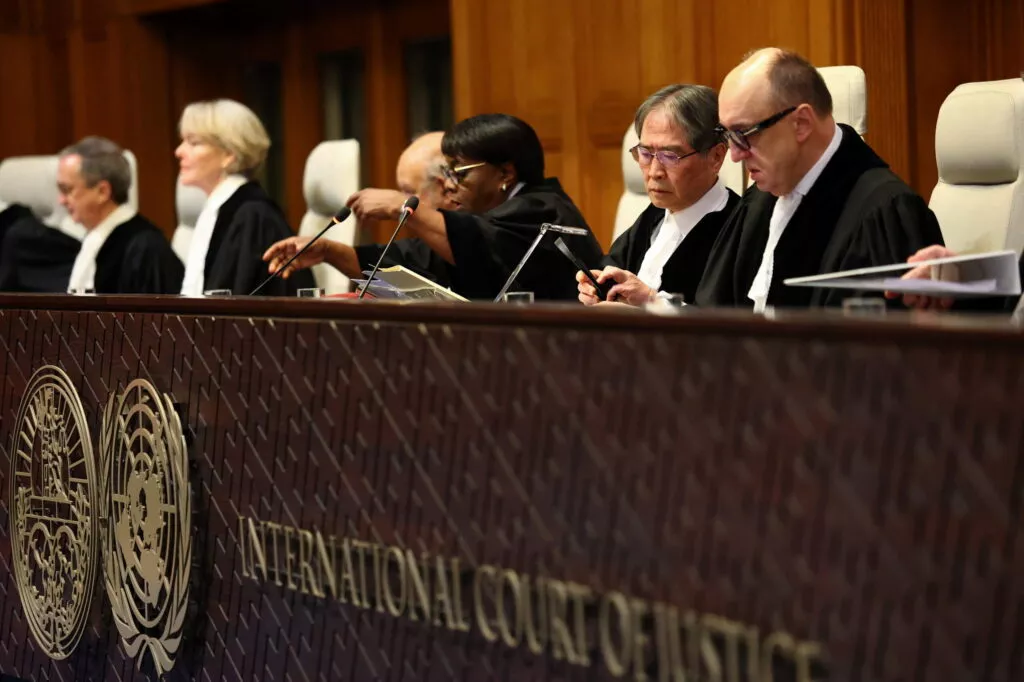
In January 2026, the International Court of Justice (ICJ) held three weeks of hearings on the merits of the Rohingya genocide case, which The Gambia brought against Myanmar in November 2019 under the Convention on the Prevention and Punishment of the Crime of Genocide (the Genocide Convention).
Though the final determination could take at least six months, the case has already reshaped the ICJ’s jurisprudence in significant ways, with implications for the two other genocide-related cases pending before the Court — South Africa’s case against Israel and Ukraine’s case against Russia.
One of the key questions to be settled in The Gambia v. Myanmar is the right of states to bring a case to enforce obligations erga omnes partes — those which are owed by a state to all the other states parties within a multilateral convention.
Myanmar sought to dismiss the case on standing grounds, arguing that The Gambia lacked any connection to the Rohingya or events in Rakhine State. The Court rejected Myanmar’s argument with its January 2020 decision which it affirmed in 2022, holding that ‘any State party to the Genocide Convention may invoke the responsibility of another State party’, including by instituting court proceedings. The obligation to prevent and punish genocide, the ICJ reasoned, is owed to all parties collectively. Accordingly, every state party has a legal interest in compliance. This provided greatly expanded opportunities for prosecuting human rights cases at the ICJ.
The Court’s reasoning builds upon its earlier recognition in the 1970 Barcelona Traction that certain obligations are owed to the international community, as well as its 2012 Belgium v. Senegal decision under the Torture Convention. But The Gambia’s case provided the first definitive application of this principle to the Genocide Convention itself.
The significance of this clarification became apparent in December 2023 when South Africa instituted proceedings against Israel concerning allegations of genocide in Gaza. South Africa specifically cited the precedent set in The Gambia’s case and Israel did not challenge its standing despite South Africa having no direct links to the alleged genocide. Without this precedent, South Africa’s case would likely have been delayed by protracted litigation over standing.
The Gambia’s case also contributed to the ICJ’s approach to provisional measures — emergency orders issued while a case is ongoing. For the first time in a Genocide Convention dispute, the ICJ applied a plausibility doctrine developed in other case law, adopting a more preventative approach.
The ICJ ordered measures on the basis that the Rohingya’s right to protection from acts of genocide and The Gambia’s right to seek Myanmar’s compliance with the Genocide Convention were plausible. In reaching this conclusion, the ICJ referred to its 2007 Bosnia merits ruling that genocidal intent could be inferred from a pattern of conduct and cited UN fact-finding reports on alleged killings and systematic burning of villages in Myanmar.
South Africa similarly relied on UN reports as evidence of Israel’s alleged genocidal acts in 2023. The ICJ leant heavily on The Gambia’s precedent in awarding provisional measures in January 2024, with some additions like requiring measures to ensure the delivery of humanitarian aid and obligations for Israel to report on its efforts in a shorter timeframe.
Though the grounds of Ukraine v. Russia are different, the influence of The Gambia’s case is still significant. The Court is not assessing whether Russia is committing genocide in Ukraine in the same sense as the allegations against Myanmar or Israel. Rather, it will test Ukraine’s assertion that Russia falsely invoked the Genocide Convention to justify its use of force.
The Gambia’s case has nonetheless shaped the procedural landscape in which Ukraine v. Russia unfolds, with practical consequences for intervention. In Ukraine v. Russia, 33 states sought to intervene under Article 63 of the ICJ Statute. The Court admitted all but one. The extraordinary scale of third-state participation reflects the Court’s recognition that interpretation of the Genocide Convention has implications for all state parties.
When the decision on the merits of The Gambia’s case is made likely later this year, it will carry significant weight. The ruling will address the evidentiary threshold for genocidal intent and provide recognition and reparation for the suffering of the Rohingya people if successful, although enforcement will be difficult.
But regardless of the judgment, the case has already altered the terrain of international human rights litigation. It has clarified who may enforce international legal instruments like the Genocide Convention and strengthened the ICJ’s use of provisional measures in genocide-related disputes. Above all, it has underscored the multilateral character of litigation under a treaty designed to protect the most fundamental values of the international legal order.
Adam Simpson is Senior Lecturer in International Studies at Adelaide University.
Juliette McIntyre is Senior Lecturer in Law at Adelaide University.
East Asia Forum