Cambodian-Thai conflict exposes ASEAN limits
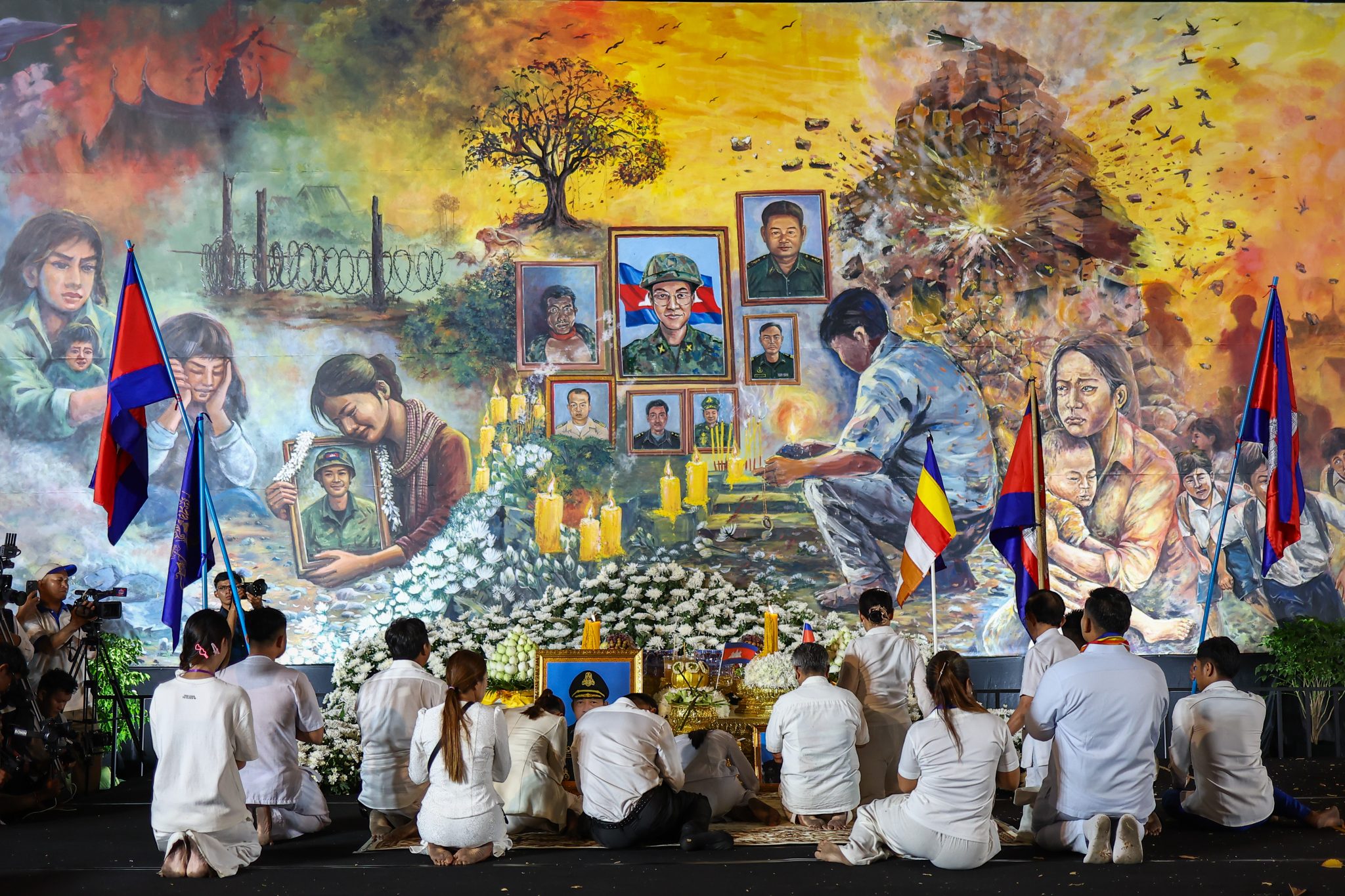 Dec. 24, 2025: A tribute in Siem Reap, Cambodia, to soldiers and civilians who have fallen victim to the Cambodian-Thai conflict. © Getty Images
Sporadic clashes highlight ineffective ceasefires for historical disputes, ASEAN’s lack of agency and a likelihood external actors will shape the region’s outcomes.
The long-running border dispute between Cambodia and Thailand broke into open conflict in May and December 2025, causing over 100 deaths and displacing hundreds of thousands of people. A fragile ceasefire and continued sporadic skirmishes have followed, while mistrust still reigns. Southeast Asia faces significant internal security challenges in multiple arenas including ongoing civil war in Myanmar and multilateral naval tensions in the South China Sea.
The countries are all members of the Association of the Southeast Asian Nations (ASEAN), a grouping of 11 neighboring states aiming to promote economic growth and regional stability. Yet members being embroiled in armed conflict with each other, causing both military and civilian fatalities, underscores the challenges that the regional bloc must address if it is to maintain credibility and geopolitical sway.
Post-colonial disagreements endure
The Cambodian-Thai tensions – recurring clashes between direct neighbors − stem largely from poorly drawn borders in 1907 French colonial-era maps. This gave way to long-standing territorial disputes, culminating in repeated military conflicts. Questions such as who controls a mountaintop site dating back to the early 9th century are emblematic of today’s deadlock.
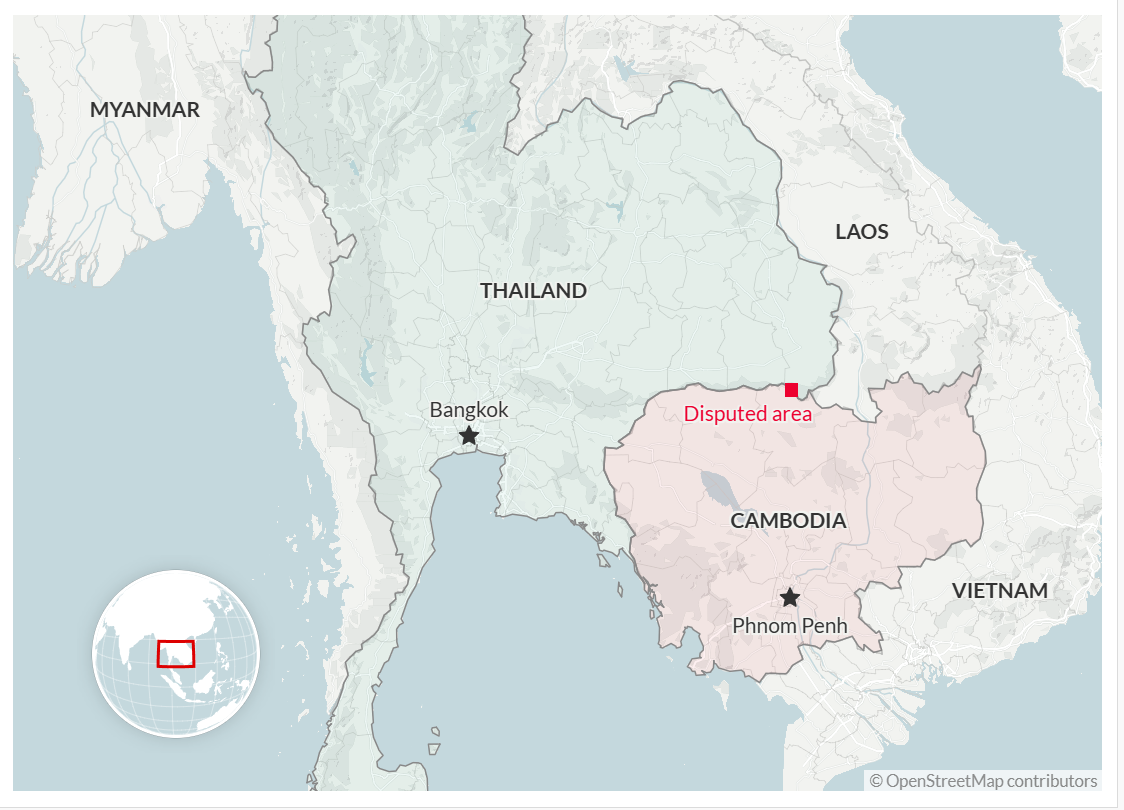
Possession of the revered Preah Vihear temple – originally Hindu and later Buddhist − and its environs atop Poy Tadi, a steep cliff on the natural border between today’s two ASEAN member countries, has long been contested. Thailand occupied the area in 1954 after Cambodia’s independence from France. Following unsuccessful diplomatic efforts, Phnom Penh decided to take the case, which included discussions to resolve larger border disputes, to the International Court of Justice (ICJ) in 1959.
In a 1962 judgment, the ICJ found that the temple itself was located on Cambodian territory. Thailand withdrew following the verdict, but the issue of the adjacent territory was left unresolved.
During an interlude of relative peace, the two countries became members of ASEAN: Thailand as a founding member in 1967 and Cambodia as the 10th member in 1999.
In 2007, Cambodia requested that the temple be designated a UNESCO World Heritage Site, and presented a map illustrating the location. Thailand objected, claiming that the proposal also included Thai land surrounding the temple. Bangkok’s formal objection resulted in a minor delay in the inscription process; however, the 11th-century Preah Vihear temple was put on the World Heritage List in July 2008.
The decision revived the previous feud and resulted in a military conflict between the two disputants, with both nations deploying their troops to the border area. After diplomatic efforts, each side withdrew its forces in late August of that year to end a month-long standoff. However, the tensions resurfaced in early October when Thai and Cambodian troops engaged in a brief exchange of fire in the disputed locale. A few days later, two Thai soldiers were injured by landmines in the border area. Yet another firefight transpired in mid-October, this time resulting in the deaths of Cambodian soldiers.
Major incidents between 2008 and 2011 claimed the lives of 34 people, while others were injured and displaced. The occurrences indicated that the ICJ decision allowed for flexible interpretation in the adjacent, disputed 4.6 square-kilometer area, resulting in the on-and-off border confrontations that keep the Southeast Asian nations at loggerheads.
In 2013, the ICJ unanimously ruled that the 1962 verdict established Cambodia’s sovereignty over the entire territory of the Preah Vihear promontory, and mandated Thailand withdraw its forces from the area. While the ruling was deemed a win for Cambodia, it triggered a nationalist protest in Thailand demanding the army protect the disputed territory.
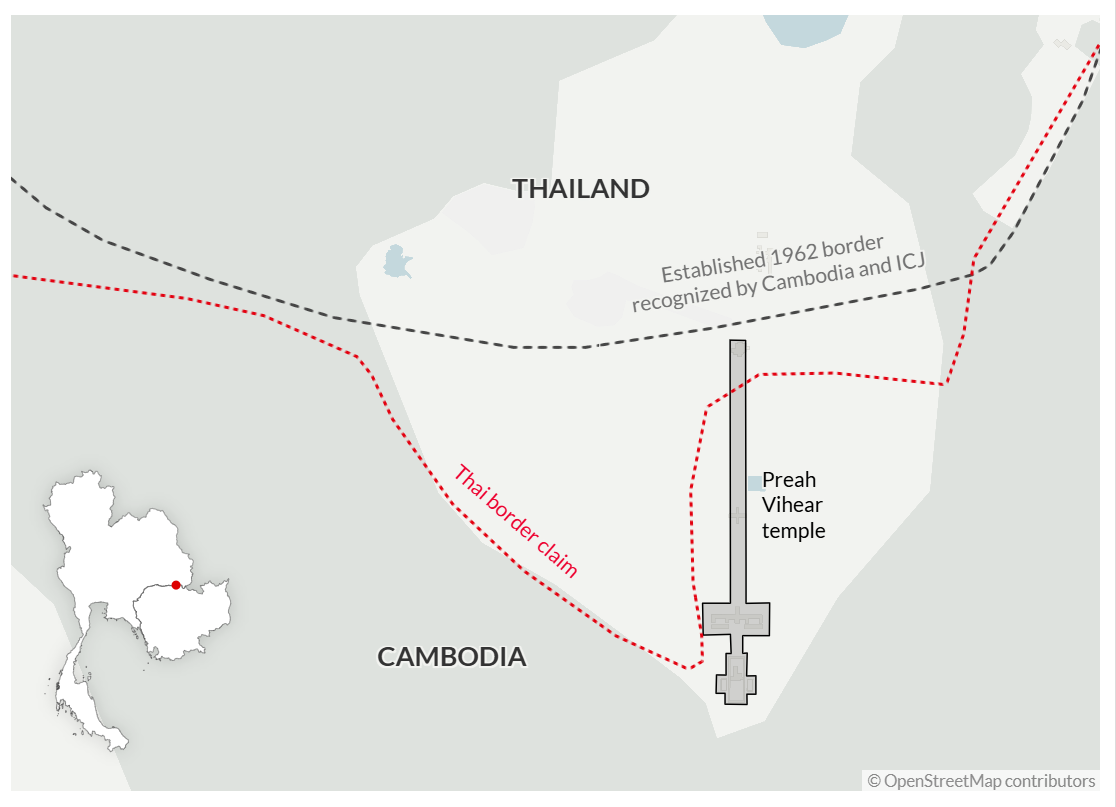
In the same year, the court maintained that it lacked the jurisdiction to draw a border line on contested territory near the temple, allowing both parties to claim victory. Although the verdict was successful in lowering the overall heat, tension in adjacent areas remained.
Current Cambodian-Thai situation, ASEAN and Trump
In 2025, the conflict surrounding the disputed area reignited. In the early part of last year, the two countries engaged in a contentious verbal altercation on the performance of a patriotic song by Cambodians during a visit to the temple, prompting diplomatic efforts to prevent future misunderstandings.
In May, Cambodia and Thailand engaged in a confrontation that included brief gunfire between troops near the Chong Bok area, an undemarcated area between the two that has long been prone to disputes. In July, Phnom Penh and Bangkok engaged in a full-scale armed conflict, with the two countries exchanging gunfire and air strikes, resulting in 32 deaths between the two states. The quick escalation prompted United States President Donald Trump to respond by threatening to impose a 36 percent tariff on Thailand and up to 49 percent on Cambodia. The levies were later set at 19 percent after a ceasefire was agreed.
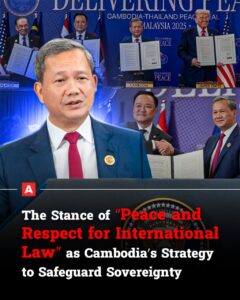
During his October trip to Malaysia for the ASEAN Summit, President Trump urged the two prime ministers to sign a peace declaration. This declaration formalized a ceasefire between Phnom Penh and Bangkok to halt the violent conflict. It established an ASEAN observer team to ensure the ceasefire holds, the release of Thai prisoners of war and the evacuation of heavy weapons from the border.
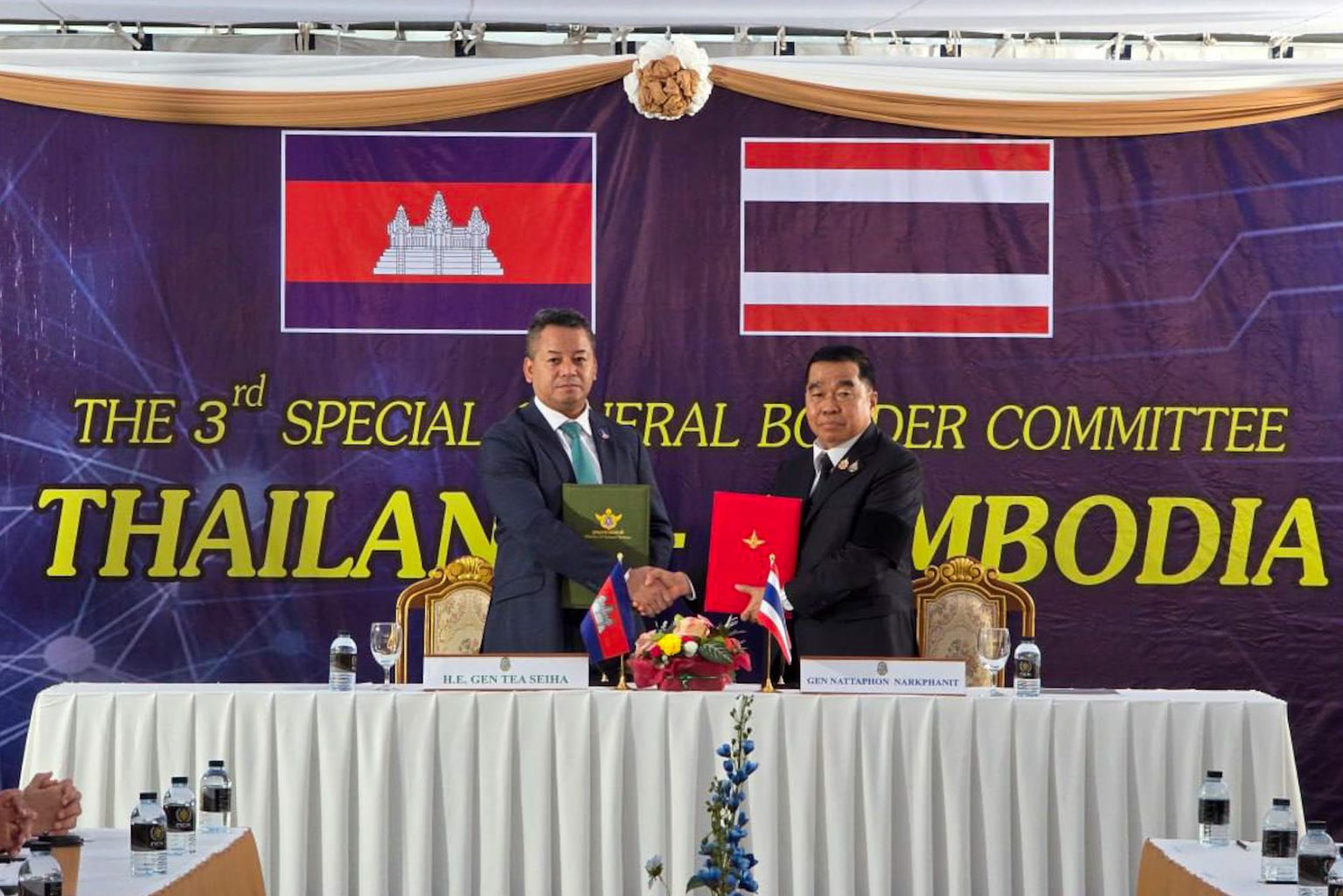
The pause in violence was short-lived. In early December, Thailand suspended the barely month-old peace deal, resulting in the resumption of air strikes and ground operations. All parties signed a fresh, albeit tenuous, ceasefire deal aimed to halt weeks of intense border fighting that claimed at least 101 lives and displaced over a half million on both sides.
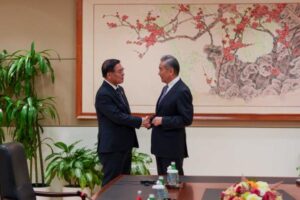
Two days after the truce, Thailand and Cambodia’s top diplomats travelled to China to meet with its foreign minister for a trilateral meeting in which Beijing urged both parties to permanently halt the fighting.
Despite the positive statements from the meeting, the December truce appears as fragile as the one brokered in July. Thailand’s army has accused Cambodia of breaking the ceasefire by flying drones into Thai airspace, which Phnom Penh has denied. As a result, Thailand postponed the release of 18 soldiers held in its custody, claiming Cambodian treaty violations. The soldiers were nevertheless released on December 31.
The event served as evidence that economic pressure, such as tariffs, may be used to settle security issues and result in temporary pauses to fighting. Yet a lasting cessation of hostilities is elusive; regional actors sometimes choose to bear economic costs to prioritize national security and sovereignty.
ASEAN countries in the crosshairs
Southeast Asia has emerged as a focal point in the competition between the U.S. and China. The region possesses a strategic maritime route, significant economic potential and is recognized for its nonaligned stance. The border conflicts, along with ongoing tensions in the South China Sea – primarily between ASEAN members and Beijing – or the sixth year of civil war in Myanmar, have attracted attention from the major powers.
Yet the territorial disputes between Cambodia and Thailand appear immune to a long-term resolution by external powers, including China. Ceasefire agreements, such as those in 2025, are merely temporary band-aids unable to overcome persistent sticking points such as deep-rooted historical grievances, nationalist sentiment and domestic political circumstances.
Border disputes between Thailand and Cambodia put ASEAN’s credibility in managing the regional conflict to the test. Cambodia’s decision to turn to the United Nations Security Council for assistance rather than ASEAN demonstrates a lack of trust and agency in the group.
The Myanmar war has resulted in millions of refugees fleeing their homes with many relocating in neighboring Bangladesh or Thailand. It has also fueled illegal arms and drug trafficking and further stoked frustrations with the bloc’s inability to resolve conflicts within its territory.
These developments reveal a flaw in the “ASEAN Way,” an approach that values process over outcomes, resulting in temporary ceasefires rather than long-term solutions. The bloc is increasingly regarded as an observer rather than a dealmaker.
Scenarios
Likely: Tensions to simmer, revealing ASEAN’s lack of agency
The ongoing Cambodian-Thai conflict is a sign of the need to transition to a more robust, binding security mechanism in Southeast Asia. While the issue’s internationalization raises the possibility of future escalation due to increased U.S.-China competition in the region, ASEAN’s ineffectiveness in managing internal conflict creates the need for external intervention.
Despite Cambodia’s request for the ICJ to intervene in the disputes, Thailand has maintained its stance of rejecting the ICJ’s compulsory jurisdiction since 1960. The two sides are likely to continue their discussions through mutually agreed-upon bilateral structures, such as the Joint Boundary Commission and General Border Committee. Resolution is unlikely.
The border conflict, which resulted in civilian displacement and violent clashes, is considered a violation of the 1976 Treaty of Amity Cooperation in Southeast Asia (TAC), a legally binding code for inter-state relations that mandates peaceful resolution. TAC violations have the potential to undermine ASEAN’s reputation, as well as its core objectives of nonviolence and peaceful conflict resolution. This is expected to exacerbate the distrust that member states have in ASEAN.
Unlikely: ASEAN relinquishes noninterference, China benefits
The Cambodian-Thai crisis demonstrated the limitations of ASEAN’s noninterference policy, which required military attaches from seven ASEAN member states to participate on an observer team, thereby emphasizing the importance of external mediators in certain scenarios. The noninterference approach may delay ASEAN’s decisive response to crises. However, it is unlikely that the bloc will change this approach, as it is critical to preserve unity among its politically diverse membership for geoeconomic reasons.
The conflict is a classic security dilemma, with the one’s defensive move perceived as an aggressive threat by the other. At the same time, Cambodia, which is smaller in size and population, sees Thailand as a threat. These perceptions contribute to mistrust between the two and render a long-term truce improbable in the foreseeable future.
The Philippines, as this year’s ASEAN chair, will face increased pressure to address important security issues. The Code of Conduct (CoC) negotiations in the South China Sea have been ongoing for the past two decades. Manila intends to expedite the negotiations this year and advocate for a legally binding CoC. Nonetheless, the negotiations will be a challenge due to rising maritime tensions, as well as Beijing’s preference for a non-legally binding framework.
An additional factor expected to complicate the task is the growing defense alliance between the Philippines and the U.S. China sees the development, which includes increased defense cooperation and joint patrols, as an attempt to deter its aggressive behavior. As a result, China opposes a CoC limiting its operations while allowing the Philippines to benefit from American security guarantees.
Source: GIS