Cambodia’s Border Tensions: Between Defending Sovereignty and Safeguarding People’s Livelihoods
 Cambodia’s Border Tensions: Between Defending Sovereignty and Safeguarding People’s Livelihoods
Since the ceasefire between Cambodia and Thailand on December 27, 2025, the situation along the border has remained fragile and unsafe for displaced civilians living along the Cambodia–Thailand border. Thai military forces have continued actions encroaching on Cambodian territory in areas under their temporary control. These actions include road construction, placement of containers, installation of barbed wire, destruction of civilian homes, and preventing more than 40,000 displaced people from returning to their residences.
Such actions constitute violations of human rights and international law, including the right to housing, economic and social rights, and conventions such as the Convention on the Rights of the Child, as well as other treaties recognized and signed by Cambodia and the international community.
In this context, the Royal Government of Cambodia has adopted the strategy of “quiet but not passive,” meaning that it avoids the use of force that could undermine peace or violate agreements, while firmly upholding national sovereignty and protecting the rights of its citizens. Cambodia’s Ministry of Foreign Affairs and International Cooperation has sent multiple diplomatic notes of protest to Thailand and international institutions, demanding full compliance with international law.
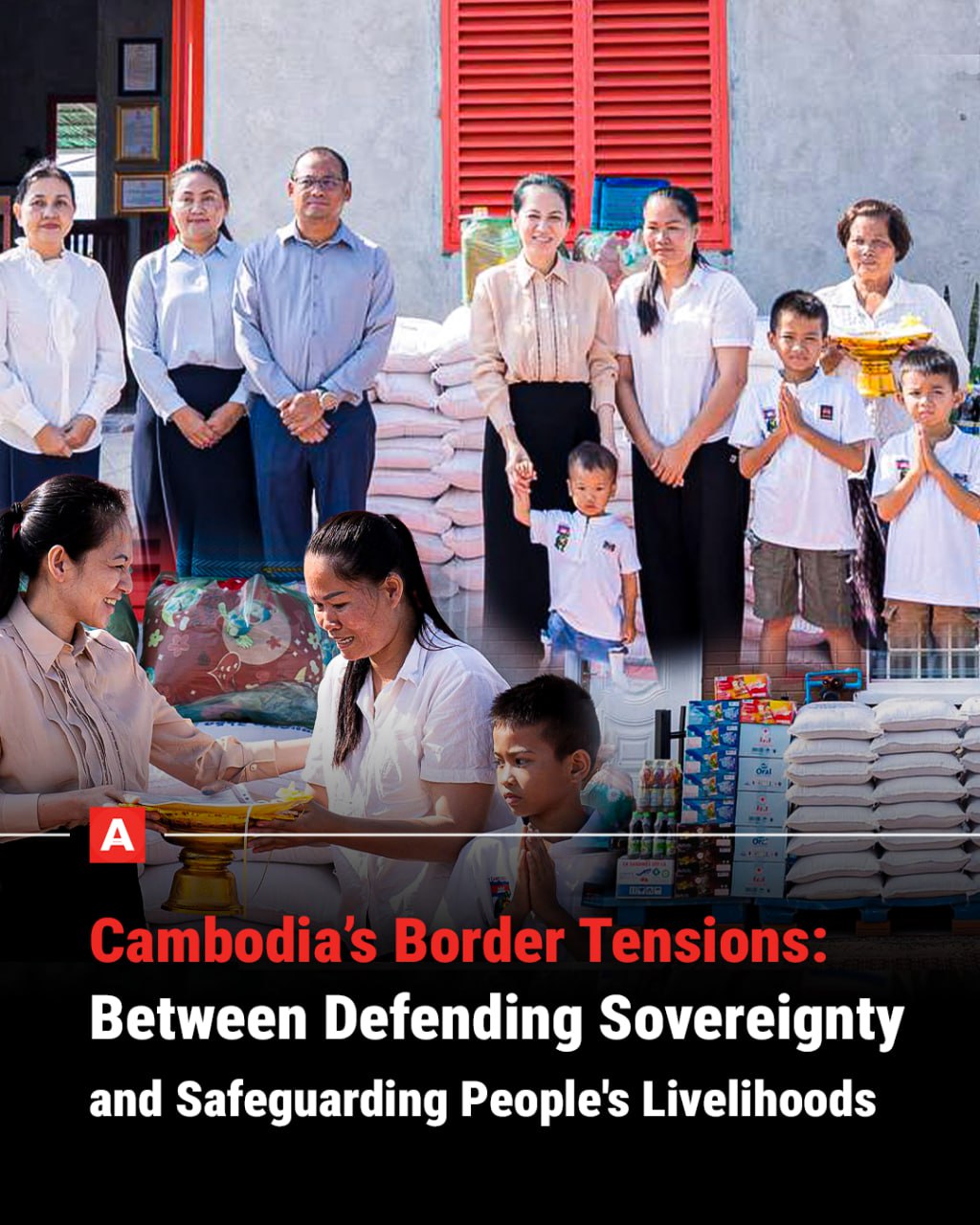
Domestically, Cambodia has also made significant efforts to support displaced citizens by establishing temporary shelters and providing food, clean water, electricity, and healthcare services, along with educational support for children. These measures do not indicate any intention by the government to abandon its territorial claims over areas unlawfully occupied by Thai forces. Rather, they reflect a practical response to address the immediate needs and livelihoods of Cambodian citizens during this crisis, ensuring they have safe and decent living conditions until they are able to return home.
All these actions demonstrate the strong political will of the head of government in fulfilling the highest responsibility of protecting national sovereignty and the Cambodian people. This stands in stark contrast to accusations and misinformation spread by opposition groups, which claim that addressing the needs of displaced persons equates to abandoning territory or trading sovereignty for peace with neighboring countries.
In interviews with international media outlets such as Reuters and Fox News, Cambodian Prime Minister Hun Manet has clearly stated that Thai forces continue to unlawfully occupy Cambodian territory and prevent citizens from returning home. Therefore, Cambodia’s strategy reflects a dual approach: on one hand, asserting territorial sovereignty in accordance with international law; and on the other, alleviating the burden on citizens through social assistance and public services in education and healthcare.
This approach underscores the appropriateness, responsibility, and high level of accountability of the Royal Government in maintaining peace while promoting development for citizens affected by acts of aggression.
In conclusion, Cambodia’s “quiet but not passive” strategy demonstrates political wisdom and responsibility in defending sovereignty while protecting the livelihoods of its people. It represents a comprehensive approach that combines active diplomacy, domestic security management, and social assistance-providing reassurance for peace, stability, and the well-being of those living along the Cambodia-Thailand border who are facing hardship.
Such urgent measures reflect Cambodia’s commitment to doing everything possible to safeguard sovereignty, uphold international law, and ensure decent living conditions for its citizens-balancing both the protection of people’s livelihoods and the pursuit of territorial claims on the international stage.
By: Pin Vichey – Political Science Scholar