Cambodia Expands Digital Expertise Abroad, Assisting Six Countries With E-Government Platforms
 Cambodia Expands Digital Expertise Abroad, Assisting Six Countries With E-Government Platforms
DILI, June 2, 2026 — Cambodia is helping several countries develop digital government platforms, reflecting the country’s growing technological capabilities and enhancing its international standing, Minister of Post and Telecommunications Chea Vandeth said on Monday.
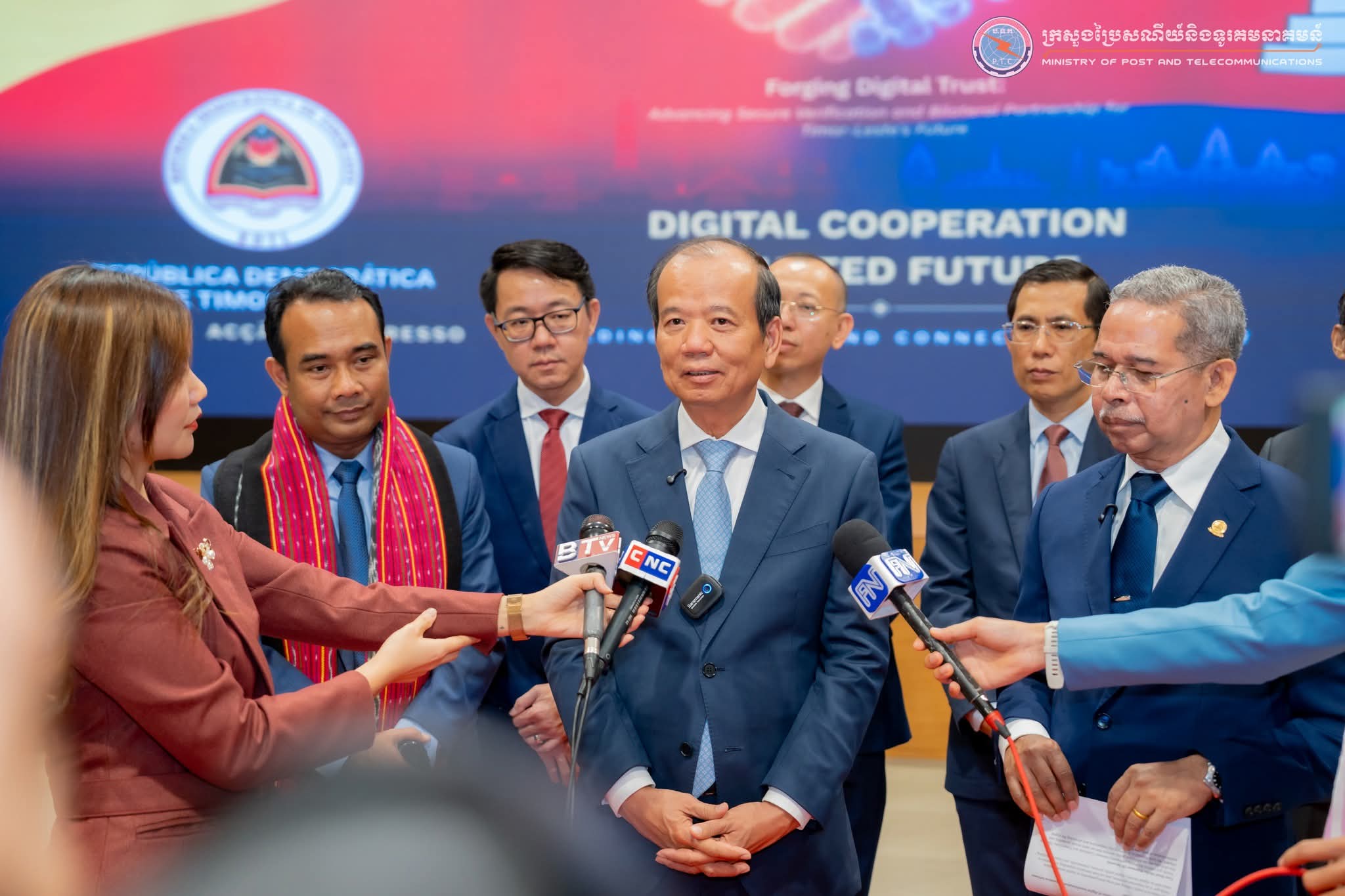
Speaking during the launch of Timor-Leste’s verify.gov.tl document verification platform in Dili on June 1, Chea Vandeth said Cambodia is not only supporting Timor-Leste but is also cooperating with the Philippines, Malaysia, Laos, Bangladesh, Nepal and other countries in digital platform development.
He described the initiative as a source of national pride, noting that Cambodia has transformed from a country that once relied heavily on international assistance into one capable of providing technical support and digital solutions to other nations.
“This is a matter of national prestige,” the minister said, emphasizing that Cambodia’s digital expertise is now being recognized beyond its borders.
The remarks came during a ceremony co-chaired by Chea Vandeth and Timor-Leste’s Minister of Transport and Communications, Miguel Marques Gonçalves Manetelu, marking the official launch of verify.gov.tl, a national platform developed with technical assistance from Cambodia.
The platform enables the verification of official documents through QR-code technology and represents one of the key outcomes of digital cooperation between the two countries.
Cambodia’s growing role in digital transformation has been driven by the development of government digital infrastructure, including platforms for identity verification, public services and digital document authentication. Officials say these experiences are increasingly attracting interest from developing countries seeking cost-effective and scalable digital government solutions.
The cooperation with Timor-Leste and other partner countries underscores Cambodia’s ambition to position itself as a regional contributor in digital governance and public-sector innovation, while strengthening international partnerships through technology and knowledge sharing.