Peace as Principle, War as Fiction: A Response to Misleading Thai Media Narratives
 Peace as Principle, War as Fiction: A Response to Misleading Thai Media Narratives
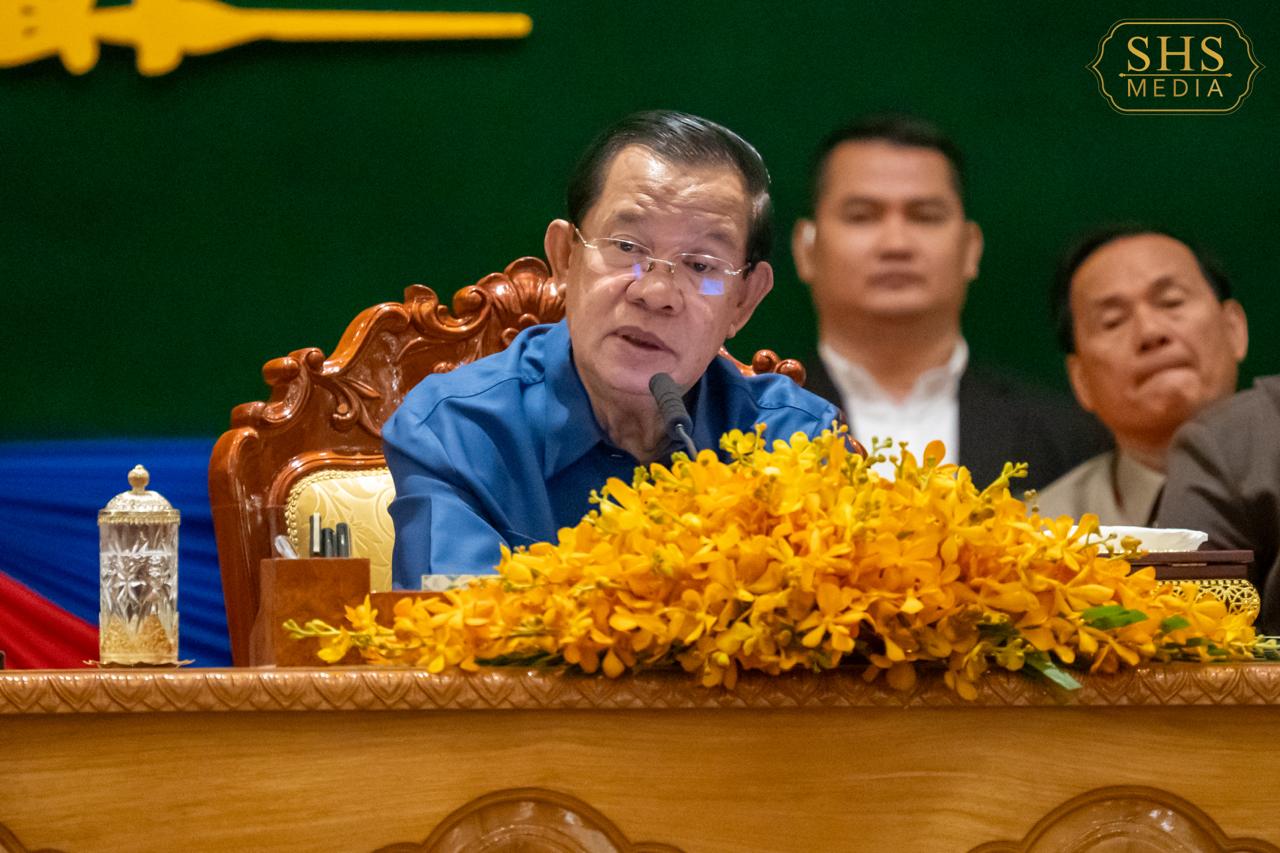
The reporting by certain Thai media outlets regarding remarks made by Samdech Techo Hun Sen, Acting Head of State of the Kingdom of Cambodia, on 9 June 2026 not only reflects an interpretation that departs from the original meaning of his statement, but also risks creating public misunderstanding and negatively affecting the atmosphere of dialogue and the peaceful pursuit of solutions between Cambodia and Thailand.
Some Thai media organizations have attempted to create the impression that Cambodia is presenting “two options” for resolving the border issue with Thailand: the use of military force or a peaceful settlement. In reality, what Samdech Techo clearly stated was that Cambodia has never regarded the use of force as a political option for resolving border disputes. Rather, he merely explained a universal reality in international relations: conflicts are generally resolved through one of two paths—war or peace—and Cambodia has unequivocally chosen the path of peace.
Samdech Techo Hun Sen’s remarks demonstrate that peace is not merely Cambodia’s preferred option at the present moment; it is a firm political principle that has been continuously upheld and incorporated into the long-term vision of the Cambodian People’s Party. The inclusion of this policy in the party’s political platforms for the 2027 and 2028 elections sends a clear political message that Cambodia remains committed to negotiation and peaceful means, rather than confrontation through force, in addressing border issues with neighboring countries.
Therefore, selectively extracting portions of his remarks and portraying them as evidence that Cambodia is considering a military option constitutes a complete distortion of reality and is unacceptable. This is not an honest presentation of information; rather, it is the selective use of isolated statements to construct a new meaning that diverges from the speaker’s original intent. From a journalistic standpoint, such conduct violates the fundamental principles of accuracy, balance, and responsibility to the public.
The question that should be raised at this moment is not, “Why has Cambodia chosen peace?” The answer to that question has already been made abundantly clear. Instead, the more pertinent question is: Why are certain Thai media outlets attempting to portray Cambodia as a party contemplating military action when Cambodian leaders are explicitly calling for the peaceful resolution of border disputes?
The dissemination of information in such an unprofessional manner cannot simply be dismissed as a technical error. In a context where border issues remain highly sensitive and capable of stirring nationalist sentiment, the distortion of statements made by Cambodian leaders can be used as a tool to shape misleading public perceptions. When information is employed to generate emotion rather than convey facts, the media risks losing its role as an institution serving the public interest and may inadvertently become an instrument of political agendas.
More importantly, Cambodia has not only chosen peace but has also categorically rejected any border demarcation or territorial change brought about through the use of force. This is not a threat; rather, it is a fundamental principle of international law, which does not recognize the acquisition of territory through force. Consequently, rejecting situations created through coercion or fait accompli is not an act of belligerence but a defense of the rule of law and respect for international legal principles.
Indeed, Samdech Techo Hun Sen also conveyed a clear message to the Thai side: if Thailand genuinely has no intention of encroaching upon Cambodian territory, then it should allow the Joint Boundary Commission (JBC) to continue its work of surveying and demarcating the border in accordance with agreements previously reached by both countries. This represents a solution grounded in law, technical mechanisms, and negotiation—not in force or political pressure.
Despite the spread of misinformation or misleading interpretations by certain Thai media outlets, political decisions concerning the resolution of border disputes should be based on political will, reason, responsibility, and a genuine commitment by Thai leaders to seek peaceful solutions. If decisions are driven by emotion or influenced by misleading information, they will not only fail to resolve existing problems but may also create new crises and tensions. In particular, references to war that are not based on the actual content of Cambodian leaders’ speeches constitute a serious misrepresentation that can lead to grave misunderstandings.
Leaders of a sovereign state should make decisions based on facts, legal principles, and the nation’s long-term interests—not under the influence of misinformation or public pressure generated through irresponsible reporting.
In the end, facts remain facts. Cambodia has chosen peace as both a principle and a long-term strategy for resolving border issues with Thailand. By contrast, attempts to transform a message of peace into a message of war are merely a fabrication that bears no resemblance to reality. At a time when both countries need trust and sincere dialogue, those who distort facts in order to create confrontation are the ones whose true intentions should be questioned—not those who are calling for peace.
By Pin Vichey
Political Science Scholar