Cambodia Rejects Thailand’s Pretext: UNCLOS and the JBC Are Two Distinct Legal Mechanisms That Cannot Be Linked
 Cambodia Rejects Thailand’s Pretext: UNCLOS and the JBC Are Two Distinct Legal Mechanisms That Cannot Be Linked
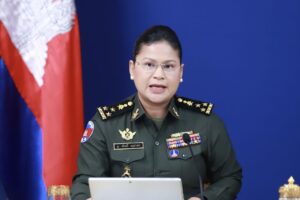
The statement issued by the spokesperson of Cambodia’s Ministry of Foreign Affairs and International Cooperation is not merely a response to remarks made by Thailand’s Minister of Foreign Affairs. Rather, it provides a clear explanation of Cambodia’s legal position under international law while reminding the international community of the reasons why Thailand is using the issue as a pretext to delay negotiations on the land boundary.
At the heart of the current dispute is Thailand’s assertion that Cambodia’s decision to initiate Compulsory Conciliation under the United Nations Convention on the Law of the Sea (UNCLOS) has effectively “closed the door” to negotiations over the land boundary. However, when examined through the lens of international law, this argument lacks a solid legal foundation because it conflates two entirely different legal issues that are governed by separate legal frameworks and dispute-settlement mechanisms.
The land boundary and the maritime boundary are not governed by the same body of law. The Cambodia–Thailand land boundary is regulated by the 1904 Convention, the 1907 Treaty, the maps prepared by the Franco-Siamese Mixed Commission, the International Court of Justice (ICJ) Judgments of 1962 and 2013, and the 2000 Memorandum of Understanding (MoU), which both countries agreed would serve as the working framework for the Cambodia–Thailand Joint Boundary Commission (JBC).
In contrast, maritime boundary issues are governed by UNCLOS, the international legal framework for the governance of the seas. Cambodia turned to this mechanism only after Thailand itself unilaterally terminated the 2001 Memorandum of Understanding (MoU 2001), arguing that the agreement had failed to produce meaningful progress. Consequently, there is no sound legal basis for merging these two distinct issues into a single negotiating framework.
In this context, Cambodia is sending a clear message that its decision to invoke the UNCLOS dispute-settlement mechanism constitutes the legitimate exercise of a sovereign state’s legal right to seek a peaceful resolution to the maritime boundary dispute after no effective bilateral mechanism remained available. This decision does not represent a rejection of bilateral negotiations over the land boundary, because land and maritime boundary issues are separate matters governed by different legal regimes and different dispute-settlement procedures.
Conversely, if Thailand uses Cambodia’s initiation of UNCLOS proceedings as a justification to suspend or delay the work of the Joint Boundary Commission (JBC), such a justification cannot reasonably be accepted. Rather, it would amount to a deliberate attempt to postpone negotiations, reflecting a lack of genuine political will to continue bilateral discussions on the land boundary. If any party is effectively closing the door to bilateral negotiations on the land border, it is not Cambodia. Instead, it is Thailand that is linking the maritime dispute to the land boundary issue in order to obstruct further progress in land boundary delimitation.
What further weakens Thailand’s position is the fact that Thailand’s own Prime Minister publicly announced in Cebu, the Philippines, that Thailand had decided to terminate the 2001 Memorandum of Understanding with Cambodia. This decision meant that Thailand itself unilaterally withdrew from the only formal bilateral mechanism established to address the maritime boundary dispute, despite Cambodia’s call for the agreement to remain in force.
Furthermore, Thailand has previously expressed support for the use of UNCLOS mechanisms in resolving maritime disputes. Yet today, it is using Cambodia’s reliance on the very same mechanism as a reason to suspend land boundary negotiations. Such an inconsistent position not only reveals contradictions in Thailand’s policy but may also prompt the international community to question Thailand’s sincerity and genuine commitment to respecting and implementing the principles of international law.
Cambodia’s statement therefore carries significant political and strategic implications. It demonstrates Cambodia’s determination to dismantle Thailand’s attempt to artificially link two unrelated legal issues into a bargaining tool for delaying negotiations or increasing leverage. Instead, Cambodia insists that each issue should be resolved within the legal framework and procedures that have already been mutually agreed upon.
Another important diplomatic element is Cambodia’s reference to the support expressed by the Assemblée parlementaire de la Francophonie (APF), which called for the continuation of land boundary demarcation through the Joint Boundary Commission while reaffirming its support for Cambodia’s sovereignty and territorial integrity. Although the resolution is not legally binding, it carries considerable political weight and reflects growing international attention to the issue.
At the same time, Cambodia reiterates the legal significance of the ICJ Judgments of 1962 and 2013, together with the 1904 Convention and the 1907 Treaty, as the legal foundations governing the land boundary. By recalling these instruments, Cambodia underscores that the land boundary dispute is not a matter without legal guidance but one firmly grounded in binding treaties and authoritative international judicial decisions that must be respected.
Finally, perhaps the strongest message contained in Cambodia’s statement is its warning that any indefinite delay in the boundary demarcation process aimed at maintaining continued occupation of Cambodian territory constitutes an unlawful occupation and violates both the Charter of the United Nations and the ASEAN Charter.
Overall, the statement illustrates Cambodia’s effort to shift the dispute from the realm of political maneuvering to one governed by the rule of law. Its central message is that resolving the maritime boundary dispute under UNCLOS and continuing the land boundary process through the Joint Boundary Commission are not mutually exclusive choices. Rather, they are two separate legal processes that should proceed in parallel if Thailand genuinely seeks to resolve all boundary disputes peacefully and in accordance with international law.
By: Pin Vichey