NBC Expects Cambodia’s Economy to Grow 3.9% in 2026
 NBC Expects Cambodia’s Economy to Grow 3.9% in 2026
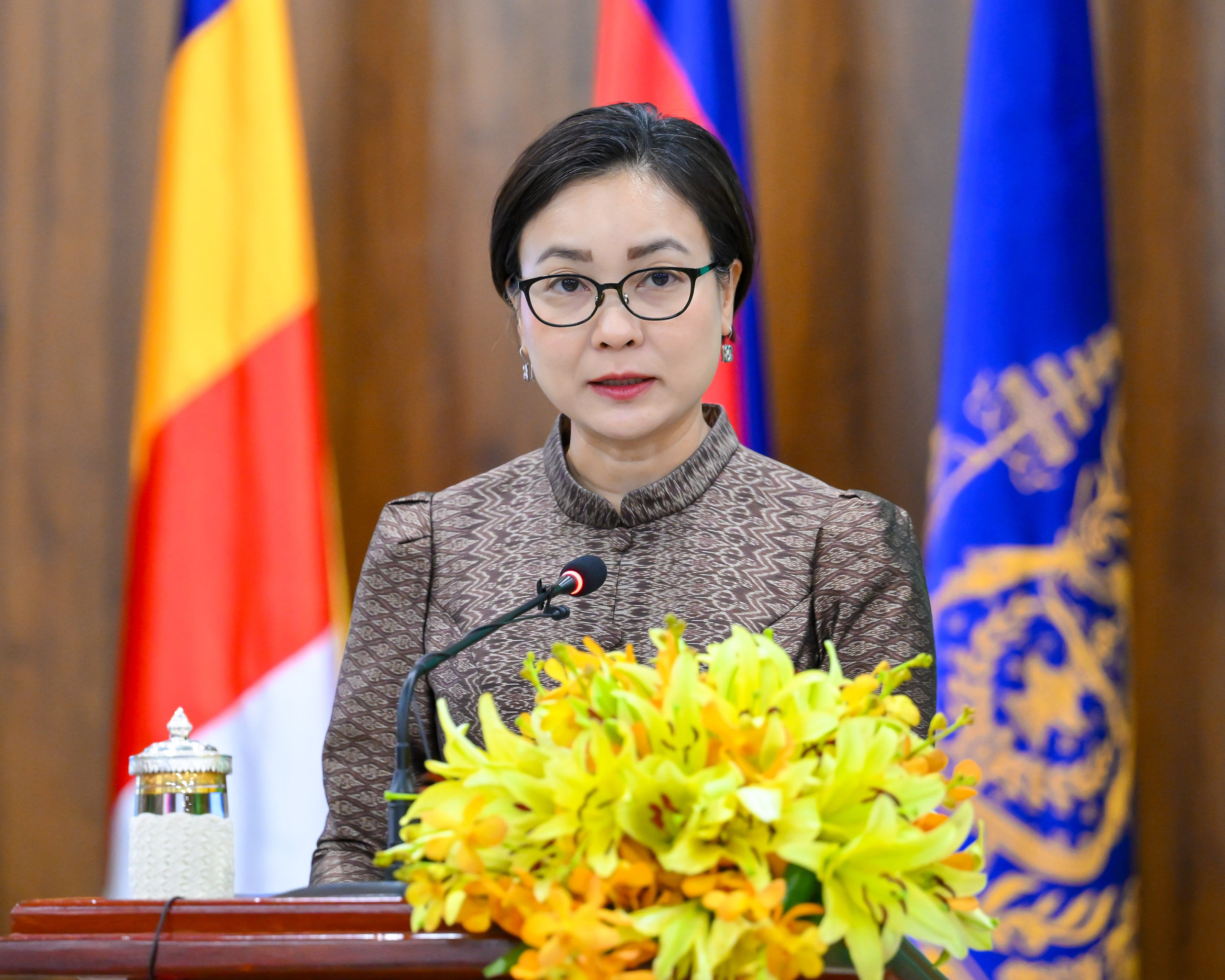
PHNOM PENH, 28 July 2026 — Cambodia’s economy is expected to grow 3.9% in 2026, down from earlier expectations, with exports and foreign direct investment expected to offset weakness in tourism, construction and real estate, National Bank of Cambodia (NBC) Governor Chea Serey said.
Speaking at the central bank’s mid-year review meeting on Tuesday, Chea Serey said the forecast assumes economic growth of 3.5% in the first half of 2026, followed by a recovery to 4.3% in the second half, resulting in full-year growth of 3.9%.
She said the outlook is supported by continued expansion in garment exports, non-garment manufacturing, agriculture, and inflows of foreign direct investment (FDI).
However, Chea Serey noted that the tourism sector has weakened, while the construction and real estate sectors remain subdued, weighing on overall economic performance.
She said Cambodia’s economy continues to face significant external and domestic challenges, including escalating geopolitical tensions, armed conflicts in some regions, and war in the Middle East, which have contributed to higher energy prices, weaker international trade and travel, and increased volatility in global financial markets.
According to Chea Serey, Cambodia has also been affected by domestic factors, including the prolonged border tensions with Thailand, the government’s campaign against cyber-enabled fraud, and lingering impacts from the COVID-19 pandemic.
She noted that following its latest Article IV Consultation, the International Monetary Fund (IMF) revised Cambodia’s 2026 growth forecast down to 3.0%, while the Asian Development Bank (ADB) and the ASEAN+3 Macroeconomic Research Office (AMRO) continue to project growth of around 4.2%.
Despite the lower forecast, Chea Serey said growth within the 3% to 4% range demonstrates the resilience of Cambodia’s economy.
She attributed that resilience to continued political stability, macroeconomic stability and ongoing structural reforms implemented by the Royal Government under Prime Minister Hun Manet, including economic diversification under the first phase of the government’s Pentagonal Strategy.
Chea Serey also noted that on July 23, the Office of the United States Trade Representative (USTR) decided to impose a 10% tariff on Cambodian exports, placing Cambodia on par with regional competitors including Bangladesh, Indonesia, Malaysia and Pakistan, while maintaining lower tariff rates than those applied to the Philippines, Thailand and Vietnam, which face tariffs of 12.5%, according to the central bank governor.