Thailand hits back at ‘inaccuracies’ and UN expert’s Cambodia Finding
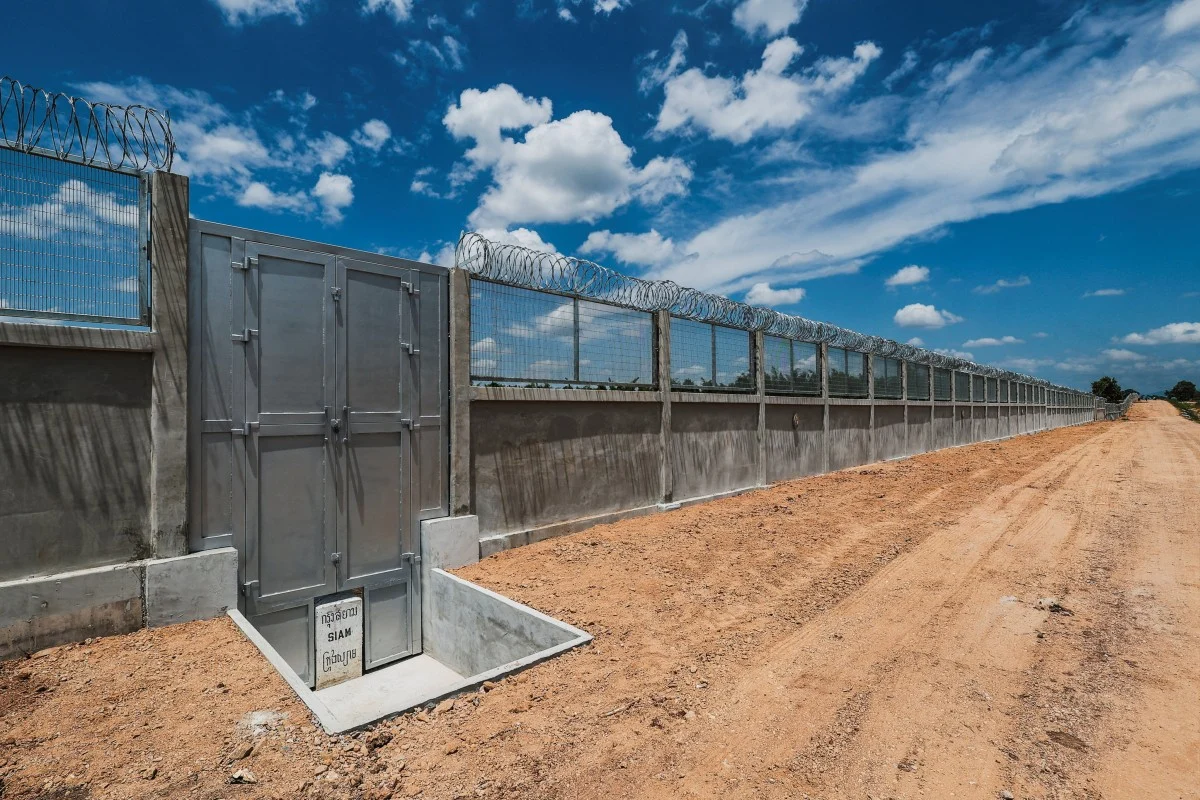 A concrete sign bearing the word “SIAM” is displayed at the base of a gate along a section of the border fence between Thailand and Cambodia in Pong Nam Ron district, Chanthaburi province, in Thailand on July. Photo: Reuters
Bangkok says no efforts to verify the claim of UN Special Rapporteur Thom Andrews with Thai authorities
Aidan Jones / South China Morning Post
Thailand has issued a full-throated rebuttal of comments by a UN human rights specialist whose visit last week to Cambodia found 20,000 people remain displaced by the border war, as the neighbouring nations engage in a battle
for international opinion over their deadly territorial dispute.
Thailand and Cambodia fought a brief but bloody border war in July and December last year that killed scores and displaced roughly a million people across both sides of the disputed frontier.
A December 2025 ceasefire has roughly held, despite occasional firefights across an 800km (497 miles) border now marked by fences, shipping containers and barbed wire.
Both sides blame the other for starting the conflict and targeting civilians, in an eruption of violence between Southeast Asian nations that has sunk their relations to a nadir.
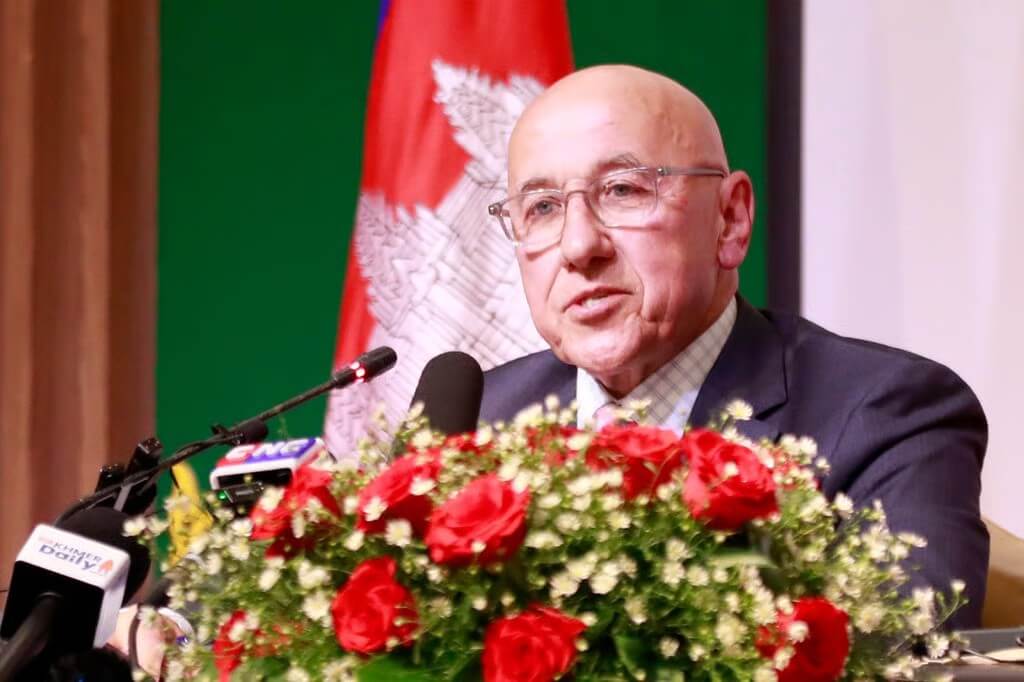
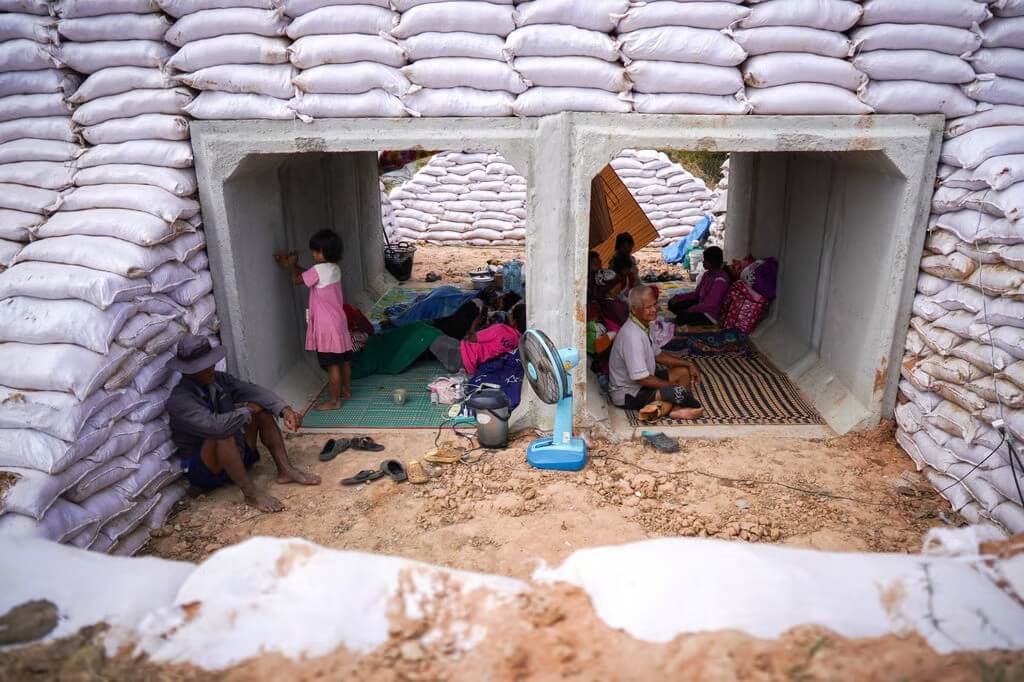
Tom Andrews, a United Nations special rapporteur on human rights in Cambodia, concluded his first trip to the Southeast Asian nation last Friday. He issued a statement saying 650,000 Cambodians had been displaced, with at least 20,000 still unable to return home due to the presence of Thai security forces despite the ceasefire deal.
“I spoke to civilians who told me that they were unable to return to their homes because their villages and towns are now occupied by Thai soldiers,” Andrews later said in a press conference. “It is a matter of international law that those displaced by armed conflict have the right to return to their homes. They deserve to go home.”
Thailand was quick out of the blocks to condemn Andrews for publishing what it claims are one-sided findings, released without endorsement from the UN’s Human Rights Council or efforts to verify the details with Bangkok.
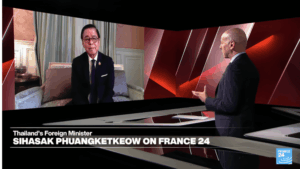
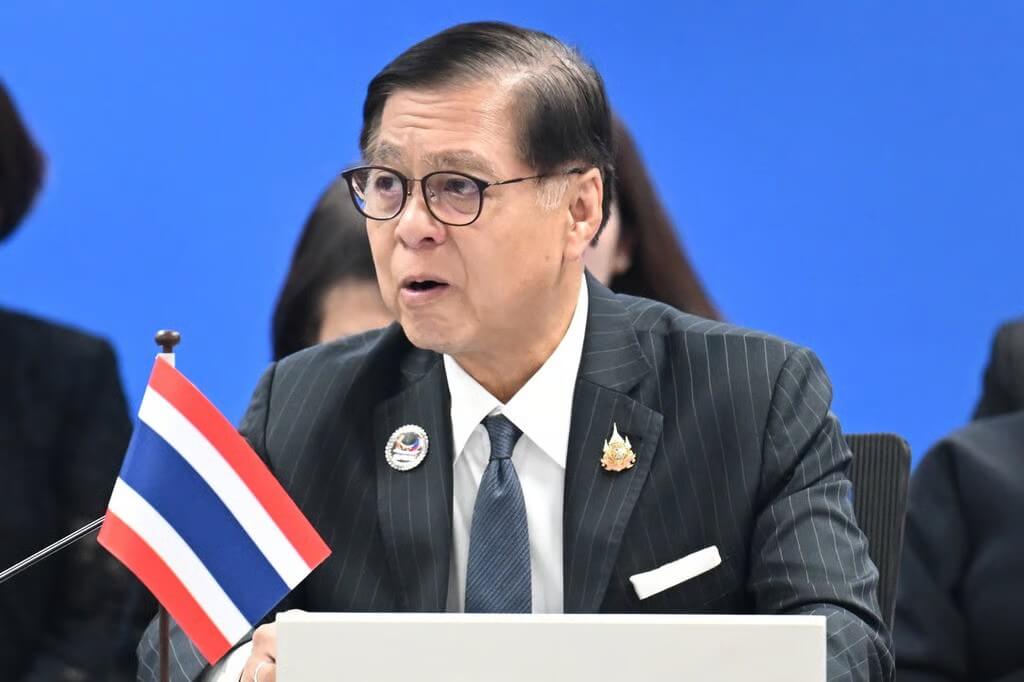
“There were quite a few inaccuracies in that report and also a few assertions that the Thai government cannot accept,” Foreign Minister Sihasak Phuangketkeow told reporters on Monday.
“I also don’t think it’s proper for him to hold a press conference when the report has not been adopted by the UN rights council. It’s very important for the special rapporteur to be impartial, not biased, and maintain a sense of fairness.”
The Thai government said the 650,000 displaced included many in villages erected illegally on Thai territory since the end of the Cambodian civil war.
It also disputed claims that 900,000 Cambodian workers who left Thailand after the July clashes for Cambodia were forced out.
“We never forced them,” Sihasak said. “Whether in Thailand legally or illegally … in actual fact they went back because of the call made by the Cambodian side to go back. Once they are back, it’s the obligation of the Cambodian government to take care of them and find. employment.”
The border spat continues to cloud relations between the neighbours, with ramped-up nationalist rhetoric masking the deepening civilian cost and economic pain the conflict has triggered on both sides.
Billions of dollars have been lost in frontier trade due to the year-long closure of border posts, while Cambodia’s tourist industry has haemorrhaged visitors.
Thai companies in Cambodia have faced a painful consumer boycott, with several major businesses including cinema franchises and coffee shops selling up as punters stay away, while some supply chains that balanced costs by using swift cross-border routes have diverted.
Still, efforts to ease the bitterness keep hitting roadblocks.
Thailand accuses Cambodia of lobbying international allies rather than genuinely resolving long-standing issues that have festered since French colonialists drew lines on maps to denote territorial boundaries.
Cambodia says Thailand has taken swathes of its territory since the conflict, undercutting the December ceasefire deal that was driven by pressure from the US and China, both countries’ largest trading partners.
Thailand denies that saying it has shored up protection of its territory, a core campaign issue for the government of Anutin Charnvirakul which won a February election in part on a tide of nationalist feeling.
In the bilious atmosphere between the nations, Bangkok’s bite back at Andrews’ findings was expected, analysts say.
“Anutin is certainly making sure that he is seen defending Thailand’s international image and position so that he cannot be criticised for being too soft in defending Thailand’s national interests,” Thai politics expert Ken Lohatepanont told This Week in Asia.
With the rancour deepening, Thailand scrapped a long-standing bilateral memorandum of understanding designed to resolve the issue of marking ownership of seas containing vast mineral and energy deposits.
In June this year, Cambodia hit back, beginning legal proceedings at the UN against Thailand to settle their disputed sea border, where it says US$300 billion in energy reserves lie under the seabed in a vast area of the Gulf of Thailand.
Cambodian Prime Minister Hun Manet said his country lodged its complaint under the UN Convention on the Law of the Sea “to protect Cambodia’s sovereignty and maritime rights in accordance with international law”.
Accusing Cambodia of selectively weaponising Andrews’ findings, Foreign Minister Sihasak pointed to Phnom Penh’s silence on the UN specialist’s other comments on rampant scams, human trafficking and collapsing political freedoms inside the country.
Cambodia “chose to present those points that tarnish our image … but there were other parts of the report that were very constructive”, he said, adding online scams were raised in his meeting with US Secretary of State Marco Rubio last week.