What Does a Ceasefire Mean When Civilians Continue to Lose Their Homes?
 What Does a Ceasefire Mean When Civilians Continue to Lose Their Homes?
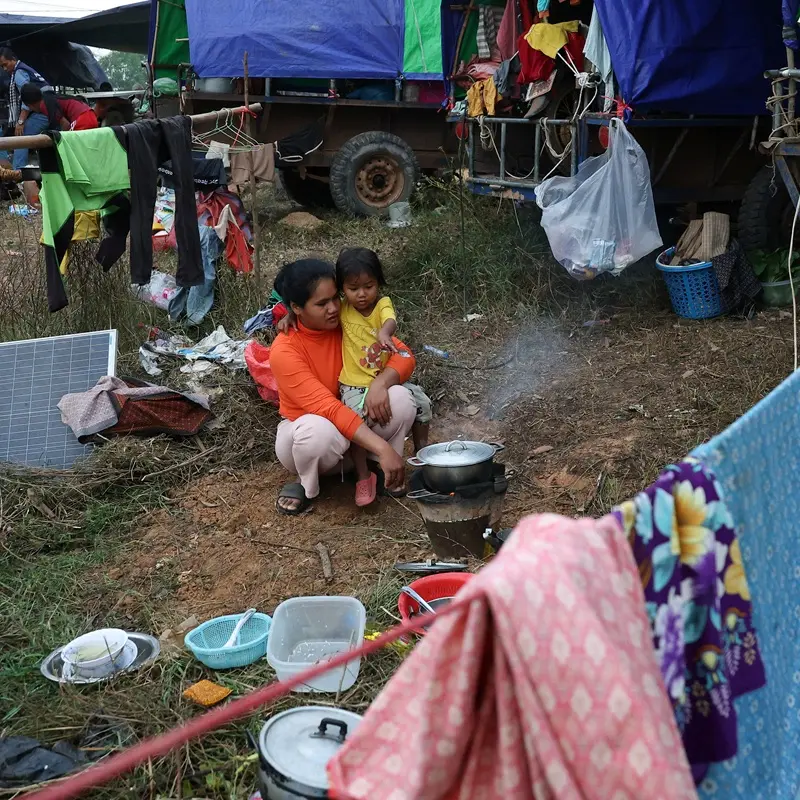
The ceasefire agreement of 27 December 2025 was expected to mark the beginning of efforts to protect civilians, facilitate the return of displaced persons, and restore livelihoods along the Cambodia–Thailand border. However, allegations and satellite imagery released by LICADHO raise an important question: Has the ceasefire truly been respected in accordance with its intended purpose?
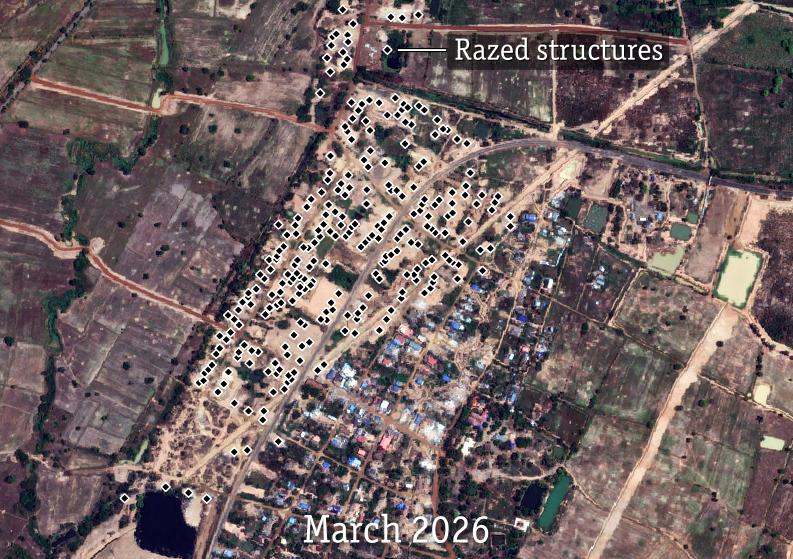
According to LICADHO, updated satellite imagery from March 2026 indicates that at least 627 civilian homes, together with numerous civilian infrastructures in Chok Chhay Village, Boeung Trakuon, and Prey Chan Village, were bulldozed after the ceasefire had already entered into force. LICADHO, a Cambodian non-governmental organization (NGO) dedicated to the protection and promotion of human rights, stated that its independent investigation suggests that Thailand failed to comply with the spirit of the ceasefire, whose primary objective was to protect civilians rather than leave them with further loss of their homes and property.
What is even more concerning is the allegation that these activities occurred after active hostilities had ceased and the ceasefire was already in effect. These allegations are not based on a single source. Rather, they are consistent with information and observations from multiple sources, including assessments conducted by the ASEAN Observer Team and international delegations that monitored conditions along the border before and after the armed conflict. In addition, satellite imagery from the European Space Agency’s Sentinel-2 program, together with higher-resolution images available following the March 2026 update of Apple Maps, has also been used as reference material to analyze and compare changes in the situation on the ground.
Taken together, these allegations are supported by multiple sources of information that are capable of independent verification. Consequently, if Thailand has exercised control over the areas concerned, it would bear obligations under international humanitarian law to protect civilians and civilian property. In particular, Article 53 of the Fourth Geneva Convention prohibits the destruction of civilian property except where such destruction is rendered absolutely necessary by imperative military operations.
Furthermore, Paragraph 3 of the Joint Statement of 27 December 2025 expressly provides that implementation of the ceasefire shall not prejudice the ongoing process of border delimitation or the international boundary between the two countries. At the same time, both parties entrusted the Joint Boundary Commission (JBC) with continuing the technical work of border demarcation while giving priority to areas where civilians had been affected, with the objective of creating conditions for the safe return of displaced persons and achieving lasting peace along the border.
Accordingly, if, during the ceasefire period, civilian homes were demolished or the situation on the ground within disputed areas was altered, as alleged, such actions could raise concerns that they constitute an attempt to create a fait accompli—a new reality on the ground that may affect the atmosphere of negotiations and the implementation of agreements reached between the two parties.
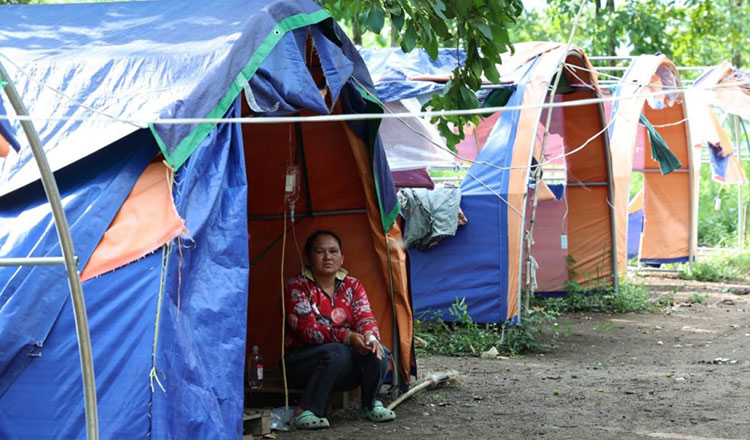
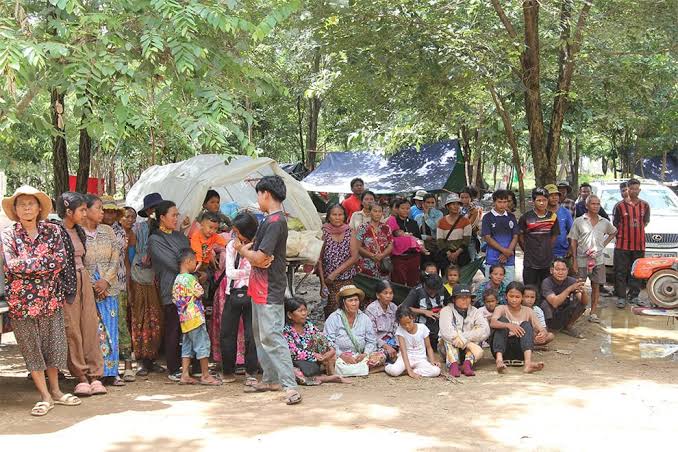
At the same time, Thomas Andrews, the United Nations Special Rapporteur on the situation of human rights in Cambodia, has emphasized that, under international law, civilians displaced by armed conflict have the right to return safely to their homes. Therefore, if displaced persons continue to be prevented from returning, or if their homes have been destroyed as alleged, the issue extends beyond an ordinary political or territorial dispute. It raises serious questions regarding compliance with obligations under both international humanitarian law and international human rights law.
In this context, Thailand should provide a clear, transparent, and credible explanation regarding these allegations and cooperate fully in establishing the facts.
Such cooperation is essential to addressing the concerns of the international community as well as those of the affected populations. Equally important is ensuring that civilians are able to return to their homes in safety and with dignity. Doing so would demonstrate that the ceasefire is not merely a political agreement on paper, but a genuine commitment to protecting the lives, rights, and human dignity of civilians.
By Pin Vichey