Indian Arrivals to Thailand Drop 11.6% as Visa Rules Shift
 Indian Arrivals to Thailand Drop 11.6% as Visa Rules Shift
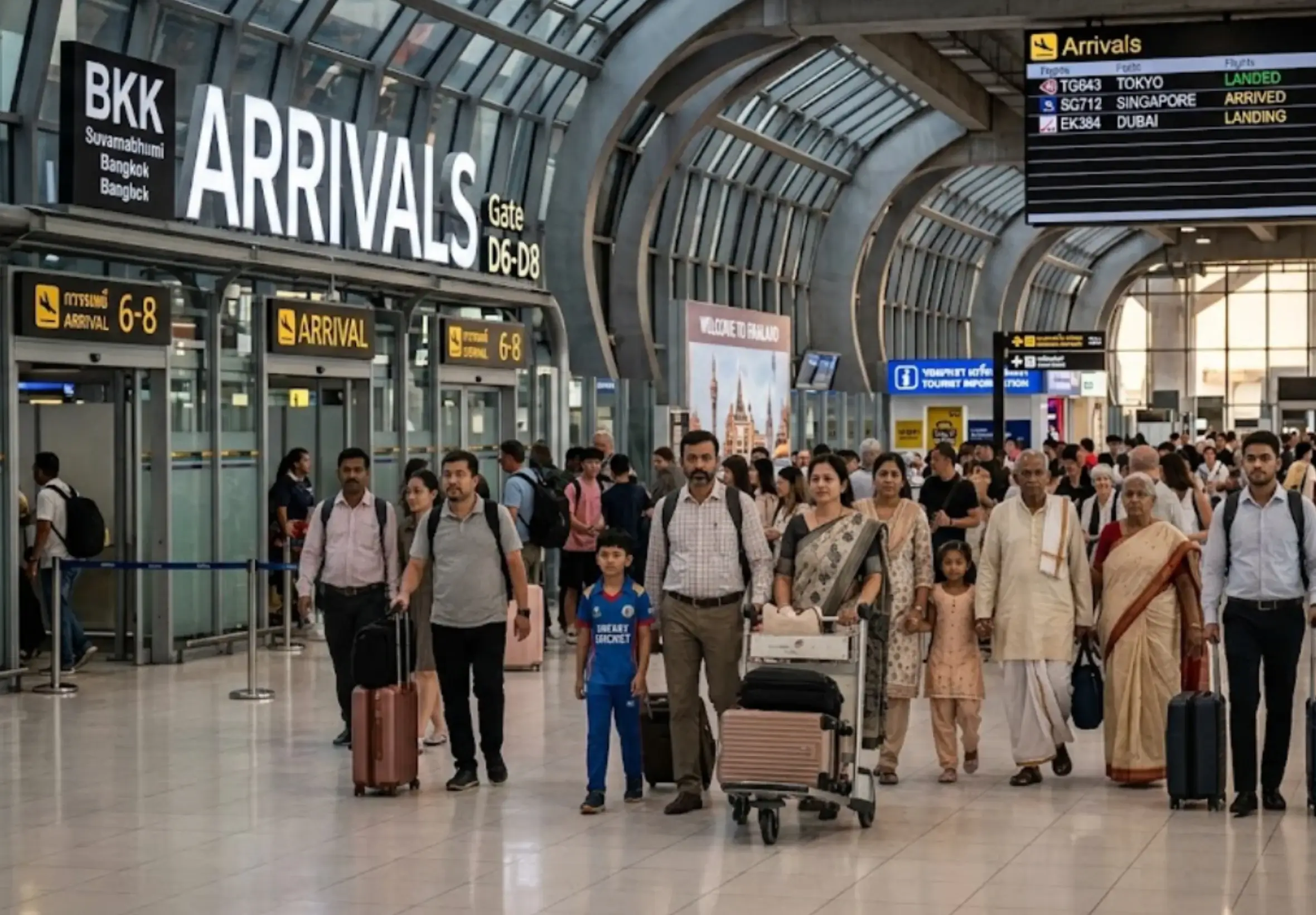
BANGKOK, September 3, 2026 — Indian tourist arrivals to Thailand fell 11.6% year-on-year from August 1–22, making India the only one of Thailand’s four major overseas markets to record a decline during the period, according to the Bank of Thailand.
The central bank attributed the drop to proposed changes to Thailand’s visa-exemption rules affecting foreign visitors, including Indian nationals. However, the decline was significantly smaller than the 20.2% contraction recorded in July.
Pranee Sutthasri, senior director of the Bank of Thailand’s macroeconomic department, said at a briefing on August 31 that officials would continue monitoring tourist arrivals from India.
Thailand’s Cabinet approved changes to its visa-exemption arrangements in July. Under the revised system, a 30-day visa exemption for visitors from 60 countries is scheduled to take effect on September 15, 2026, with India included on the amended list.
India was Thailand’s third-largest international source market in 2025, accounting for 7.5% of total arrivals, according to the central bank.
China remained the largest source market at 33.6%, followed by Europe at 12.4%, while the Middle East accounted for 7.3%.
While Indian arrivals declined, other major markets recorded growth during August 1–22. Chinese arrivals increased 23.5%, while visitors from Europe and the Middle East rose 1.2% and 18.6%, respectively.
Overall, international tourist arrivals to Thailand fell just 0.3% year-on-year during the period, improving substantially from the 2.5% decline in July.
After seasonal adjustment, foreign tourist arrivals increased from 2.1 million in June to 2.5 million in July, driven largely by long-haul markets, including Europe, the Middle East and China.
The recovery was supported by improving flight capacity following easing tensions in the Middle East, as well as stronger demand during school summer holidays in several countries. Short-haul markets excluding China, however, continued to recover more gradually.
Tourism receipts rose 2.7% in July after seasonal adjustment, although spending per trip declined as average stays became slightly shorter.
The Bank of Thailand said the pace of Thailand’s tourism recovery will depend partly on available flight capacity, while growing competition among regional tourism destinations could continue to put pressure on the country’s travel sector.