
ASEAN Needs US$7.1 Trillion in Infrastructure Investment by 2040, ADB Warns
 ASEAN Needs US$7.1 Trillion in Infrastructure Investment by 2040, ADB Warns
MANILA, November 12, 2026 – Southeast Asia will need approximately US$7.1 trillion in infrastructure investment between 2026 and 2040 to sustain economic growth, strengthen energy security and build a more connected and resilient regional economy, according to a new report released by the Asian Development Bank (ADB).
ADB President Masato Kanda said the region’s future growth would depend heavily on its ability to develop reliable electricity supplies, modern transportation networks and infrastructure capable of supporting expanding economic activity.
“Growth in Southeast Asia depends on what the region builds and develops next,” Kanda said, emphasising the need for long-term investment in infrastructure that businesses can rely on and communities can benefit from.
The report, The US$7 Trillion Investment Challenge: Building ASEAN for the Future, estimates that ASEAN will require approximately US$476 billion in infrastructure investment annually from 2026 to 2040, equivalent to 8.7% of the region’s gross domestic product (GDP).
However, current government investment levels are expected to cover only around 45% of total requirements, leaving an annual financing gap of approximately US$264 billion.
Electricity and transport account for 85% of investment needs
The electricity and transportation sectors will account for approximately 85% of ASEAN’s total infrastructure investment requirements.
Electricity infrastructure will require around US$3.6 trillion, while transportation projects will need approximately US$2.5 trillion.
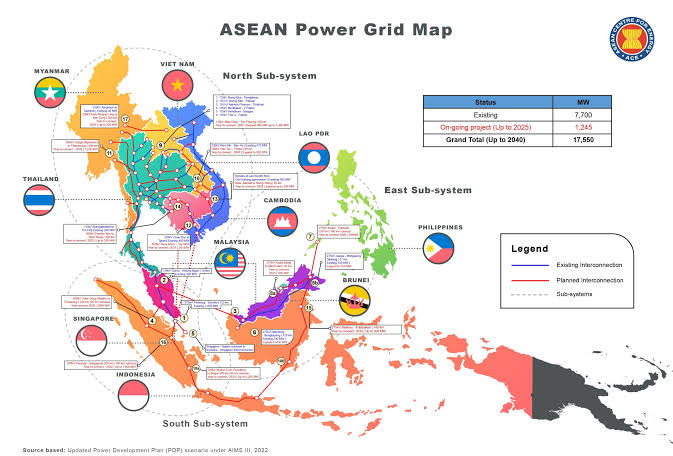
Investment in electricity will need to expand power generation, transmission and storage capacity, including cross-border electricity connections through the ASEAN Power Grid.
These developments are expected to strengthen regional energy security, increase the use of clean energy and reduce vulnerability to disruptions in global supply chains.
Roads represent the largest investment requirement within the transportation sector, accounting for nearly US$2 trillion. Significant additional funding will also be needed for railways and airports.
ADB said better-connected transportation networks and cross-border infrastructure would help reduce logistics costs and improve Southeast Asia’s competitiveness in international markets.
Digital and healthcare infrastructure also require major funding
Beyond traditional infrastructure, ASEAN will need an additional US$584 billion for digital infrastructure, including high-speed internet networks and data centres.
These investments are expected to strengthen regional digital connectivity, improve productivity and competitiveness, and support the ASEAN Digital Economy Framework.
ADB’s Asia-Pacific Digital Highway initiative, launched in May, aims to support these needs through financing for fibre-optic networks, submarine cables, internet exchange facilities and regional data centres through 2035.
Healthcare infrastructure will require another US$227 billion by 2040, including investment in approximately 49,000 new healthcare facilities, most of which will be primary healthcare centres.
The investments are intended to strengthen regional healthcare systems and improve preparedness for future public health emergencies.
ADB calls for greater private-sector investment
The report identifies a shortage of well-prepared infrastructure projects as one of the major obstacles to attracting private-sector financing.
With government budgets unable to cover the region’s full investment requirements, the ADB recommends better project preparation, clearer and more reliable regulations, and transparent procurement processes to encourage private investment.
ADB said it would support regional governments through financing, project preparation, technical expertise and coordination to turn infrastructure priorities into investment-ready projects.
The report covers all 11 ASEAN member states: Brunei Darussalam, Cambodia, Indonesia, Laos, Malaysia, Myanmar, the Philippines, Singapore, Thailand, Timor-Leste and Vietnam.
The findings highlight the scale of infrastructure development required to sustain Southeast Asia’s economic expansion over the next 15 years, while underscoring the importance of stronger regional cooperation and increased participation from private investors.