Cambodia Tells UN Rights Council Over 20,000 Remain Displaced After Border Conflict
 Cambodia Tells UN Rights Council Over 20,000 Remain Displaced After Border Conflict
GENEVA, Sept. 16, 2026 — Cambodia has raised the humanitarian consequences of its 2025 border conflict with Thailand at the UN Human Rights Council, highlighting the continued displacement of more than 20,000 Cambodians and the alleged contamination of nearly 3,000 square kilometres by cluster-munition remnants.
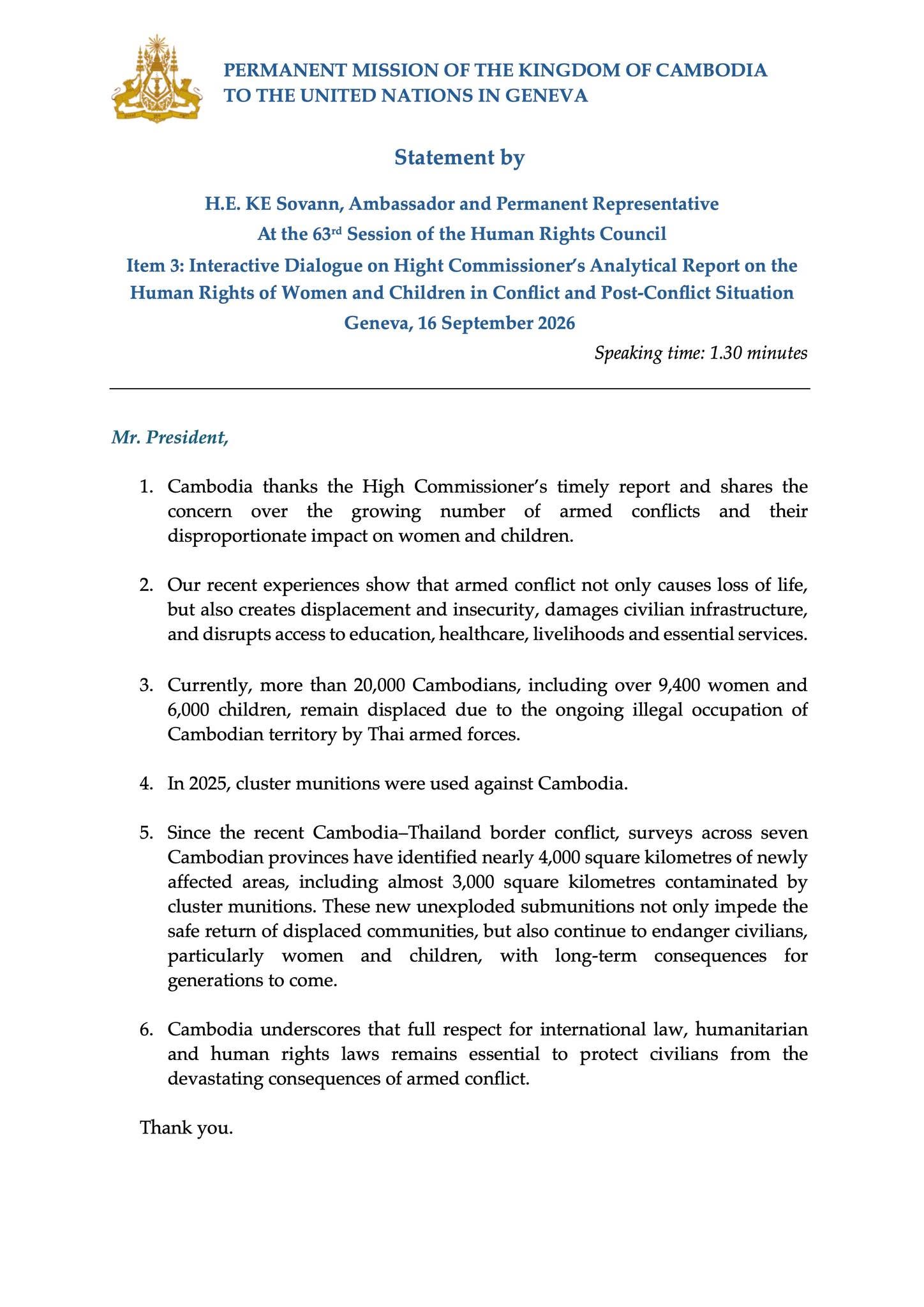
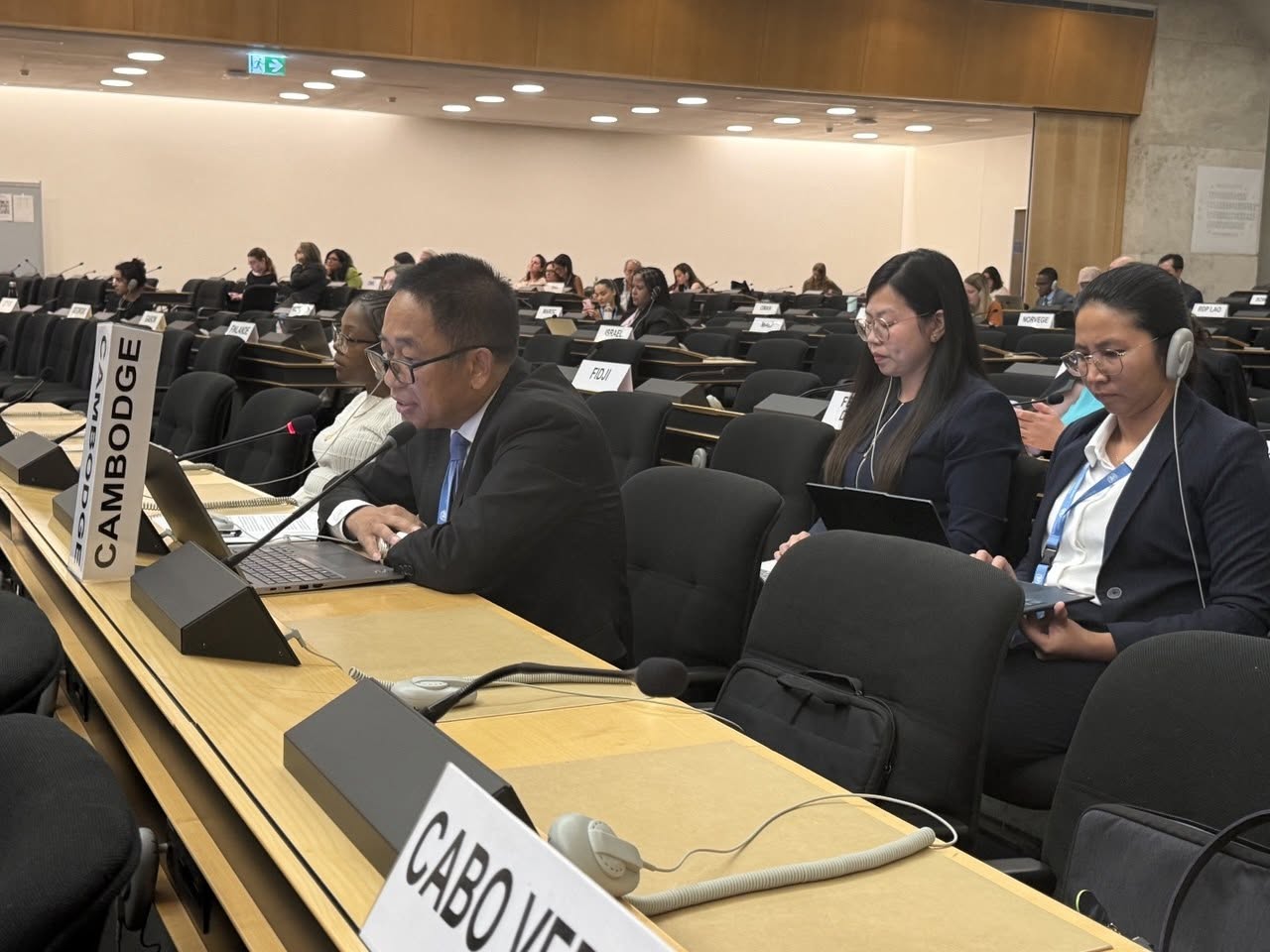
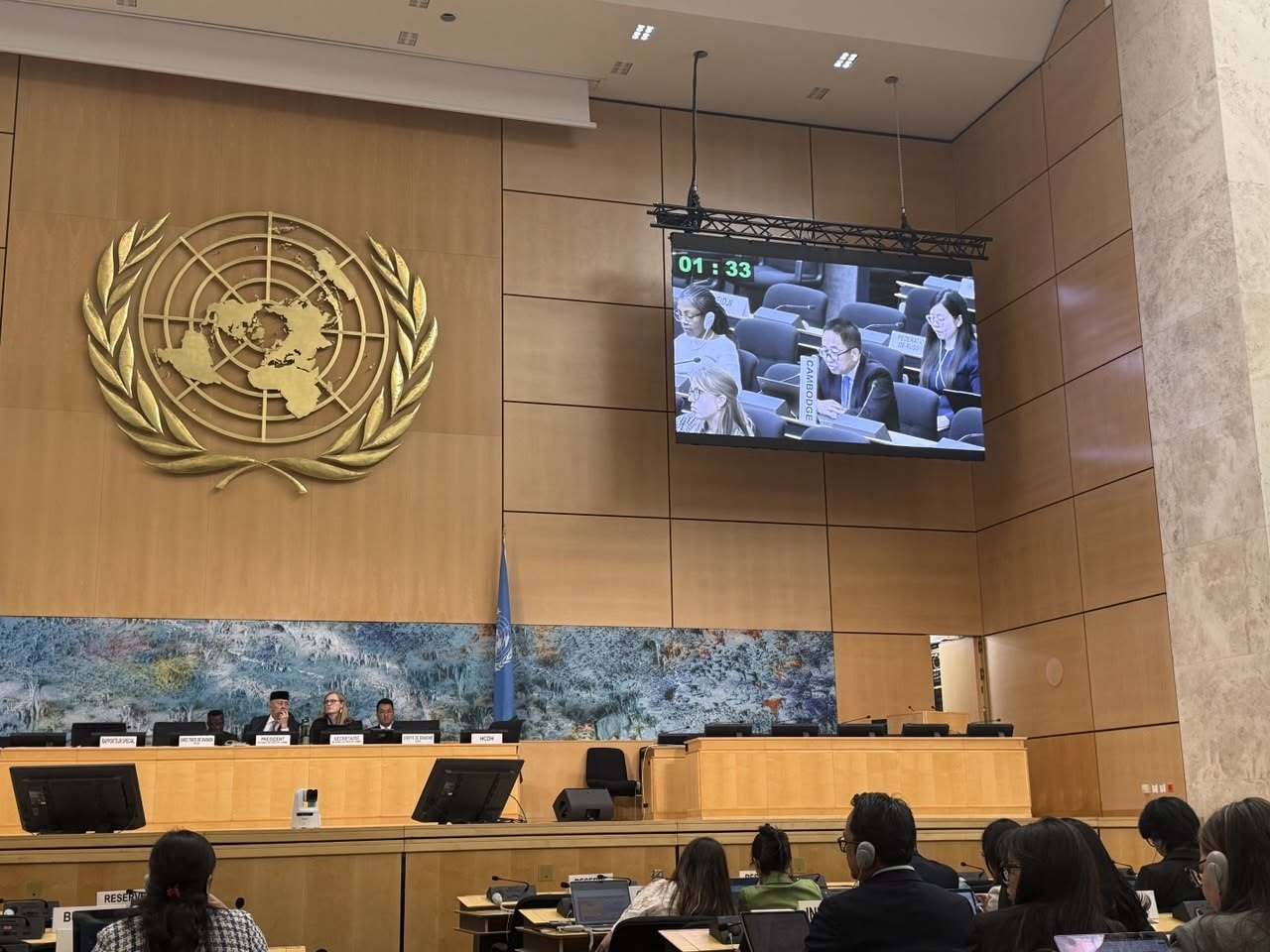
Ambassador Ke Sovann, Cambodia’s Permanent Representative to the United Nations in Geneva, made the remarks on September 16 during the 63rd session of the Human Rights Council, under an interactive dialogue on the UN High Commissioner for Human Rights’ analytical report on the rights of women and children in conflict and post-conflict situations.
Ke Sovann said armed conflicts cause not only loss of life but also displacement and insecurity, damage civilian infrastructure and disrupt access to education, healthcare, livelihoods and essential services.
He specifically highlighted the impact on women and children, saying more than 20,000 Cambodians, including more than 9,400 women and 6,000 children, remain displaced as a result of what Cambodia described as the ongoing illegal occupation of Cambodian territory by Thai armed forces.
Cambodia cites new cluster-munition contamination
The ambassador also raised the alleged use of cluster munitions during the 2025 Cambodia-Thailand conflict.
According to the Cambodian statement, surveys across seven Cambodian provinces have identified nearly 4,000 square kilometres of newly affected areas, including almost 3,000 square kilometres contaminated by cluster-munition remnants.
Cambodia said the unexploded submunitions continue to prevent displaced communities from safely returning home and pose long-term risks to civilians, particularly women and children.
The claims regarding the use of cluster munitions and responsibility for the resulting contamination are part of the broader, disputed accounts of the 2025 Cambodia-Thailand conflict. Cambodia has repeatedly raised the issue at international forums. At an earlier Human Rights Council session in September, Ke Sovann also cited the continued displacement of more than 20,000 Cambodians and called for full respect for international law.
Ambassador rejects Thai allegations
During his intervention, Ke Sovann also rejected what Cambodia described as “unfounded allegations” from Thailand and addressed several disputed issues surrounding the conflict.
According to the Cambodian mission’s statement, these included the circumstances surrounding the start of hostilities, landmines, damage to cultural heritage — particularly Preah Vihear Temple — UN documentation concerning displacement and damage to civilian infrastructure, and what Cambodia described as unlawful activities by Thai armed forces in areas it considers Cambodian territory under occupation.
The Cambodian ambassador reiterated Phnom Penh’s call for full implementation of the December 27, 2025 Joint Statement, which followed the border conflict.
Cambodia calls for international law and civilian protection
Ke Sovann concluded by stressing that full respect for international law, international humanitarian law and human rights law remains essential to protecting civilians from the consequences of armed conflict.
His intervention placed Cambodia’s continuing border-related concerns within the broader UN discussion on protecting women and children in conflict and post-conflict situations, emphasizing the longer-term humanitarian consequences of displacement, damaged infrastructure and unexploded ordnance.
Cambodia has previously told the Human Rights Council that more than 20,000 displaced people remain unable to return home safely and with dignity, while calling for peaceful resolution of outstanding issues and respect for international law.