In Response to Anutin, Hun Sen Urges Thailand to Honor 2025 Border Commitments
 In Response to Anutin, Hun Sen Urges Thailand to Honor 2025 Border Commitments
SIEM REAP, June 10, 2026 — Senate President Hun Sen has called on Thailand to fully implement the third point of the Joint Statement adopted during the Cambodia-Thailand General Border Committee (GBC) meeting on December 27, 2025, arguing that bilateral border mechanisms should continue regardless of Cambodia’s maritime dispute proceedings under the United Nations Convention on the Law of the Sea (UNCLOS).
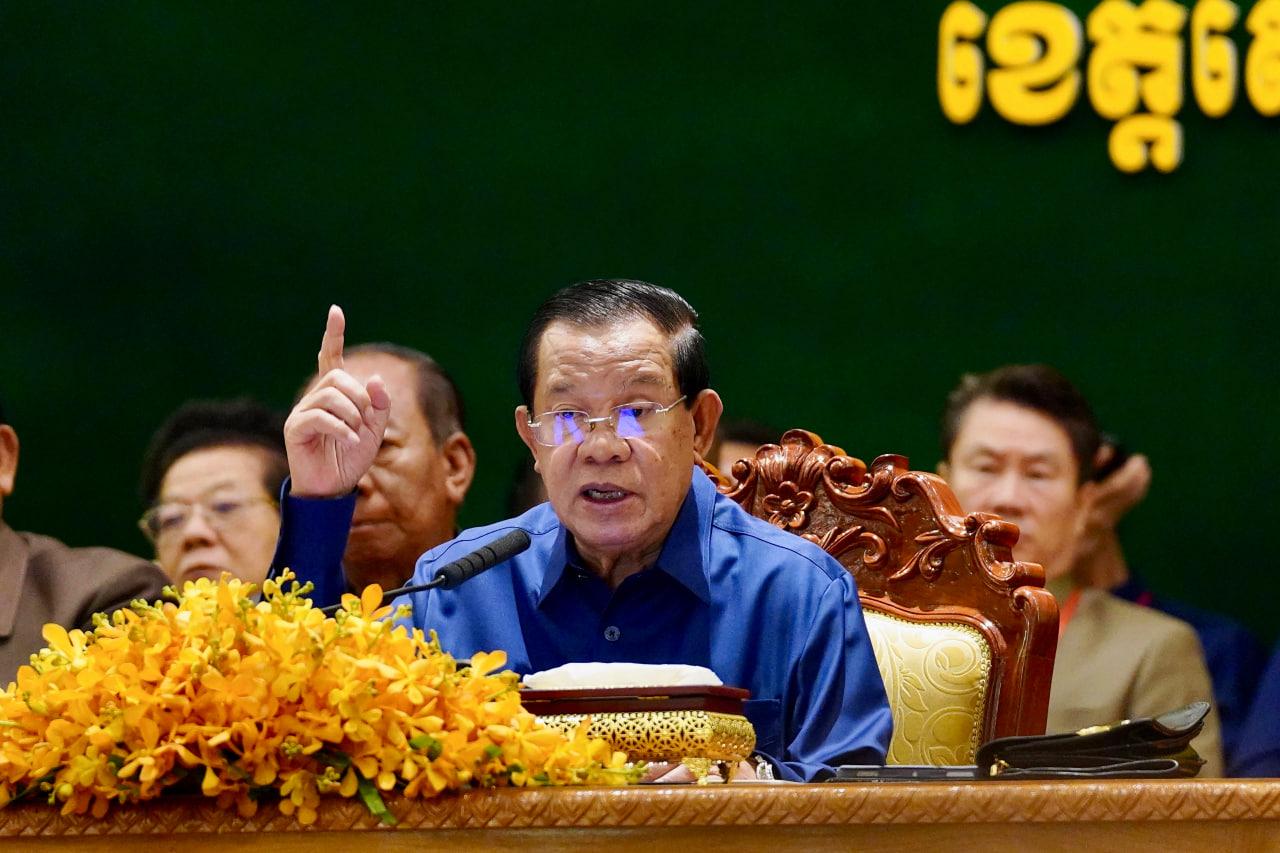
Speaking during a meeting with provincial, district and commune officials, as well as leaders of government institutions from Siem Reap and Oddar Meanchey provinces on Wednesday morning, Hun Sen responded to recent remarks by Thai Prime Minister Anutin Charnvirakul that Thailand had never invaded another country.
Hun Sen said the best way to demonstrate Thailand’s commitment to peaceful relations was to implement existing bilateral agreements, particularly the commitments outlined in the December 2025 GBC Joint Statement.
Under Point 3 of the statement, both countries agreed to resume border survey and demarcation work through the Joint Boundary Commission (JBC) at the earliest opportunity, in accordance with existing agreements, while prioritizing disputed border areas where civilians reside.
Hun Sen argued that progress on land border demarcation has been repeatedly delayed, alleging that meetings of the JBC and GBC have been postponed multiple times by the Thai side.
He also rejected Thailand’s position that bilateral negotiations should be suspended because Cambodia has initiated proceedings under UNCLOS regarding overlapping maritime claims.
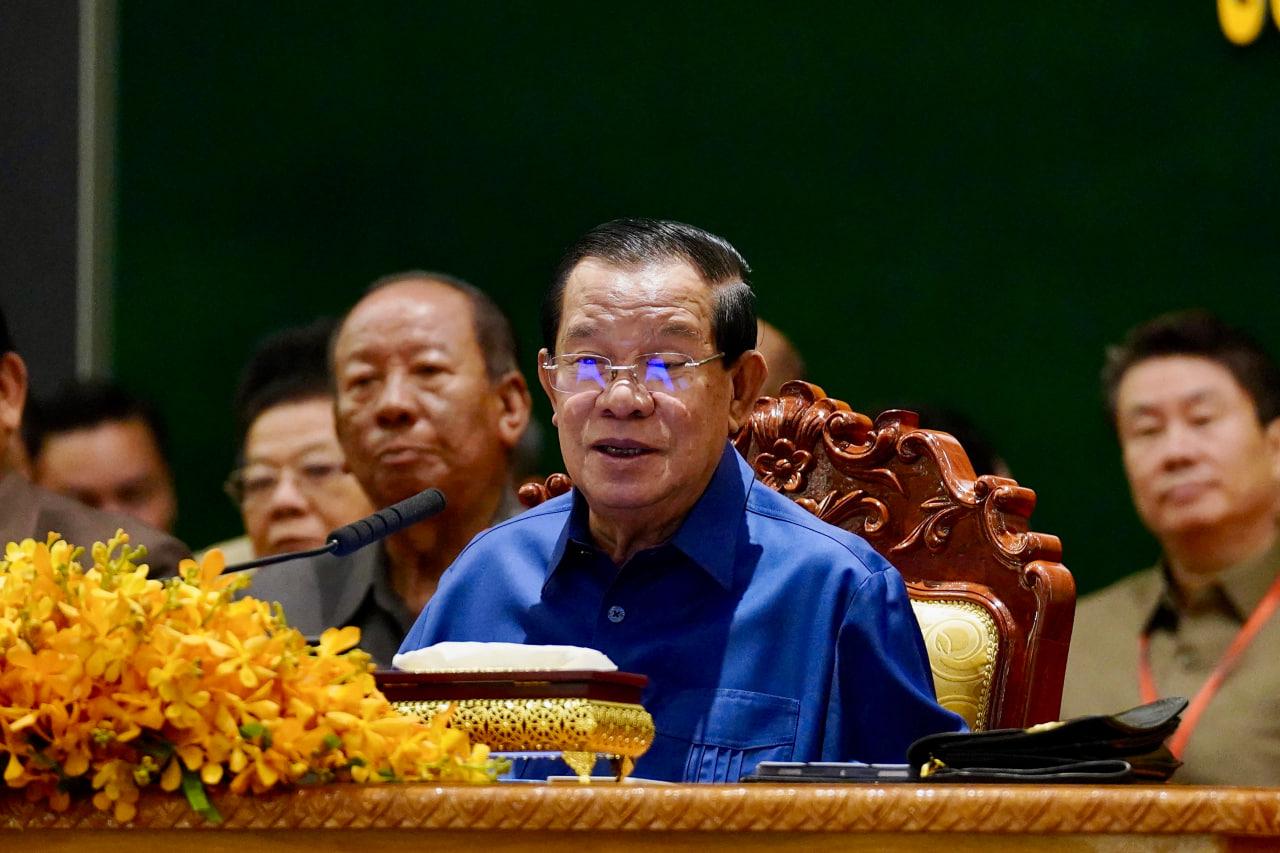
According to Hun Sen, the two issues are entirely separate. He explained that land border negotiations are governed by the Cambodia-Thailand Memorandum of Understanding of 2000 (MOU 2000), while the UNCLOS process concerns maritime claims previously addressed under the Cambodia-Thailand Memorandum of Understanding of 2001 (MOU 2001).
Hun Sen noted that Thailand had already withdrawn unilaterally from MOU 2001, prompting Cambodia to pursue the UNCLOS compulsory conciliation mechanism as a peaceful and rules-based avenue for resolving overlapping maritime claims.
“The UNCLOS case concerns maritime boundaries, while the JBC process concerns land border demarcation. They are different matters and should not be linked together,” Hun Sen said.
He stressed that Cambodia remains committed to resolving all outstanding issues through peaceful means, dialogue and existing bilateral and international legal mechanisms.
The remarks come amid ongoing tensions over border and maritime issues between the two neighboring countries, with Cambodia continuing to advocate for the resumption of border demarcation work under previously agreed frameworks while simultaneously pursuing international legal mechanisms for maritime dispute resolution.