“Nong Chan” Is Not a Single Location: Clarifying the Historical Facts Between Nong Chan Camp in Cambodia and Site K in Thailand
 “Nong Chan” Is Not a Single Location: Clarifying the Historical Facts Between Nong Chan Camp in Cambodia and Site K in Thailand
In discussions about the history of Cambodian refugees and the situation along the Cambodia–Thailand border during the 1980s, one misconception has persisted for many years. That misconception is the tendency to equate the original Nong Chan Camp, located in Cambodia, with Nong Chan, or Site K, located in Thailand, and to conclude that they were the same place.
At first glance, such confusion may appear understandable because of the similarity in their names. However, a careful examination of United Nations documents, historical maps, and research conducted by international scholars clearly shows that the two camps had different origins, were located in different countries, were administered by different authorities, and served fundamentally different purposes.
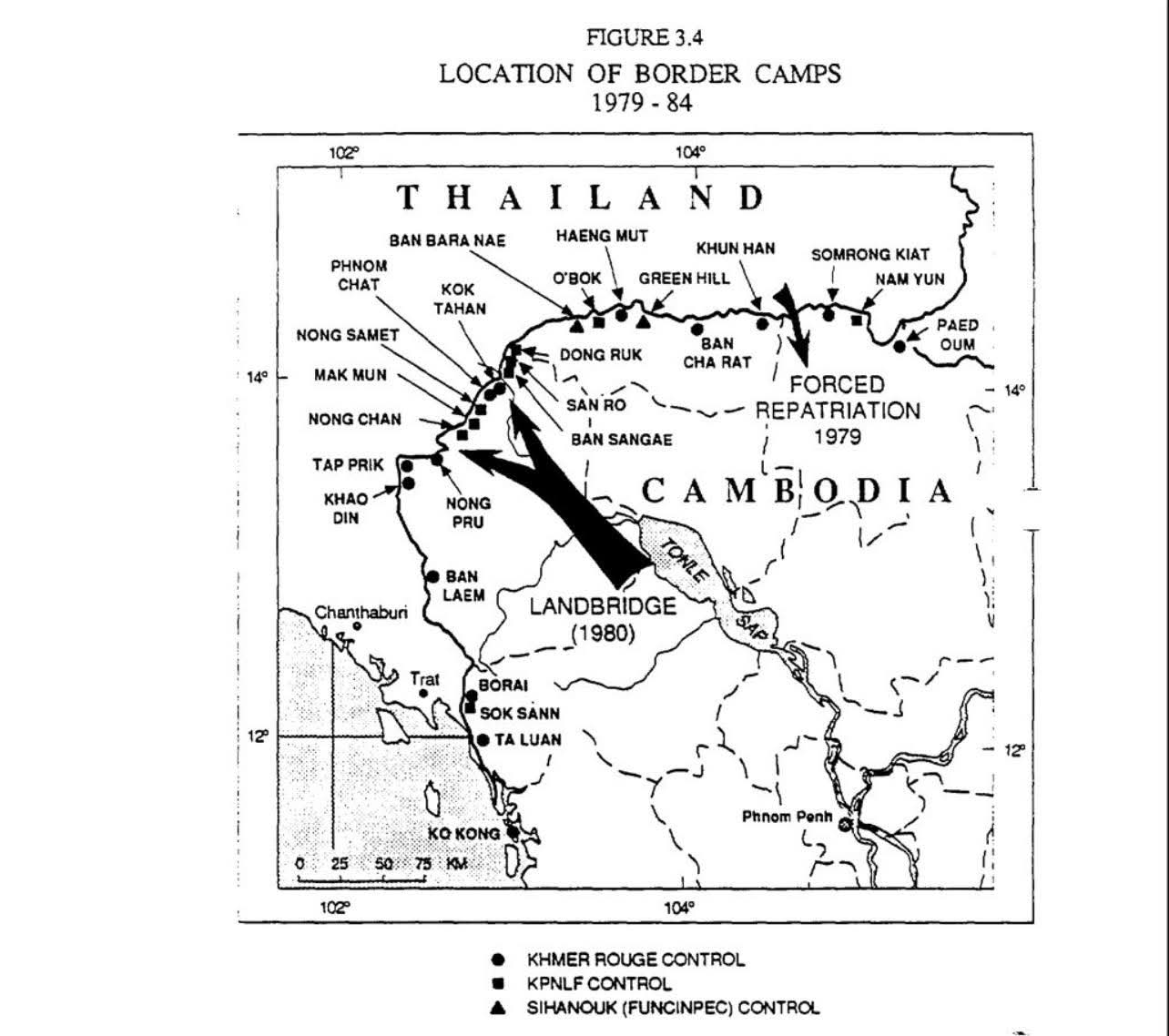
Distinguishing between these two locations is not merely a matter of terminology. It is a matter of historical accuracy. The original Nong Chan Camp emerged following the collapse of Democratic Kampuchea in late 1979 and early 1980. It was situated in the Prey Chan area of Banteay Meanchey Province, within Cambodian territory adjacent to the Thai border.
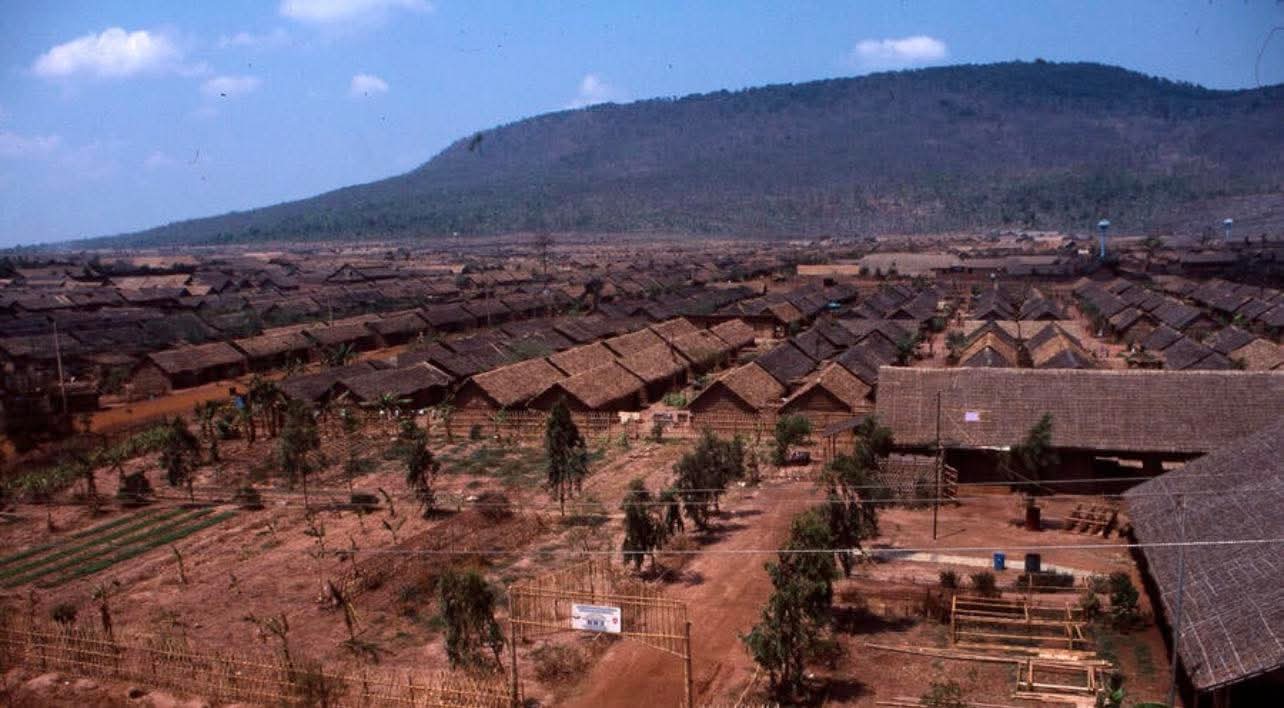
At that time, the entire border region remained engulfed in armed conflict. Nong Chan was not a refugee camp established by the United Nations High Commissioner for Refugees (UNHCR). Rather, it was a mixed camp that functioned simultaneously as a political center, a military base, and a refuge for civilians fleeing war and famine. However, the character of the camp changed dramatically during the 1984–1985 dry-season military campaign, when it was attacked and completely destroyed. Following its destruction, tens of thousands of civilians who had been living there fled across the border into Thailand in search of safety. It is precisely at this point that much of the historical confusion originated.
After the destruction of the original Nong Chan Camp inside Cambodia, the Thai authorities, in cooperation with the United Nations, established a new refugee camp in Sa Kaeo Province, Thailand, to receive Cambodian refugees who had crossed the border following the destruction of the original camp. This new camp became known as Site K, established in 1984. In some documents, it was also referred to as Nong Chan, because many of its residents had come from the original Nong Chan Camp in Cambodia. However, the use of the same name does not mean that the two camps were located at the same site.
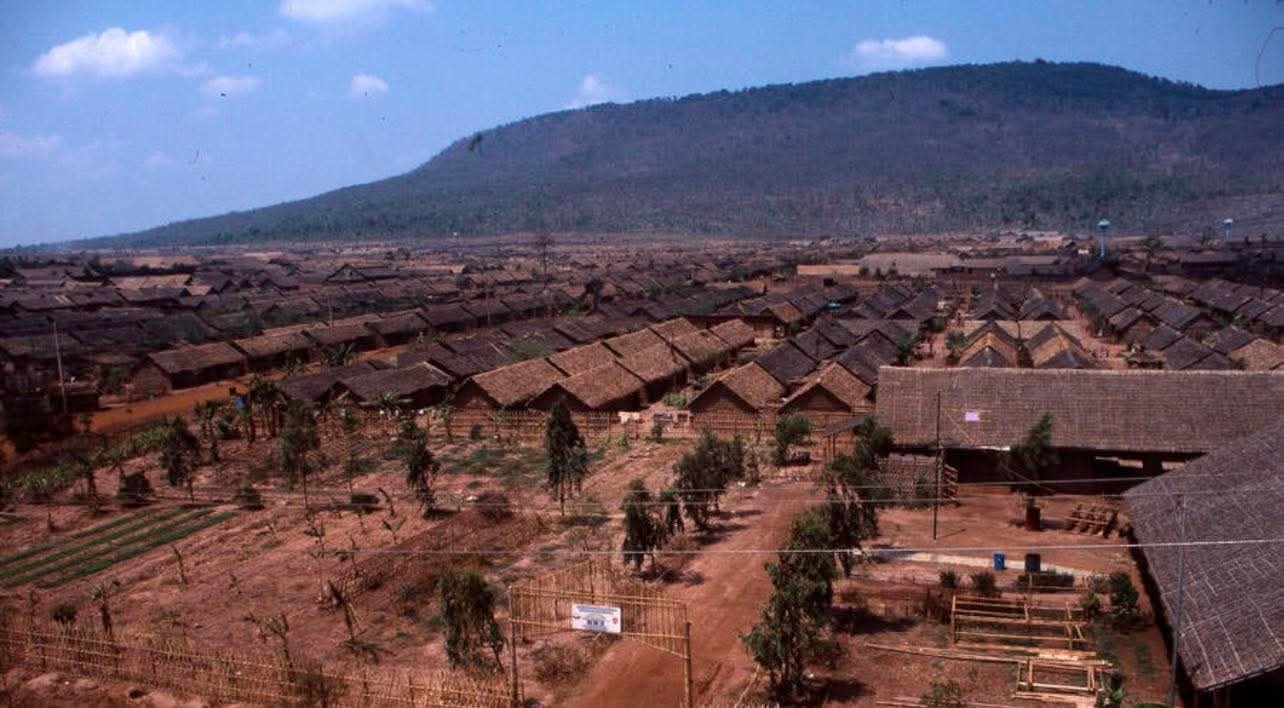
Site K in Thailand was a civilian refugee camp operated through cooperation between the Thai Government, UNHCR, and international humanitarian organizations. Its primary mission was to provide temporary shelter, food, clean water, healthcare, education, and protection for Cambodian refugees until conditions allowed them to return safely to Cambodia. Therefore, although the two camps shared similar names and were historically connected through the movement of refugees, they were not the same location.
It should also be recalled that following the 1991 Paris Peace Agreements, the United Nations Transitional Authority in Cambodia (UNTAC) and UNHCR implemented a large-scale repatriation program that enabled more than 360,000 Cambodian refugees to return home from various camps in Thailand, including Site K, during 1992–1993. Once the repatriation program was completed, the refugee camps, including Site K, were permanently closed.
Much of the misunderstanding stems from the fact that some documents use the term “Nong Chan” to refer to the refugee camp in Thailand without clearly explaining that it was a new camp established after the destruction of the original Nong Chan Camp inside Cambodia. As these documents have continued to be cited and reproduced without reference to their original context or careful verification, the misunderstanding has been passed down from one generation to another.
The ambiguity surrounding the name “Nong Chan” has consequently created opportunities for conflicting interpretations that continue to this day. In recent years, some individuals in Thailand—including certain political figures and nationalist groups—have claimed that the area where Cambodian citizens currently reside was formerly Nong Chan Camp established by Thailand on Thai territory to accommodate Cambodian refugees, and that those Cambodian residents never actually left the area.
However, such claims are not consistent with the historical record or with existing international documentation. United Nations records and the research of international scholars clearly distinguish between the original Nong Chan Camp, located within Cambodian territory, and Nong Chan (Site K), a new refugee camp established on Thai territory after the destruction of the original camp. Consequently, treating these two camps as the same location, or using them as the basis for geographical or territorial claims, is inconsistent with verifiable historical evidence and internationally documented facts.
For this reason, distinguishing clearly between these two locations is not about assigning blame. Rather, it is about ensuring historical accuracy based on documented evidence recognized internationally. Such clarification helps prevent misunderstanding and discourages the misuse of history in ways that could lead to inaccurate interpretations concerning geography and sovereignty.
From the perspective of historical research, distinguishing between these two locations is critically important because history cannot be determined solely by the similarity of names. It must instead be established through clear evidence concerning geographical location, the period during which a site existed, the circumstances of its establishment, and the institutions that documented and recognized it.
The original Nong Chan Camp was a camp located within Cambodia during the country’s civil conflict. By contrast, Site K was a Cambodian refugee camp established inside Thailand after the destruction of the original camp to provide humanitarian assistance to those fleeing the conflict in Cambodia.
These historical facts have long been reflected in United Nations documentation. Therefore, using the two camps interchangeably for any purpose is inconsistent with the historical record.
History should serve as a foundation for understanding rather than as a source of misunderstanding or a tool for advancing the interests of any particular party. Respect for historical facts and verifiable evidence remains the most effective way to help the public in Cambodia, Thailand, and the wider international community understand the past as it actually occurred, rather than through misconceptions or interpretations lacking factual foundation.
Regarding border-related issues, Cambodia cannot legitimately assert its position without supporting evidence, and Thailand likewise should not interpret history solely from its own perspective. Questions concerning history and borders should be addressed on the basis of official documents, historical evidence, and the principles of international law—not through assumptions or unilateral assertions.
Accordingly, the most appropriate means of establishing the facts in a transparent and mutually acceptable manner is for both parties to jointly survey and verify the boundary on the basis of documents and maps that both sides recognize and that possess legal validity. Only by adhering to agreed procedures, objective evidence, and verifiable facts can the distinction be clearly made between historical reality and interpretations that are not supported by the evidence.
By: Pin Vichey