Cambodia Rejects Thai Culture Minister’s Claims Over K’Nar and Ta Krabey Temples
 Cambodia Rejects Thai Culture Minister’s Claims Over K’Nar and Ta Krabey Temples
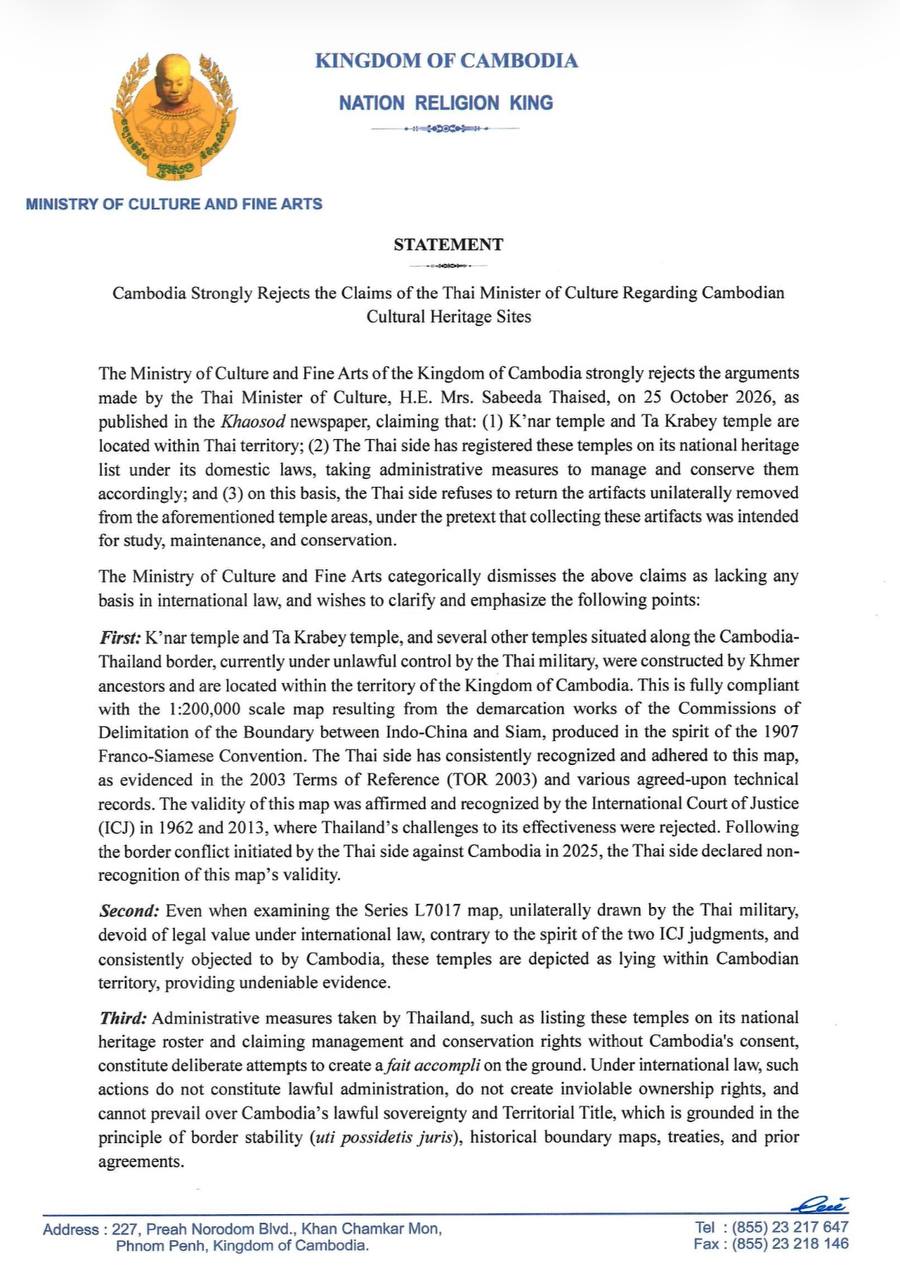
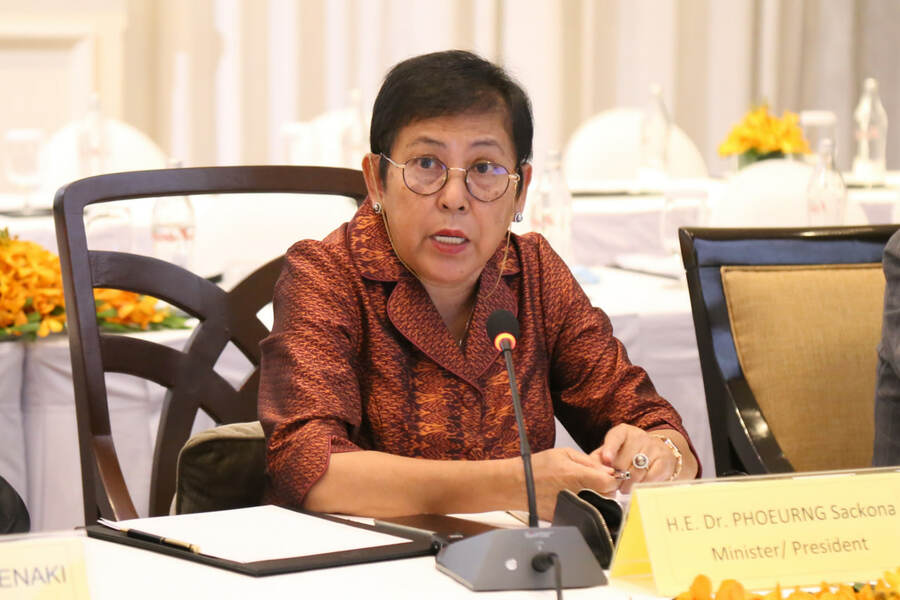
PHNOM PENH, October 27, 2026 — Cambodia’s Ministry of Culture and Fine Arts has strongly rejected claims by Thailand’s Culture Minister Sabeeda Thaised concerning the ownership of K’Nar and Ta Krabey temples, accusing Thailand of using unilateral administrative measures to assert control over Cambodian cultural heritage sites and refusing to return artifacts removed from the areas.

In a statement issued on October 27, Cambodia’s ministry responded to remarks reportedly made by Thaised on October 25 and published by Khaosod. The Thai minister reportedly argued that the temples were located in Thai territory, had been registered as national heritage sites under Thai law, and were being managed for study, maintenance and conservation.
Cambodia’s ministry dismissed those arguments as lacking a legal basis under international law.
Cambodia Cites Historical Maps and International Court Rulings
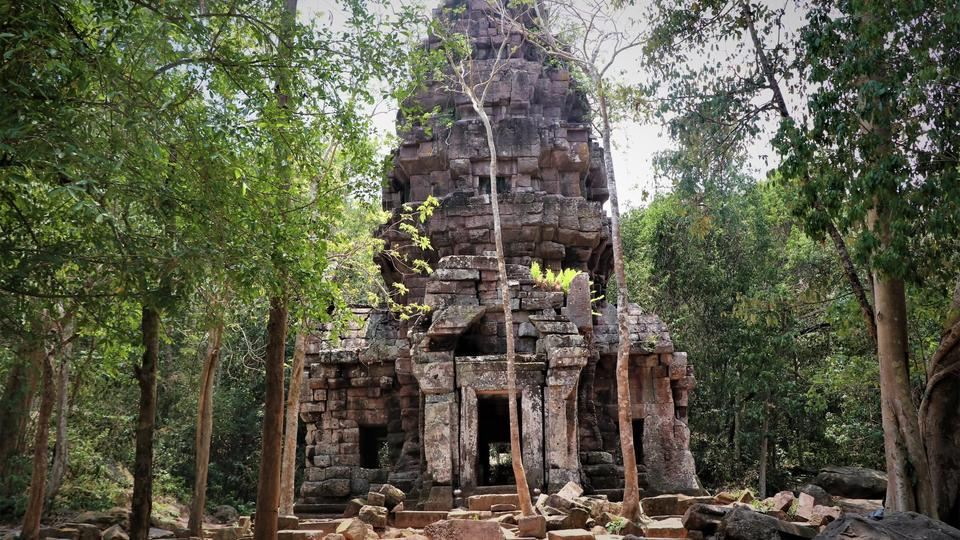
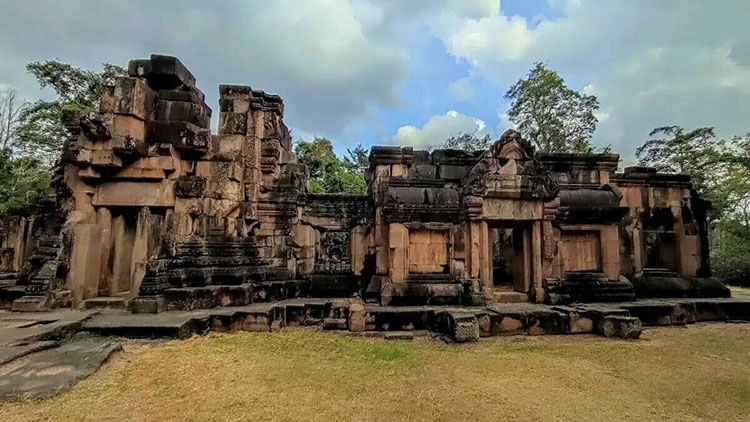
The ministry stated that K’Nar and Ta Krabey temples, along with several other temples along the Cambodia-Thailand border, were built by Khmer ancestors and are located within Cambodian territory.
It cited the 1:200,000-scale map produced through the boundary delimitation work of the Franco-Siamese commissions under the 1907 Franco-Siamese Convention. According to the ministry, Thailand had previously recognised and followed the map, as reflected in the 2003 Terms of Reference and other mutually agreed technical records.
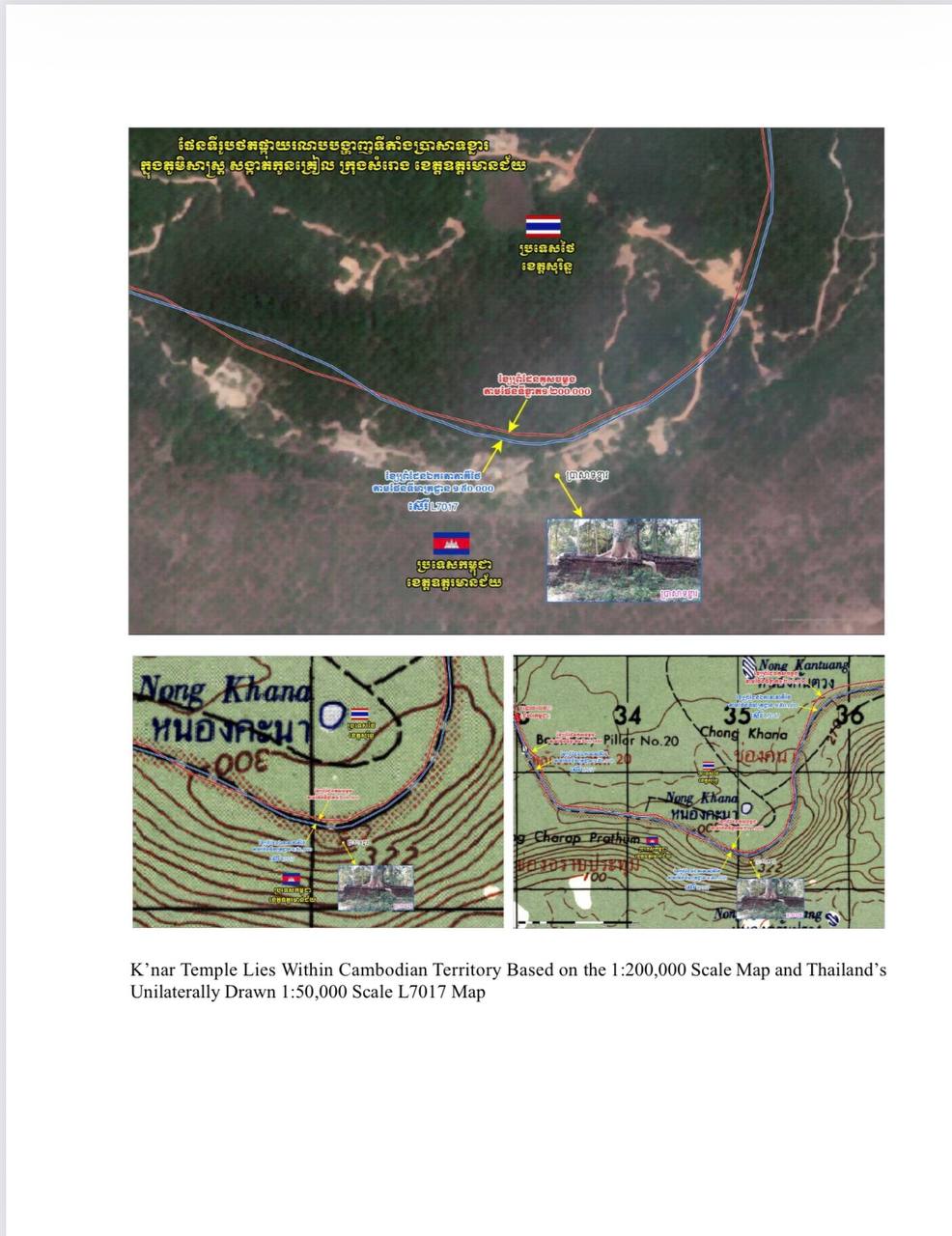
The ministry also cited International Court of Justice (ICJ) rulings in 1962 and 2013, saying the court had affirmed the map’s validity and rejected Thailand’s challenges to its effectiveness.
Cambodia further argued that even Thailand’s L7017 map, which Phnom Penh considers unilateral and legally invalid, depicts the two temples within Cambodian territory.
Dispute Over Heritage Registration and Artifacts
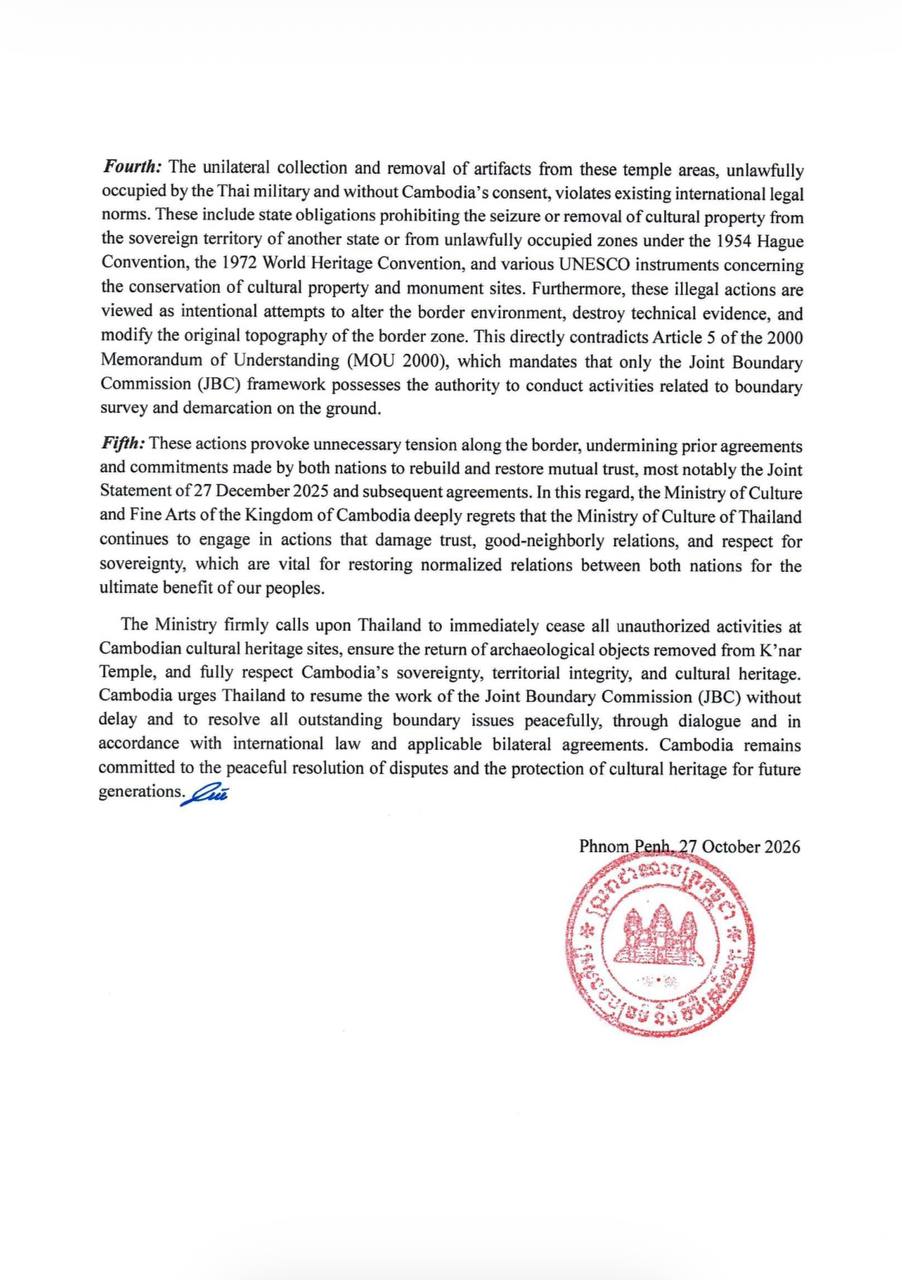
Cambodia’s ministry argued that Thailand’s unilateral registration and management of the temples without Cambodian consent amounted to an attempt to establish facts on the ground, a practice known as fait accompli.
It maintained that such administrative actions cannot establish lawful ownership or override Cambodia’s territorial sovereignty, citing historical boundary maps, treaties, prior agreements and the principle of uti possidetis juris, which concerns the preservation of established territorial boundaries.
The ministry also accused Thai military personnel of removing artifacts from the temple areas without Cambodia’s consent. It said such actions violated international legal norms and obligations concerning cultural property, citing the 1954 Hague Convention, the 1972 World Heritage Convention and relevant UNESCO instruments.
According to the statement, unauthorized activities could also alter the border environment, damage technical evidence and change the original topography of the disputed areas.
Cambodia further cited Article 5 of the 2000 Memorandum of Understanding, arguing that only the Joint Boundary Commission (JBC) has the authority to conduct on-the-ground activities related to border surveying and demarcation.
Phnom Penh Calls for Return of Artifacts
The ministry warned that the actions risked increasing tensions along the border and undermining commitments made by both countries to rebuild mutual trust, including the Joint Statement of December 27, 2025, and subsequent agreements.
Cambodia called on Thailand to immediately halt unauthorized activities at Cambodian cultural heritage sites, return archaeological objects removed from K’Nar Temple, and fully respect Cambodia’s sovereignty, territorial integrity and cultural heritage.
It also urged both countries to resume work through the Joint Boundary Commission without delay and resolve outstanding border issues peacefully through dialogue, international law and applicable bilateral agreements.
The ministry reaffirmed Cambodia’s commitment to peaceful dispute resolution and the protection of cultural heritage for future generations.