Thailand’s economic recovery depends on opening up
 Thailand’s economic recovery depends on opening up
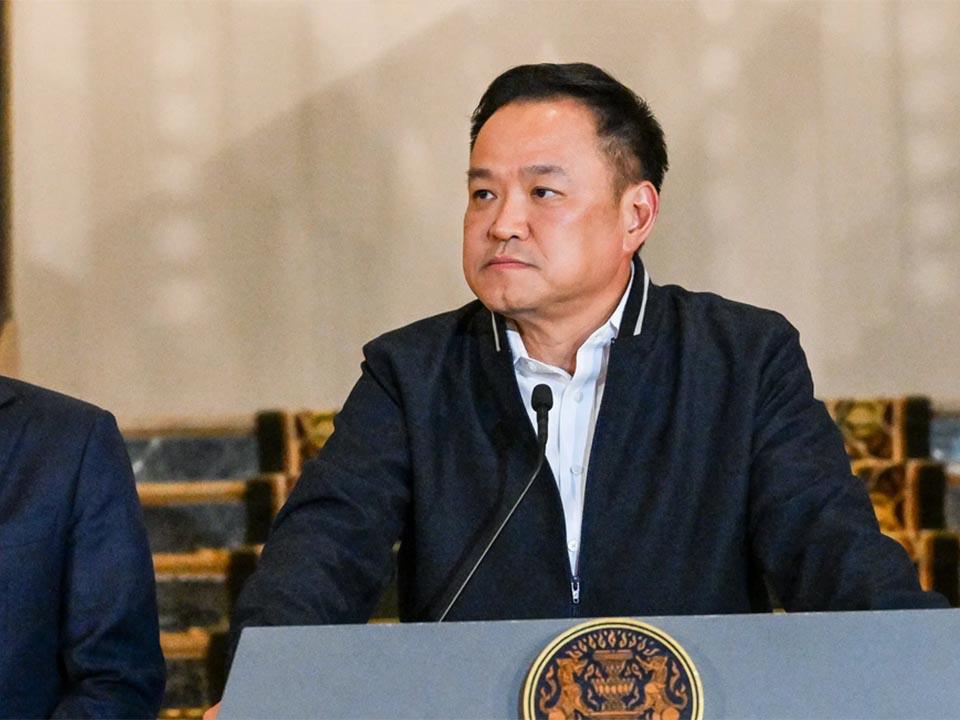
Thailand’s snap election on 8 February 2026 delivered a decisive victory for the conservatives. Bhumjaithai, a royalist party led by caretaker Prime Minister Anutin Charnvirakul, more than tripled its 2019 seat count to win around 194 out of 500 seats.
Anutin campaigned on stability, offering the continuity of stimulus packages and of ministerial posts including commerce, finance and foreign affairs. But the new coalition government inherits an economy that never quite recovered from the pandemic. A full recovery will depend on the kind of trade and investment reforms that Thai politics has long resisted.
Record household debt and public finances near the debt ceiling are constraining growth. Thailand’s GDP growth forecast for 2026 sits at just 1.6 per cent, the lowest among major ASEAN economies. To break out of this bind, the new government needs to improve the competitiveness of Thai exports and attract the industries of the future.
Exports have been the lifeline of the economy, expanding rapidly in 2025 due to a combination of strong US demand and trade diversion away from China. Electronics exports to the United States, which remain exempt from tariffs, were particularly strong.
But uncertainty looms. The US Supreme Court struck down the tariffs enacted under the International Emergency Economic Powers Act on 20 February 2026. Initially, Washington replaced them with a flat 10 per cent — and promised to raise them to 15 per cent soon after — under Section 122 of the Trade Act. China still faces higher duties than Thailand overall, so the incentive to diversify remains. Section 301 investigations targeting Thailand add further variability. The Thai baht appreciated against the dollar in 2025, eroding competitiveness further.
Inefficiency is a major issue. Resources are locked in unproductive industries rather than sectors where Thailand could build a competitive edge. Most new investment goes towards maintaining ageing assets, which is why it takes Thailand twice as much investment as peers like the Philippines and Malaysia to generate the same unit of output.
The World Bank argues that expanding into advanced green manufacturing could reverse this trend. But existing manufacturing assets are not easily convertible into green manufacturing. Internal combustion engine vehicle plants cannot be upgraded to manufacture battery electric vehicles. Most battery electric vehicles in Thailand are merely assembled from Chinese imports. BYD has committed to local production, but developing domestic linkages takes time. Solar panels face even dimmer prospects, with the United States having imposed anti-dumping and countervailing duties on Thai panels for relying on Chinese inputs.
For green manufacturing to deliver growth, ‘creative destruction’ of inefficient players and the development of genuine domestic capabilities will be necessary.
One way to attract these industries is through an open, competitive policy environment that politics has long hindered. Reforming the Foreign Business Act is one policy item that has been a victim of political instability. It caps foreign ownership at 49 per cent in some sectors, requiring investors to go through arduous licensing processes.
The Commerce Ministry has announced plans to remove 10 service sectors — from software development to petroleum exploration — from the restricted list, which is a step in the right direction.
But the sectors opened are not the ones manufacturing firms rely on, such as legal, accounting and logistics services. These remain restricted. The OECD ranks Thailand among the most restrictive countries assessed for services trade barriers. Without liberalising these sectors, even generous investment incentives will struggle to attract the industries of the future.
Access to export markets is another area requiring attention. Thailand has 14 free trade agreements (FTAs), with preferential access to only 18 markets — a fraction of Vietnam’s market access. FTA utilisation is also an issue. Nearly one in five eligible exports still do not use preferences because rules of origin compliance is too costly or complex for smaller firms.
Thailand imports a significant share of inputs, which can be a vulnerability as rules of origin tighten under geopolitical pressure. Joining the Comprehensive and Progressive Agreement for Trans-Pacific Partnership (CPTPP) would help by expanding the network of countries, like Japan, whose inputs count towards origin requirements, while improving market access. Since joining the CPTPP in 2019, Vietnam, an economy that relies on foreign inputs more than Thailand, has seen its exports to new markets surge.
As trade tensions with the United States rise and supply chains relocate, market access will become increasingly decisive in attracting investment. Thailand did well in 2025. Foreign investment pledges hit a high. But this was driven largely by data centres rather than sectors associated with industrial upgrading. With fewer trade agreements and tighter investment rules, Thailand risks missing out on the investments that matter.
The new coalition must move beyond stimulus packages to tackle reforms. This involves streamlining the process to majority foreign ownership, joining the CPTPP, concluding the long-stalled EU FTA and liberalising the services sectors that manufacturers rely on, helping Thailand attract the ecosystem that future industries demand.
The political obstacles are substantial. Thailand’s coalition politics have long been short-sighted — revolving around stimulating consumption to win votes. Trade and investment liberalisation has been a casualty. Whether the technocrats Anutin has kept in the cabinet can drive reform remains an open question. But with household debt restraining domestic demand and public finances stretched thin, a more open economy, oriented towards the industries of the future, might just be the best plan for Thailand to overcome its domestic constraints.
Ahmed Albayrak is Research Associate in the Indo-Pacific Development Centre at the Lowy Institute.
East Asia Forum