Laos Records 16,000 Fire Hotspots as Air Pollution Soars
 Laos Records 16,000 Fire Hotspots as Air Pollution Soars
VIENTIANE, April 5, 2026 — Laos has recorded more than 16,000 fire hotspots in the first three months of 2026, driving air pollution to hazardous levels across the country, authorities said.
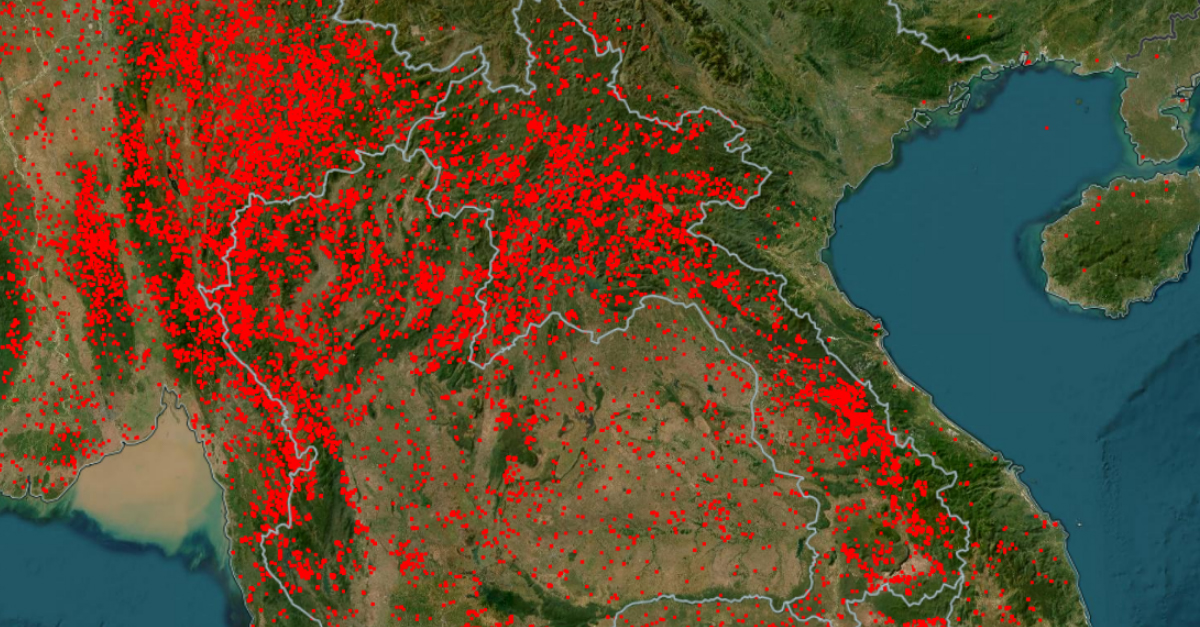
Data from the Ministry of Agriculture and Environment showed 16,395 hotspots nationwide, with fires affecting all forest categories as well as agricultural and fallow land, where the highest number of burnings was recorded.
Officials said human activity remains the main cause, including slash-and-burn farming, grass burning for livestock and forest clearing without adequate fire control measures.
Fire activity intensified toward the end of the period, with 895 hotspots detected on April 1 alone. Northern provinces were among the worst affected, with Luang Prabang, Oudomxay and Savannakhet recording the highest counts.
The fires have significantly worsened air quality. Authorities reported that PM2.5 levels exceeded safe limits in every province, pushing the Air Quality Index above 100 nationwide. In northern areas such as Bokeo, Oudomxay and Luang Prabang, AQI levels surpassed 200, posing health risks to the general population.
The pollution has also had cross-border impacts. The northern Thai city of Chiang Mai recorded an AQI of 235 on April 1, ranking among the most polluted cities globally that day, as haze spread across borders.
Wind patterns have carried transboundary smoke into Laos’ capital and northern regions, compounding locally generated pollution.
Authorities have urged residents to wear protective masks, limit outdoor activities and monitor for respiratory symptoms.
In response, Laos and Thailand have stepped up cooperation. Officials from both countries met in Luang Prabang in late March, pledging to promote zero-burning agricultural practices and improve monitoring systems to reduce fire incidents.
The government has called on communities and stakeholders to halt indiscriminate burning, warning that air pollution poses long-term risks to public health and the environment.