A Ceasefire Is Not a Title Deed: Thailand Cannot Use Military Force to Redraw Cambodia’s Borders
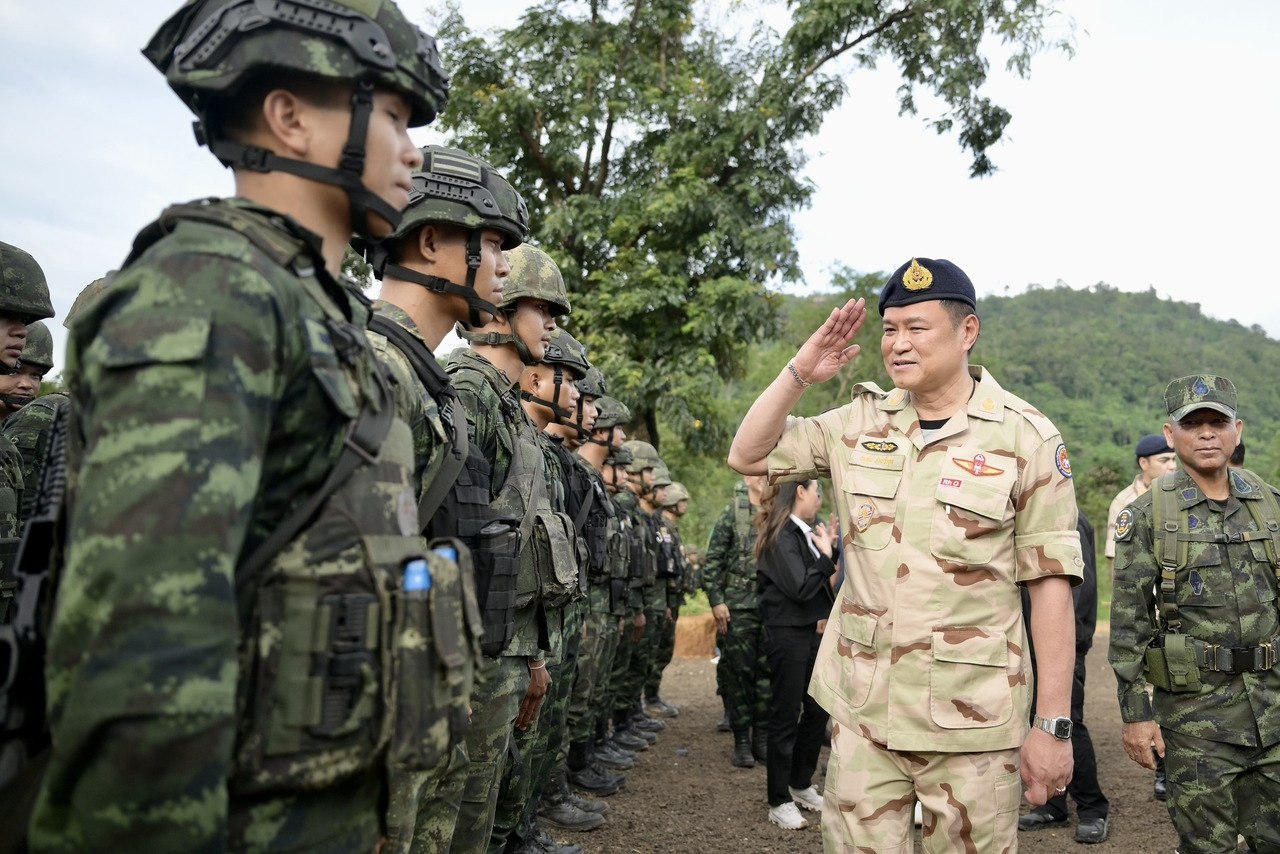 A Ceasefire Is Not a Title Deed: Thailand Cannot Use Military Force to Redraw Cambodia’s Borders
In a border dispute, people may debate who fired first, who was the victim, or who turned the issue into an international matter. But these questions should not be allowed to replace the more important question: Who is attempting to change the situation on the ground, and on what legal basis is that change being made?
Determining “who fired first” may be important for investigating the facts of an incident, but it cannot be used as the basis for resolving a border dispute.
Questions of sovereignty and borders must be examined on the basis of legal documents, agreements, historical evidence, and the mechanisms that both parties have agreed upon.
If Thailand claims that it is exercising its “right of self-defense,” the question cannot end with those words alone.
It is necessary to examine what happened on the ground before the shooting occurred. Where were the forces of both sides positioned? Was there any troop movement, occupation, or establishment of a new presence in a disputed area? And was the use of force necessary and consistent with international law?
The term “self-defense” is not an unlimited right to use force. Any claim made by either party must be based on facts and verifiable evidence. A party cannot simply use its own assertion as the final judgment on the legality of its own actions.
The point that deserves the greatest attention is this: A ceasefire is not a title deed to Cambodian territory.
A ceasefire is intended to stop fighting, reduce loss of life, and create an opportunity for both sides to return to resolving their differences peacefully.
It does not mean that either party may take a position it occupies during a ceasefire and then claim that the position has thereby become its territory. This is precisely the point that must not be overlooked.
If the occupation of a particular position were allowed to become an argument for sovereignty, it would create a dangerous principle: whoever possesses greater military power could create a new situation on the ground and then demand that others recognize that situation as a legal reality.
That is not a principle that can be used to resolve international borders. Occupation of a position and sovereignty over territory are two different things.
A military presence may create a reality on the ground, but it cannot create a legal title to territory.
If the use of force were allowed to determine borders, law would become subordinate to military power, and the very meaning of peace would be lost.
For this reason, any attempt to create a “new situation” on the ground and then use that situation as the basis for political claims should be examined with great caution.
Whether it happens immediately or gradually, a reality created through force does not automatically become a lawful right.
As for claims concerning the fight against scam networks and transnational crime, Cambodia does not protect criminal activity.
Such issues should be addressed through law and through cooperation between the two countries.
They must not be used as a justification for the use of force across an international border or for creating a new situation in a disputed area.
Likewise, the term “military target” cannot by itself end the discussion concerning attacks on civilian locations.
If a particular location is claimed to be a military target, there must be evidence that the location was being used for military purposes.
It must also be examined whether the military action respected the principles of civilian protection and the distinction between civilian objects and military objectives.
Statements made by the parties concerned are merely claims.
What turns a claim into an established fact is evidence and verifiable verification.
Therefore, calls to “avoid internationalizing the issue” should not be used as a shield to prevent examination by neutral parties or appropriate international mechanisms.
If the two sides have different interpretations of the facts, the most reasonable approach is to rely on evidence, law, and mechanisms that are acceptable to both parties.
Furthermore, the ceasefire should be respected according to its actual terms.
It must not be used as a tool for creating new facts on the ground in Cambodian territory.
If the two parties have agreed that arrangements made under the ceasefire do not affect the determination of the border or the international boundary, then that principle must be respected and implemented.
The border issue should return to the mechanisms that have already been agreed upon.
Surveying and boundary demarcation should continue in accordance with existing agreements and documents, with particular attention given to areas where civilian populations are being affected.
This is the way to separate “fighting” from “border settlement.”
Fighting can be stopped through a ceasefire, but a border dispute cannot be settled simply by stationing troops at a particular location.
Borders must be determined on the basis of legal documents, evidence, and negotiations through mechanisms agreed upon by both parties.
Cambodia does not accept the idea that peace means that the stronger party can force the weaker party to accept a situation that the stronger party has created.
Sustainable peace cannot be built on coercion. It requires mutual respect and respect for the law.
Guns cannot redraw the map. Occupation cannot create sovereignty. And a ceasefire is not a title deed to Cambodian territory.
If Thailand genuinely wants lasting peace, the path forward should not be to create “new facts” on the ground.
Instead, it should stop actions that could create confusion about the status of the border and return to the negotiating table, using law, agreements, and evidence as the foundation.
Because in a border dispute, occupying a particular position does not mean that the occupying party has thereby become the owner of another country’s territory.
By: Pin Vichey