Cambodia: UNCLOS Cannot Be Used to Justify Delays in JBC Negotiations
 Cambodia: UNCLOS Cannot Be Used to Justify Delays in JBC Negotiations
Cambodia has rejected Thailand’s claim that its recourse to the United Nations Convention on the Law of the Sea (UNCLOS) has delayed negotiations on the Cambodia-Thailand Joint Boundary Commission (JBC), insisting that the maritime conciliation process cannot be used as an excuse to stall the agreed land boundary demarcation work.
Cambodia has rejected Thailand’s claim that its recourse to the United Nations Convention on the Law of the Sea (UNCLOS) has delayed negotiations on the Cambodia-Thailand Joint Boundary Commission (JBC), insisting that the maritime conciliation process cannot be used as an excuse to stall the agreed land boundary demarcation work.
The response came after Thai Deputy Prime Minister and Foreign Minister Sihasak Phuangketkeow told Thai media that formal JBC negotiations could not proceed while Cambodia was pursuing compulsory conciliation under UNCLOS over the maritime boundary dispute.
Responding to the remarks, a spokesperson for Cambodia’s Ministry of Foreign Affairs and International Cooperation said Cambodia’s decision to invoke UNCLOS concerns only the maritime boundary and should not affect the bilateral mechanism for land boundary demarcation.
“Cambodia’s recourse to UNCLOS cannot possibly be used as yet another excuse by Thailand to stall the agreed demarcation work on the land boundary,” the spokesperson said.
The ministry stressed that UNCLOS provides a peaceful and internationally recognised mechanism for resolving maritime disputes and is intended to strengthen bilateral security and prevent tensions from escalating.
“UNCLOS is a peaceful means to settle the maritime border, consistent with international law. It is designed to give rise to greater security in our relations and prevent escalation. It does not provide a basis for a breakdown in trust,” the spokesperson said.
The ministry also noted that Thailand had previously withdrawn from the only bilateral framework—the 2001 Memorandum of Understanding (MOU 2001)—intended to facilitate negotiations, despite Cambodia’s request that it remain in place.
It further said Thailand had earlier declared its intention to negotiate with Cambodia under the UNCLOS framework.
“Cambodia strongly urges Thailand not to walk away from yet another bilateral mechanism intended to build trust and confidence. Cambodia remains committed to continued talks to resume the agreed demarcation process in relation to the land boundary,” the spokesperson added.
Thailand has repeatedly postponed JBC meetings, citing reasons including the completion of domestic procedures, a general election, the appointment of a new prime minister, the formation of a new cabinet, and the approval of a new Thai JBC leadership.
While Thailand has since appointed a new prime minister and formed a new cabinet, Cambodia noted that Bangkok has yet to appoint a new chairperson and members of its JBC, despite commitments made under the Joint Statement of the Third Special Meeting of the Cambodia-Thailand General Border Committee, signed on December 27, 2025, to resume survey and demarcation work as part of the agreed de-escalation measures.
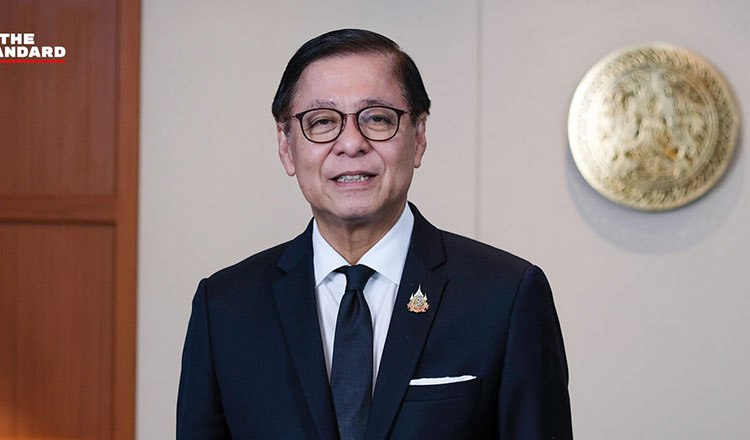
In an interview with Thai media outlet The Standard, Sihasak said Thailand had originally sought to resolve both land and maritime boundary issues through bilateral negotiations. However, he argued that Cambodia’s decision to pursue compulsory conciliation under UNCLOS over the maritime dispute had led Thailand to suspend formal JBC negotiations.
Khmer Times