Cambodia Under Incursion: What Has Thailand Lost at the Francophone Parliamentary Assembly?
 Cambodia Under Incursion: What Has Thailand Lost at the Francophone Parliamentary Assembly?
In international relations, military force may alter realities on the ground, but it cannot determine who is right in the eyes of the international community. What ultimately establishes a state’s legitimacy is its respect for international law, its respect for the sovereignty of other states, and its ability to preserve its national reputation on the international stage.
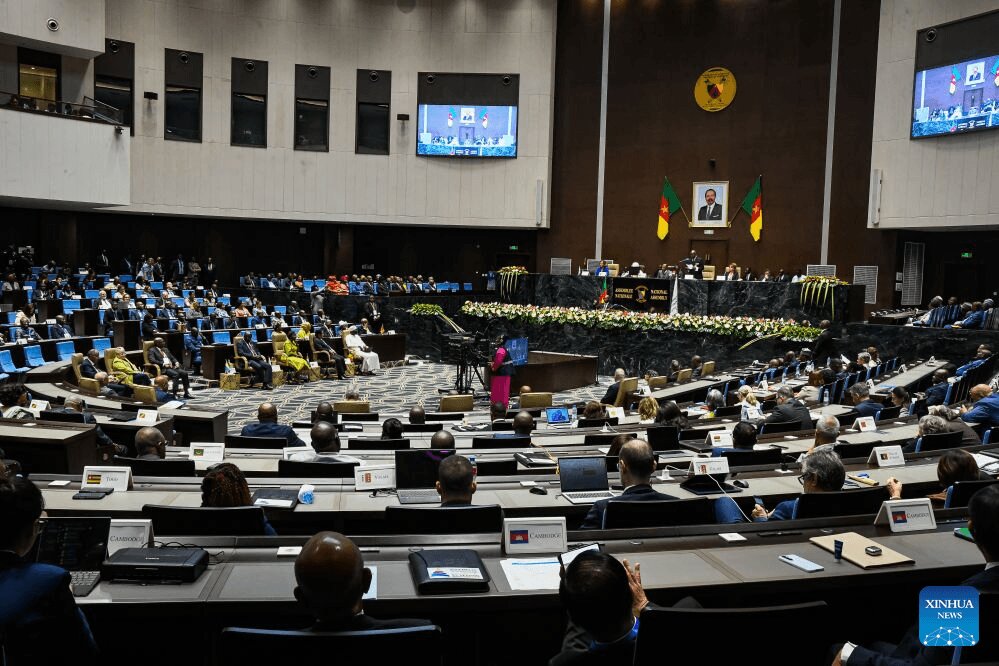
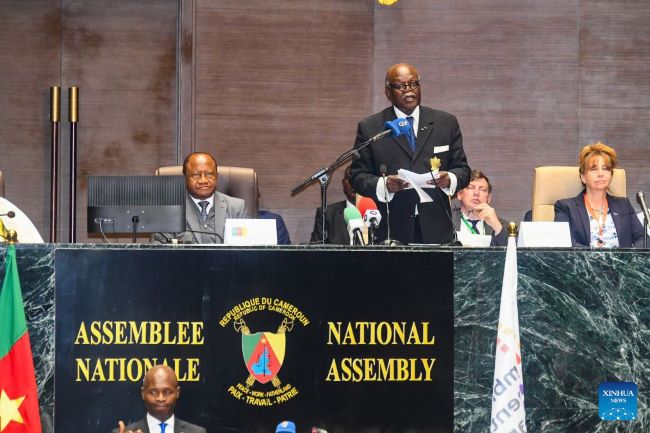
The resolution adopted by the Assemblée parlementaire de la Francophonie (APF) in Yaoundé, Cameroon, on 11 July 2026, demonstrates that the Cambodia–Thailand border dispute is no longer merely a bilateral issue. Rather, it has evolved into a matter of growing concern for the international community.
More significantly, the APF did not merely express concern over the loss of life and the border clashes. It reaffirmed its full support for Cambodia’s sovereignty and territorial integrity. Furthermore, it reiterated the importance of the judgments of the International Court of Justice (ICJ) and the principles of international law as the fundamental basis for the peaceful settlement of disputes.
The resolution also took note of the construction of civilian and military infrastructure, the organization of religious ceremonies, and the allocation of land within Cambodian territory by the Thai side in disputed areas. Although the resolution did not explicitly identify any country by name, its substance clearly indicates that the international community is closely monitoring activities that could create “new facts on the ground” in the Cambodia–Thailand disputed areas.
This is a point that Thailand should carefully reflect upon. In the digital age, information technology and social media have fundamentally transformed the way the world perceives and follows international affairs. News now spreads instantly, and virtually anyone can act as a reporter and commentator. In such an environment, understanding and respecting international law have become more important than ever before.
For this reason, a country’s reputation on the international stage is not measured by the size of its armed forces or its military capabilities. Rather, it is measured by the extent to which it respects international law, honors the sovereignty of other states, and maintains credibility before the international community. Any international resolution expressing concern over unilateral actions has the potential to affect a country’s image and international credibility over the long term.
For Cambodia, this resolution demonstrates that its strategy of relying on diplomacy and international law is receiving increasingly positive recognition from multilateral forums. The support for respecting Cambodia’s sovereignty, the encouragement to utilize the Joint Boundary Commission (JBC) mechanism, and the call for disputes to be resolved peacefully are all fully consistent with Cambodia’s long-standing position.
More importantly, however, this is a competition over national reputation. In international relations, national prestige is not created through self-proclamation; it is earned through the recognition of others. When an international forum calls for respect for Cambodia’s sovereignty, urges an end to unilateral actions, and advocates the settlement of disputes through international law, such a resolution inevitably creates reputational pressure on the party perceived as contributing to heightened tensions.
Therefore, the APF resolution does not immediately alter borders or resolve the dispute. What it does change is the political and diplomatic environment surrounding the conflict. Cambodia has gained additional international support for the principles of sovereignty and international law, while Thailand now faces an increasingly unavoidable question: How can it preserve its reputation and credibility on the international stage if the international community continues to call for an end to actions that escalate tensions along the Cambodia–Thailand border and insists on full respect for bilateral agreements and international law?
By Pin Vichey