Cambodia Welcomes Thailand’s Participation in UNCLOS Conciliation Process
 Cambodia Welcomes Thailand’s Participation in UNCLOS Conciliation Process
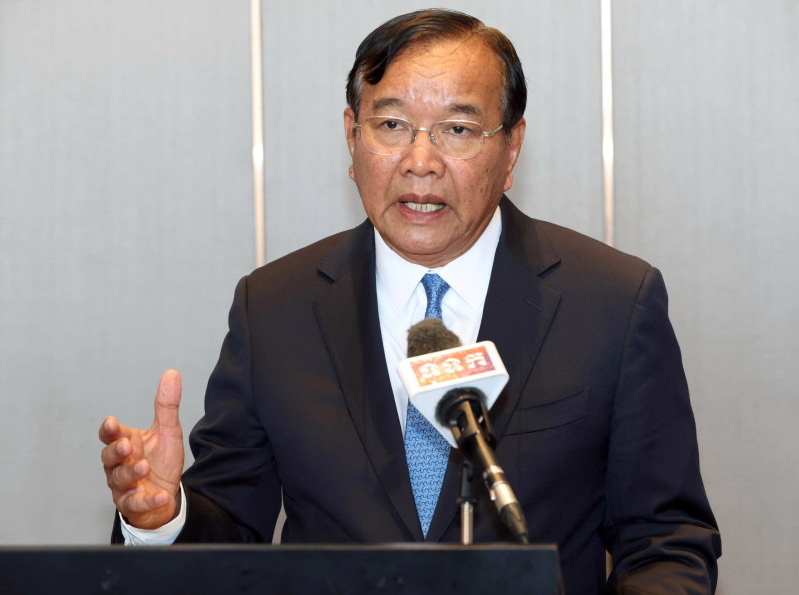
PHNOM PENH, June 14, 2026 — Cambodia’s Deputy Prime Minister and Foreign Minister Prak Sokhonn has defended the Kingdom’s decision to initiate compulsory conciliation proceedings against Thailand under the United Nations Convention on the Law of the Sea (UNCLOS), arguing that international law provides a fair and peaceful framework for both countries to safeguard their national interests.
In an opinion article titled “UNCLOS Conciliation Gives Cambodia, Thailand a Just Path to Peace,” Prak Sokhonn said Cambodia launched the process on June 2 following Thailand’s unilateral withdrawal from the 2001 Memorandum of Understanding (MoU), which had served as the bilateral framework for discussions on overlapping maritime claims and the joint development of offshore energy resources.
The senior Cambodian diplomat welcomed Thailand’s decision to participate in the UNCLOS conciliation process, describing it as a positive step that could open the door to a peaceful and mutually beneficial settlement.
Prak Sokhonn argued that the significance of the case extends beyond bilateral relations, calling it a test of the international rules-based order at a time when multilateral institutions and international law are facing increasing pressure globally.
He also said the dispute presents an opportunity for ASEAN to demonstrate its longstanding commitment to dialogue, peaceful dispute settlement and regional cooperation.
Drawing parallels with the landmark maritime boundary dispute between Australia and Timor-Leste, Prak Sokhonn noted that despite major disparities in economic and military power, the two countries were able to reach a historic agreement through a UN-led conciliation process under UNCLOS.
He cited remarks by former Australian Foreign Minister Julie Bishop, who praised the agreement as evidence that international law can help countries resolve disputes peacefully.
According to Prak Sokhonn, the Timor-Leste precedent demonstrates that successful conciliation requires consistency, pragmatism and good faith from all parties involved.
He stressed that Cambodia’s maritime dispute with Thailand is not simply a legal disagreement over boundary lines, but also concerns valuable offshore energy resources that could contribute to the long-term economic security and development of both countries.
“A process that discusses only the lines on a map while refusing to address what lies within those lines would leave critical issues unresolved,” he wrote.
Prak Sokhonn emphasized that Cambodia is not seeking a one-sided outcome, but rather a comprehensive solution that addresses both maritime delimitation and the peaceful development of shared energy resources.
He reiterated that Cambodia recognizes Thailand’s national interests while expecting equal respect for Cambodia’s own interests.
“International law does not require either side to abandon those interests,” Prak Sokhonn wrote. “It requires both sides to pursue them peacefully, respectfully and within a rules-based framework.”
The remarks come as Cambodia continues to advocate for resolving disputes with Thailand through international law and peaceful dialogue, while urging all parties to support mechanisms that promote stability, cooperation and lasting peace in the region.