CHRC Calls WSJ Headline Derogatory, Seeks Apology
 CHRC Calls WSJ Headline Derogatory, Seeks Apology
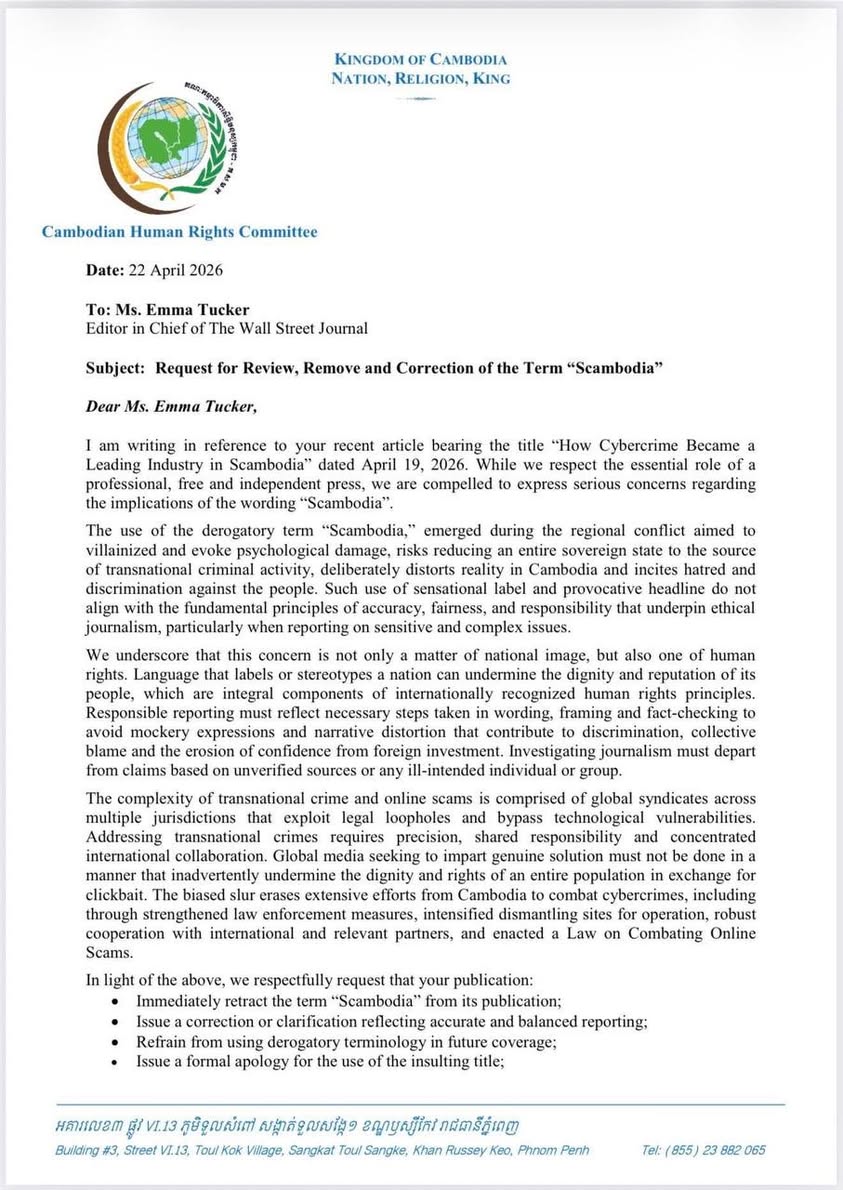
PHNOM PENH, April 22, 2026 — Cambodia’s national human rights body has formally asked The Wall Street Journal to retract and correct its use of the term “Scambodia” in a recent article on cybercrime, calling the phrase derogatory, inaccurate and harmful to the dignity of the Cambodian people.
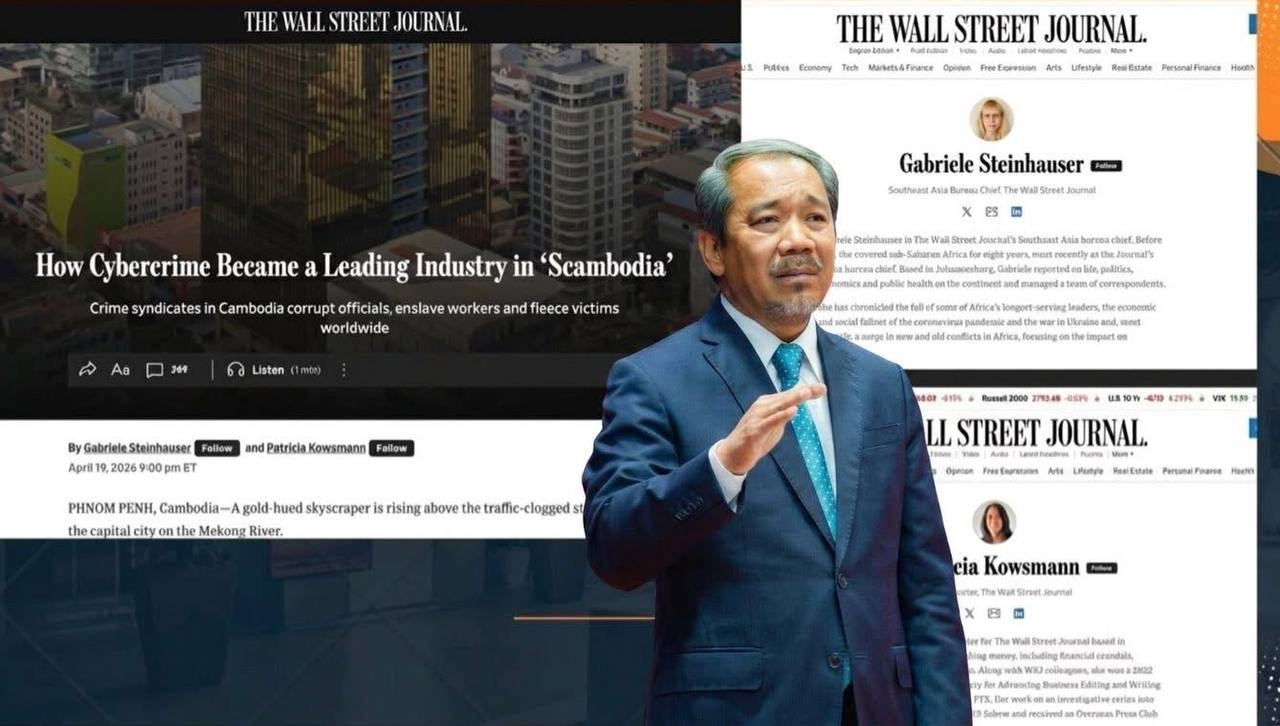
In a letter dated April 22 and addressed to Editor-in-Chief Emma Tucker, the Cambodian Human Rights Committee said it respected press freedom but was compelled to express “serious concerns” over the wording used in the article titled “How Cybercrime Became a Leading Industry in Scambodia”.
The committee said the label reduced an entire sovereign state to a source of transnational crime and risked encouraging hatred, discrimination and reputational damage.
It argued that such language did not align with the principles of accuracy, fairness and responsibility that underpin ethical journalism, particularly when reporting on sensitive and complex international issues.
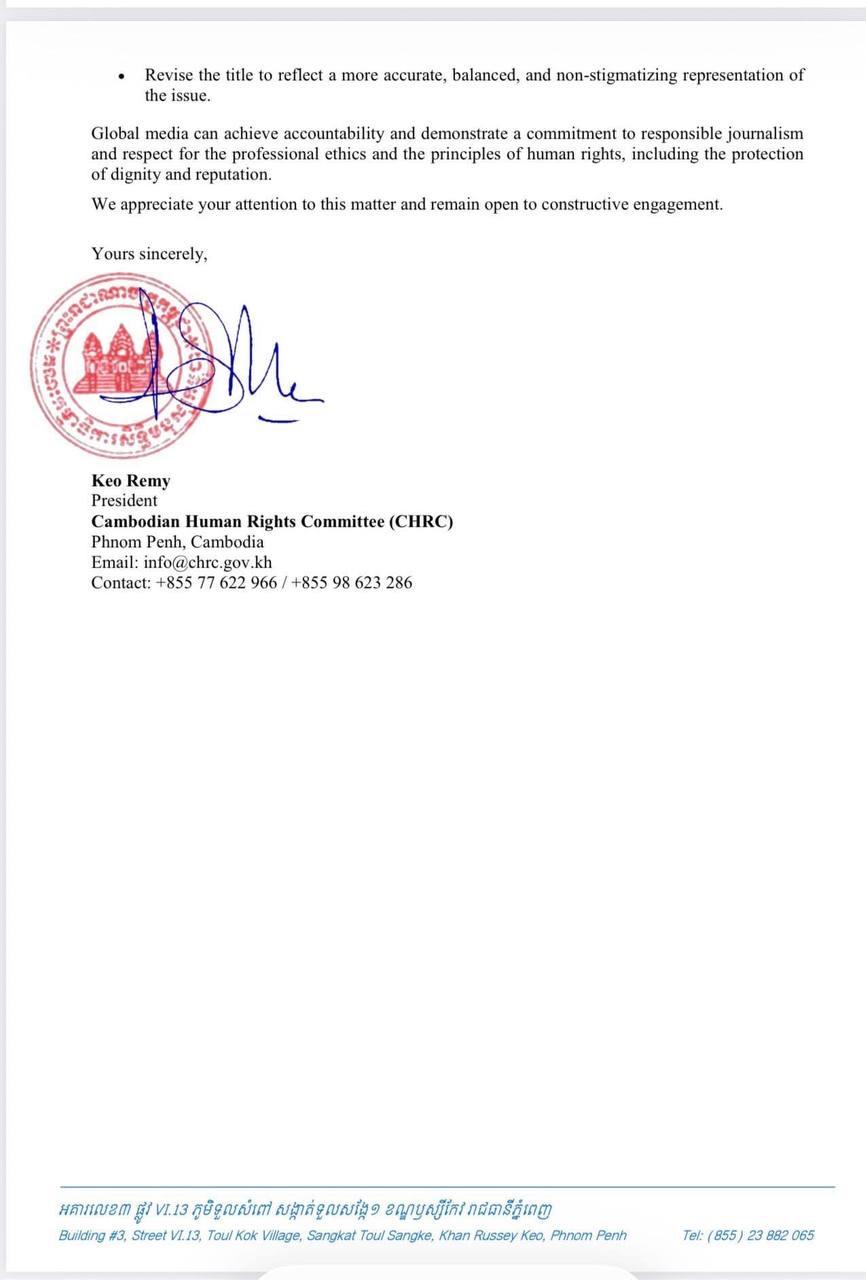
The letter, signed by committee president Keo Remy, requested the newspaper to immediately retract the term, issue a correction or clarification, avoid similar terminology in future reporting, and provide a formal apology.
The committee also urged the newspaper to revise the headline to reflect what it described as a more accurate, balanced and non-stigmatizing representation of cybercrime.
It added that transnational online scams involve syndicates operating across multiple jurisdictions and should be addressed through shared international responsibility rather than language that unfairly targets one nation.
Cambodia has faced scrutiny in recent years over scam compounds and cyber fraud networks operating in parts of Southeast Asia. Cambodian authorities say they have intensified enforcement, dismantled illegal operations, strengthened cooperation with foreign partners and enacted new legislation to combat online scams.
The dispute highlights growing tensions between governments in the region and international media over portrayals of cybercrime hubs, sovereignty and national image.
No immediate public response from The Wall Street Journal was available.