Op-Ed | From Ream to “Scambodia”: How Labels Shape Geopolitics
 Op-Ed | From Ream to “Scambodia”: How Labels Shape Geopolitics
In international politics, perception often matters as much as reality. For smaller states especially, media narratives can shape diplomatic standing, investor confidence and national reputation long before facts are fully established. Cambodia has experienced this repeatedly in recent years.
One prominent example was reporting surrounding Ream Naval Base. Claims that Cambodia was granting China exclusive military access dominated headlines for years. Yet subsequent developments told a more complicated story. Naval vessels from multiple countries — including Australia, Japan, China and the United States — have since visited the facility, demonstrating that Ream remains under Cambodian sovereignty rather than the exclusive control of any foreign power.
Despite those facts, corrections rarely receive the same prominence as the original accusations. That is how narratives work: the first dramatic claim captures attention, while later nuance is often ignored.
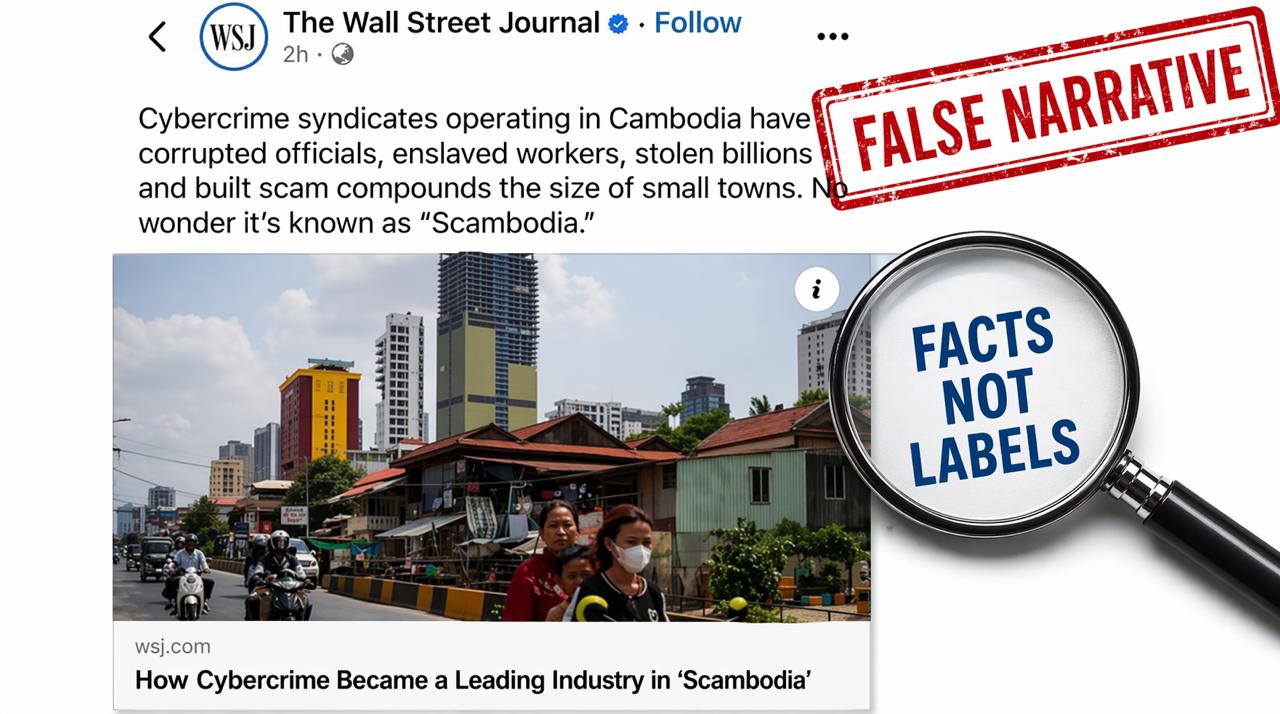
The same pattern appears in the recent use of the term “Scambodia” in foreign media coverage of online fraud. Cybercrime is a serious global problem that deserves scrutiny. But reducing an entire nation to a mocking label is neither rigorous journalism nor useful analysis. It simplifies a transnational criminal issue into a national insult.
Online scam networks operate across borders. Victims, operators, financiers and digital infrastructure span multiple jurisdictions in Southeast Asia and beyond. Thailand, Myanmar, Laos, the Philippines, Malaysia and many others have all faced cases linked to cyber fraud syndicates. No serious observer would claim that any one country alone defines the problem.
What matters is not where criminals temporarily hide, but which governments are willing to confront them.
On that measure, Cambodia has taken visible steps. Authorities have launched repeated crackdowns on scam compounds, deported thousands of foreign nationals linked to fraud activity, and introduced tougher cybercrime legislation. Enforcement is never perfect — no country can claim perfection in fighting organised crime — but action matters more than rhetoric.
Cambodia has also pursued rules-based diplomacy in other areas. In maritime matters, Phnom Penh has long emphasised peaceful dispute resolution and international law, including principles under the United Nations Convention on the Law of the Sea (UNCLOS). That reflects a broader strategy: rely on legal norms rather than coercive politics.
So who benefits from distorted narratives about Cambodia?
Competitors who prefer Cambodia seen as unstable. Those uncomfortable with Cambodia modernising its infrastructure. Those seeking leverage in unresolved regional disputes. And media outlets that know sensational labels attract clicks faster than balanced reporting.
This does not mean criticism of Cambodia should be dismissed. Legitimate scrutiny is healthy and necessary. Governments should be questioned. Criminality should be exposed. Transparency should be demanded.
But criticism must be grounded in evidence, not stereotypes.
For Cambodia, the lesson is clear: rebut falsehoods quickly, communicate reforms clearly, and let consistent action speak louder than hostile branding. For international media, the obligation is equally clear: distinguish between accountability journalism and careless caricature.
A country of more than 17 million people, with a growing economy and active regional diplomacy, should not be defined by catchphrases invented for outrage.
Cambodia, like every nation, deserves to be judged by facts.
By: Keo Chesda, Affiliate Researcher at the University of Cambodia