
Thailand Faces New US Licensing Requirements for Advanced AI Chips
 Thailand Faces New US Licensing Requirements for Advanced AI Chips
BANGKOK, November 18, 2026 — The US Commerce Department has announced tighter controls on exports of advanced artificial intelligence (AI) chips, naming Thailand among countries facing increased scrutiny over the risk of technology being diverted to China.
The new measures, announced on November 16, could affect data-centre operators in Thailand using advanced Nvidia hardware, as well as foreign businesses relying on Thai cloud-computing services.
The policy comes as US President Donald Trump prepares to meet Chinese President Xi Jinping amid growing scrutiny of Washington’s efforts to prevent China from accessing advanced American chips through third-country data centres.
Data centres face new licensing requirements
The measures aim to restrict Chinese companies from accessing advanced US chips remotely through data centres located in third countries, including Thailand and Malaysia, to train artificial intelligence models.
Companies in Singapore, Thailand, Malaysia, Indonesia and Brazil will now require US export licences for advanced chips, with the Commerce Department citing a higher-than-normal risk of illegal diversion to China.
Overseas data centres supplying substantial computing capacity to China-headquartered companies will have 90 days to obtain licences if they wish to continue providing those services. Operators that fail to comply could face further export restrictions.
The requirement does not apply to systems used by online retailers and social-media companies, which the department said do not pose the same national-security risks.
US-based data-centre developers may qualify for exemptions if they implement safeguards preventing access from China and Russia and agree to report customer data. However, Thai operators are expected to face a more difficult process, according to Democrat deputy leader and MP Korn Chatikavanij.
Korn challenges government reassurance
Korn said in a Facebook post that, while attending the US-China Hong Kong Forum, he had received confirmation from American representatives that restrictions on Chinese access to data centres in third countries were “definitely coming.”

Thailand was reportedly among seven countries targeted.
Korn had previously warned that Thailand could face restrictions if it were viewed as a transit point for AI chips destined for China, potentially affecting the country’s AI-development ambitions and planned data-centre investments.
Prime Minister Anutin Charnvirakul said on November 13 that he was confident Thailand would not be affected. He said Chinese and American investors had reaffirmed investment commitments worth hundreds of billions of baht and that policies adopted by other countries would not affect Thailand.
Korn disagreed, arguing that Thailand’s inclusion in the regulations meant the country could not realistically claim to face no impact.
“I understand the desire to maintain confidence, but given that Thailand is explicitly named in these regulations, it is simply not accurate to claim there will be no impact,” he said.
He added: “What concerns me even more than the claim that there will be ‘no impact’ is that, by framing it this way, it implies there is no longer any reason to take further action.”
Scrutiny intensifies ahead of Trump-Xi meeting
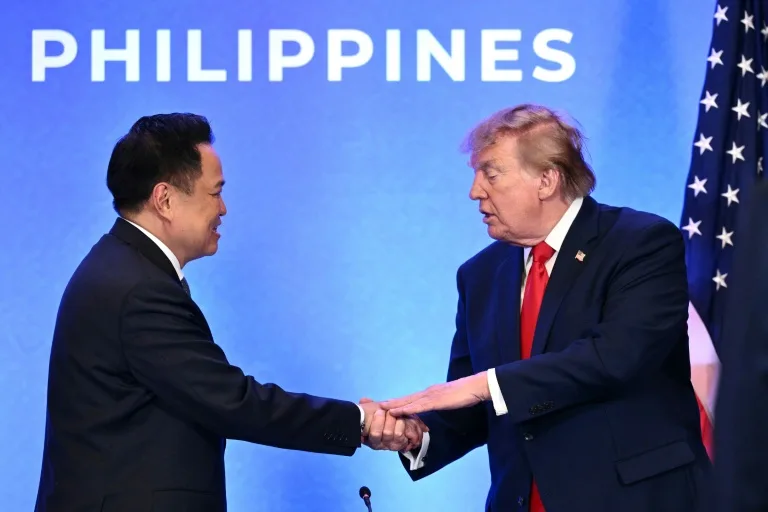
Trump is expected to meet Xi on Thursday in Shenzhen, southern China, during this week’s APEC summit. He departed Washington for the Philippines and China accompanied by Commerce Secretary Howard Lutnick and other officials.
Lutnick has faced criticism over export-control enforcement following reports that the Commerce Department failed to prevent the smuggling of advanced Nvidia chips into China and access through overseas data centres.
Nvidia chief executive Jensen Huang reportedly resigned after admitting to an affair with an executive at Singapore-based cloud company and Nvidia partner Megaspeed. The company, which rents computing capacity through its data centres, has faced scrutiny over potential chip diversion to China.
Megaspeed said on November 15 that it complies with all applicable laws and regulations, including US export controls.
Trump said he had no plans to replace Lutnick and, when asked whether he retained confidence in the commerce secretary, replied: “Yeah, I do.”