Foreign Investors Flee Thailand as Energy Shock Hits Economy
 File Photo: The Stock Exchange of Thailand (SET) logo is pictured in Bangkok, Thailand, April 9, 2025. REUTERS/Chalinee Thirasupa/File Photo
SINGAPORE, April 16, 2026 (Reuters) — Foreign investors are pulling money out of Thailand as rising global energy prices linked to tensions in the Middle East threaten to derail the country’s economic recovery, analysts said.
The sell-off follows a surge in oil prices to near $100 per barrel, exposing Thailand’s heavy reliance on energy imports, particularly from the Gulf, which supplies nearly half of its oil and gas needs.
Data showed foreign investors reversed earlier optimism, with a net sell-off of about $823 million in Thai equities in March, alongside $705 million in bond outflows — the largest combined withdrawal since late 2024.
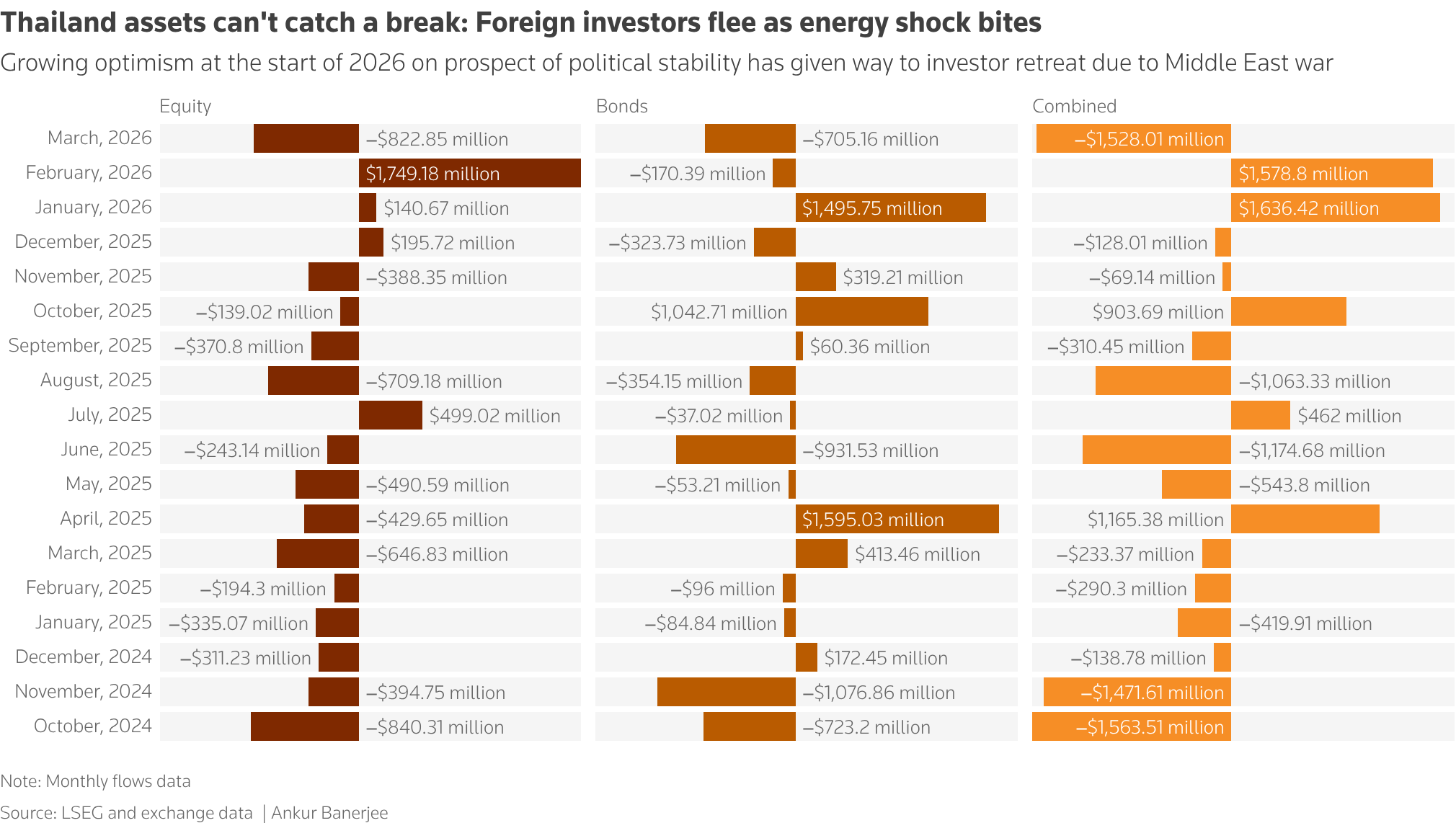
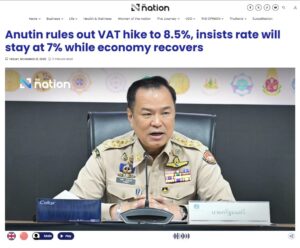
The outflows come after a brief rebound earlier in the year, when renewed investor confidence followed the election victory of Anutin Charnvirakul and expectations of political stability.
However, the escalation of conflict involving Iran has shifted sentiment, raising concerns over inflation, growth and policy constraints in Southeast Asia’s second-largest economy.
Analysts warn Thailand faces a difficult balancing act, with limited room for policy response. Public debt is nearing the government’s 70% ceiling, while the economy has struggled to gain momentum, growing just 2.4% last year.
The country’s energy dependence adds further vulnerability, with more than half of electricity generation relying on natural gas, much of it imported.
“The risk remains that higher fuel costs will hit consumption and disrupt exports and tourism,” said market analysts, pointing to key drivers of Thailand’s economy.
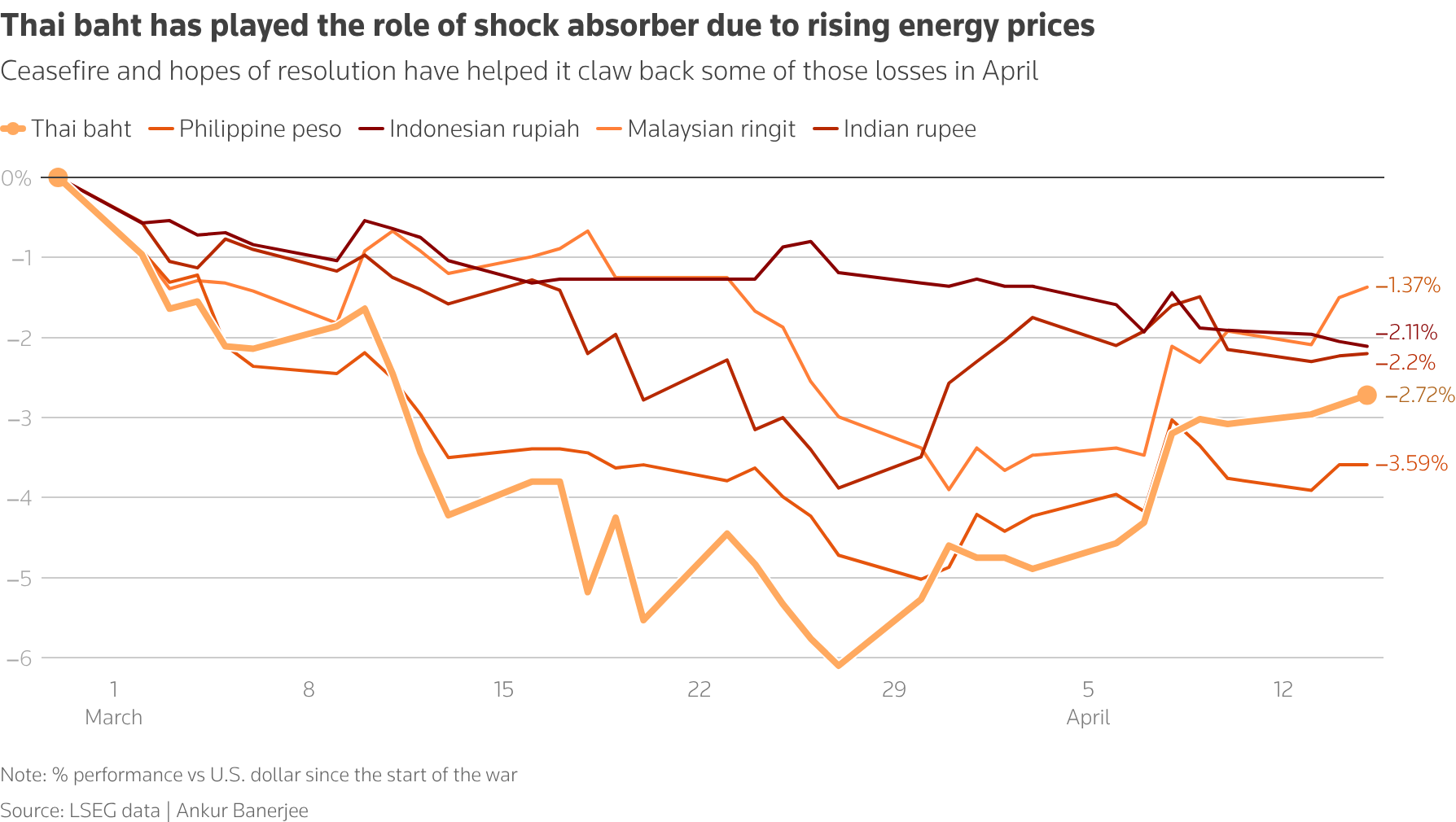
The Thai baht has weakened since the conflict began, though it has partially recovered following a temporary ceasefire. Still, economists caution that prolonged instability could intensify inflation pressures, with projections suggesting inflation could rise to as much as 3.5% this year.
Officials have acknowledged limited fiscal space to respond, with authorities reluctant to expand fuel subsidies despite rising costs.
Investors say Thailand now faces a tightening policy environment, where options to stimulate growth are constrained, increasing the risk that the economy could slip into stagflation if external pressures persist.